ābele
Latvian
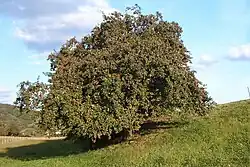
Ābele
Etymology
From Proto-Baltic *ābōl, genitive *ābeles (from this paradigm, the two forms ābols (“apple”) and ābele (“apple tree”) were later differentiated), from Proto-Indo-European *h₂ébl̥, *h₂ebōl, a word which some consider a borrowing from some pre-Indo-European language. Cognates include Lithuanian obelìs, Old Prussian wobelne, Proto-Slavic *ablonь, *abolnь (Ukrainian я́блінь (jáblinʹ), Russian я́блоня (jáblonja), Belarusian я́бланя (jáblanja), Bulgarian ябла́н (jablán), абла́н (ablán), Czech jabloň, Polish jabłoń).[1]
Pronunciation
- IPA(key): [âːbɛle]
Noun
ābele f (5th declension)
- apple tree (gen. Malus)
- stādīt, kopt ābeles ― to plant, to cultivate apple trees
- ābele ziedos ― apple tree in flower
- ābele pilna ar āboliem ― apple tree full of apples
- ābeļu sugas ― apple tree species
- galva balta kā ābele ― head as white as an apple tree(= gray hair)
Declension
Declension of ābele (5th declension)
Related terms
References
- Karulis, Konstantīns (1992) “ābele”, in Latviešu Etimoloģijas Vārdnīca (in Latvian), Rīga: AVOTS, →ISBN
This article is issued from Wiktionary. The text is licensed under Creative Commons - Attribution - Sharealike. Additional terms may apply for the media files.