ķēde
Latvian

Ķēde (1)
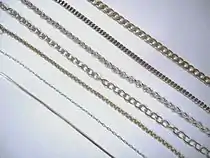
Sudraba ķēdes (2)

Kāju ķēde (3)
Alternative forms
- (archaic, dialectal term) šķēde
Etymology
Borrowed from Middle Low German kede, or from Middle Dutch cede (cf. German Kette), themselves borrowings from Latin catena, ultimately from a Proto-Indo-European stem *kat- (“to weave, to braid”). This is an old borrowing, already mentioned in 17th-century sources, sometimes with a prothetic š (šķēde). The current form, without š, officially entered the standard language in the early 20th century.[1]
Pronunciation
- IPA(key): [cɛ̄ːdɛ]
| (file) |
Noun
ķēde f (5th declension)
- chain (sequence of interconnected, usually metal, rings or links)
- velosipēda ķēde ― bicycle chain
- pulksteņa ķēde ― clock chain
- enkura ķēde ― anchor chain
- ķēdes posms, loceklis ― chain link
- ķēžu dūriens ― chain stitch
- piesiet zirgu ķēdē ― to tie a horse with a chain (= tether)
- chain (a chain (1) made of precious metal, to be worn as an ornament)
- ķēde ar piekariņiem ― chain with pendants
- sudraba ķēde ― silver chain
- chain, fetters (to restrain prisoners)
- kāju ķēde ― foot chain, fetters
- row, line of people at a certain distance from each other
- uzbrucēju ķēde ― chain of attackers
- izvērsties ķēdē ― to unfold (people) in a chain
- a series of elements following each other
- apsnigušu virsotņu ķēde ― a chain of snowy peaks
- elektriskā ķēde ― electric circuit (lit. chain)
- a sequence of events or facts
- notikumu ķēde ― chain of events
- ķēdes reakcija ― chain reaction
Declension
Declension of ķēde (5th declension)
References
- Karulis, Konstantīns (1992) “ķēde”, in Latviešu Etimoloģijas Vārdnīca (in Latvian), Rīga: AVOTS, →ISBN
This article is issued from Wiktionary. The text is licensed under Creative Commons - Attribution - Sharealike. Additional terms may apply for the media files.