اسپندان
Persian
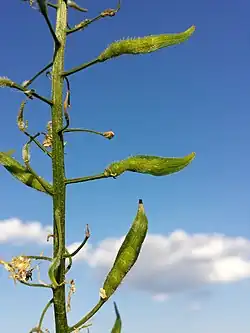
اسپندان – Sinapis alba
Alternative forms
- سپندان (sepandân)
Etymology
Containing the word for “white”, now سفید (safêd). Probably also confounded with اسپند (espand, “Syrian rue”) and containing دان (dân, “seed”). Forms auslauting in /ɾ/ are contaminated by کندر (kondor, “olibanum-tree; olibanum”)-
Pronunciation
- (Classical Persian) IPA(key): [ʔis.pan.dɑːn]
- (Dari, formal) IPA(key): [ʔɪs.pʰän̪.d̪ɑːn]
- (Kabuli) IPA(key): [ʔɪs.pʰän̪.d̪ɑːn]
- (Hazaragi) IPA(key): [ʔis.pʰän̪.d̪ɔːn]
- (Iran, formal) IPA(key): [ʔes.pʰæn̪.d̪ɒːn]
- (Tajik, formal) IPA(key): [ʔis.pʰän̪.d̪ɔn]
| Readings | |
|---|---|
| Classical reading? | ispandān |
| Dari reading? | ispandān |
| Iranian reading? | espandân |
| Tajik reading? | ispandon |
Descendants
- → Arabic: أَسْبَنْدَار (ʔasbandār), أَسْبَنْذَار (ʔasbanḏār), أَسْبِنْدَار (ʔasbindār), أَسْبِنْذَار (ʔasbinḏār), أَسْفِنْدار (ʔasfindār), أَسْفِنْذَار (ʔasfinḏār), أَسْفَنْد (ʔasfand) (obsolete, uncommon)
- → Urdu: اسپندان (ispandān)
References
- Flattery, David Stophlet, Schwartz, Martin (1989) Haoma and Harmaline. The Botanical Identity of the Indo-Iranian Sacred Hallucinogen “Soma” and its Legacy in Religion, Language, and Middle Eastern Folklore (Near Eastern Studies; 21), Berkeley · Los Angeles · London: University of California Press, →ISBN, page 143
This article is issued from Wiktionary. The text is licensed under Creative Commons - Attribution - Sharealike. Additional terms may apply for the media files.