شیشه
Persian
Etymology
From Middle Persian [script needed] (šyšk' /šīšag/, “bottle, flask”), seemingly from *šīš (compare Old Armenian շիշ (šiš, “bottle”), an Iranian borrowing) + common suffix -ag, probably ultimately from Semitic. Compare Biblical Hebrew שַׁיִשׁ (šayiš, “alabaster; marble”), Classical Syriac ܫܝܫܐ (šēšā, “marble”), Egyptian
|


(šs, “alabaster”).
Pronunciation
Audio (file)
- (Classical Persian) IPA(key): [ʃiː.ʃa]
- (Dari, formal) IPA(key): [ʃiː.ʃä]
- (Kabuli) IPA(key): [ʃiː.ʃä]
- (Hazaragi) IPA(key): [ʃi.ʃä]
- (Iran, formal) IPA(key): [ʃiː.ʃe]
- (Tajik, formal) IPA(key): [ʃi.ʃä]
| Readings | |
|---|---|
| Classical reading? | šīša |
| Dari reading? | šīša |
| Iranian reading? | šiše |
| Tajik reading? | šiša |
Noun
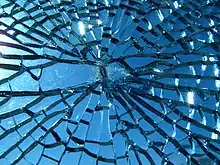
شیشهٔ شکسته (šiše-ye šekaste, “broken glass”)
شیشه • (šiše)
- glass
- وی شیشه را شکست. ― vey šiše râ šekast. ― He broke the glass.
- اون شیشه رو شکست. ― un šiša ro šekast. ― He broke the glass. (Iran, colloquial)
- شِیشهٔ دِلَم، اَی خُدا، زیرِ سَنگ آمَده.
- šīša-yi dilam, ay xudā, zēr-i sang āmada.
- The glass of my heart, o God, comes under the stone.
- bottle; flask (of glass)
- c. 1260s, Jalāl ad-Dīn Mohammad Rūmī, translated by Reynold A. Nicholson, مثنوی معنوی [Masnavi-ye-Ma'navi], volume I, verse 328:
- گفت احول ز ان دو شیشه من کدام
پیش تو آرم بکن شرح تمام- guft ahwal z-ān du šīša man kudām
pēš-i tu āram bikun šarh-i tamām - Said the squint-eyed one: “Which of the two bottles shall I bring to you? Explain fully.”
- guft ahwal z-ān du šīša man kudām
Derived terms
- شیشه باز (šiše bâz, “magician; trickster”)
- شیشه بر (šiše bor, “glazier”)
- شیشه جان (šiše jân, “timid”, literally “glass-soul”)
- شیشه رنگی (šiše-ye rangi, “stained glass”)
- شیشهای (šiše-yi, “glassy”)
- شیشهگر (šiše-gar, “glassblower”)
Descendants
Descendants
- → Albanian: shishe
- → Middle Armenian: շիշայ (šišay), շուշայ (šušay)
- Armenian: շիշա (šiša), շուշա (šuša)
- → Georgian: შუშა (šuša)
- → Hindustani:
- → Marathi: शीशी (śīśī)
- → Punjabi: ਸ਼ੀਸ਼ਾ (śīśā)
- → Punjabi:
- → Turkic:
This article is issued from Wiktionary. The text is licensed under Creative Commons - Attribution - Sharealike. Additional terms may apply for the media files.