صمغ
Arabic
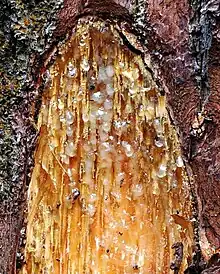
صَمْغ
Etymology
| Root |
|---|
| ص م غ (ṣ-m-ḡ) |
Uncertain. Maybe a variant of سَمْع (samʕ, “ear”), compare شَمْع (šamʕ, “wax”), otherwise سَمُر (samur, “acacia”). A chain of comparisons also allows to assume Iranian borrowing: سَمْعَج (samʕaj, “thick sweet milk”), زَمَج (zamaj, “gum arabic; raisins”), زَاج (zāj, “vitriol”), Classical Persian زمه (zama, “vitriol, alum”), زنج (zunj, zanj, zinj, “resin; chin”), زنخ (zanax, “chin”), زاگ (zāg, “vitriol, alum”).
Pronunciation
- IPA(key): /sˤamɣ/
Noun
صَمْغ • (ṣamḡ) m (plural صُمُوغ (ṣumūḡ) or أَصْمَاغ (ʔaṣmāḡ))
- resin
- 1025, ابن سينا (Avicenna), القانون في الطب, Rome: Stamperia Orientale Medicea, published 1593, Liber 2, page 174:
- قال ديسقوريدوس في كتابه ان الحلتيث صمغ الانجدان و ذكر بان يشرط اصله وساقه ثم بعد الشرط يسيل منه الحلتيث […]
- Dioscurides said in his book that hing is the resin of the Ferula assa-foetida and he notified that its stem and its foot is slit and then, after the slitting, the hing flows from it. […]
- glue
Declension
Declension of noun صَمْغ (ṣamḡ)
| Singular | basic singular triptote | ||
|---|---|---|---|
| Indefinite | Definite | Construct | |
| Informal | صَمْغ ṣamḡ |
الصَّمْغ aṣ-ṣamḡ |
صَمْغ ṣamḡ |
| Nominative | صَمْغٌ ṣamḡun |
الصَّمْغُ aṣ-ṣamḡu |
صَمْغُ ṣamḡu |
| Accusative | صَمْغًا ṣamḡan |
الصَّمْغَ aṣ-ṣamḡa |
صَمْغَ ṣamḡa |
| Genitive | صَمْغٍ ṣamḡin |
الصَّمْغِ aṣ-ṣamḡi |
صَمْغِ ṣamḡi |
| Dual | Indefinite | Definite | Construct |
| Informal | صَمْغَيْن ṣamḡayn |
الصَّمْغَيْن aṣ-ṣamḡayn |
صَمْغَيْ ṣamḡay |
| Nominative | صَمْغَانِ ṣamḡāni |
الصَّمْغَانِ aṣ-ṣamḡāni |
صَمْغَا ṣamḡā |
| Accusative | صَمْغَيْنِ ṣamḡayni |
الصَّمْغَيْنِ aṣ-ṣamḡayni |
صَمْغَيْ ṣamḡay |
| Genitive | صَمْغَيْنِ ṣamḡayni |
الصَّمْغَيْنِ aṣ-ṣamḡayni |
صَمْغَيْ ṣamḡay |
| Plural | basic broken plural triptote | ||
| Indefinite | Definite | Construct | |
| Informal | صُمُوغ; أَصْمَاغ ṣumūḡ; ʔaṣmāḡ |
الصُّمُوغ; الْأَصْمَاغ aṣ-ṣumūḡ; al-ʔaṣmāḡ |
صُمُوغ; أَصْمَاغ ṣumūḡ; ʔaṣmāḡ |
| Nominative | صُمُوغٌ; أَصْمَاغٌ ṣumūḡun; ʔaṣmāḡun |
الصُّمُوغُ; الْأَصْمَاغُ aṣ-ṣumūḡu; al-ʔaṣmāḡu |
صُمُوغُ; أَصْمَاغُ ṣumūḡu; ʔaṣmāḡu |
| Accusative | صُمُوغًا; أَصْمَاغًا ṣumūḡan; ʔaṣmāḡan |
الصُّمُوغَ; الْأَصْمَاغَ aṣ-ṣumūḡa; al-ʔaṣmāḡa |
صُمُوغَ; أَصْمَاغَ ṣumūḡa; ʔaṣmāḡa |
| Genitive | صُمُوغٍ; أَصْمَاغٍ ṣumūḡin; ʔaṣmāḡin |
الصُّمُوغِ; الْأَصْمَاغِ aṣ-ṣumūḡi; al-ʔaṣmāḡi |
صُمُوغِ; أَصْمَاغِ ṣumūḡi; ʔaṣmāḡi |

This article is issued from Wiktionary. The text is licensed under Creative Commons - Attribution - Sharealike. Additional terms may apply for the media files.