طرناق
Ottoman Turkish
طرناق
Alternative forms
- درناق (dırnak), طرنق (tırnak)
Etymology
Inherited from Proto-Turkic *tïrŋak (“finger-nail, claw”); cognate with Old Turkic 𐱃𐰃𐰺𐰭𐰴 (tïrŋaq), Azerbaijani dırnaq, Bashkir тырнаҡ (tırnaq), Kazakh тырнақ (tyrnaq), Kyrgyz тырмак (tırmak), Turkmen dyrnak, Uyghur تىرناق (tirnaq), Uzbek tirnoq and Yakut тыҥырах (tıñıraq).
Noun
طرناق • (tırnak)
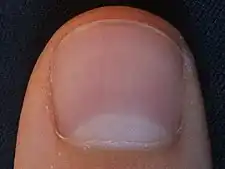
- fingernail, toenail, the thin, horny plate at the ends of fingers and toes
- claw, a curved, pointed nail on each digit of the foot of a mammal or bird
- hoof, the tip of a toe of an ungulate, such as a horse, ox or deer
- Synonym: طویناق (toynak)
- guillemet, either of the punctuation marks « or », used to indicate passages of speech
Derived terms
- طرناق اوتی (tırnak otu, “mouse-ear hawkweed”)
- طرناق سوكمك (tırnak sökmek, “to draw a nail with pincers”)
- طرناق كسمك (tırnak kesmek, “to cut the nails”)
- طرناق یری (tırnak yeri, “weak point”)
- طرناقلامق (tırnaklamak, “to wound with the nails or claws”)
- طرناقلو (tırnaklı, “provided with nails, claws or hoofs”)
Descendants
- Turkish: tırnak
- → Armenian: թըռնախ (tʻəṙnax)
Further reading
- Çağbayır, Yaşar (2007) “tırnak”, in Ötüken Türkçe Sözlük (in Turkish), volume 1, Istanbul: Ötüken Neşriyat, page 4815
- Kélékian, Diran (1911) “طرناق”, in Dictionnaire turc-français, Constantinople: Mihran, page 804
- Meninski, Franciszek à Mesgnien (1687) “Unguis”, in Complementum thesauri linguarum orientalium, seu onomasticum latino-turcico-arabico-persicum, simul idem index verborum lexici turcico-arabico-persici, quod latinâ, germanicâ, aliarumque linguarum adjectâ nomenclatione nuper in lucem editum, Vienna, column 1782
- Meninski, Franciszek à Mesgnien (1680) “طرنق”, in Thesaurus linguarum orientalium, Turcicae, Arabicae, Persicae, praecipuas earum opes à Turcis peculiariter usurpatas continens, nimirum Lexicon Turkico-Arabico-Persicum, Vienna, column 3102
- Nişanyan, Sevan (2002–) “tırnak”, in Nişanyan Sözlük
- Redhouse, James W. (1890) “طرناق”, in A Turkish and English Lexicon, Constantinople: A. H. Boyajian, page 1238
This article is issued from Wiktionary. The text is licensed under Creative Commons - Attribution - Sharealike. Additional terms may apply for the media files.