糹
See also: 纟
| ||||||||
| ||||||||
Translingual
| Stroke order | |||
|---|---|---|---|
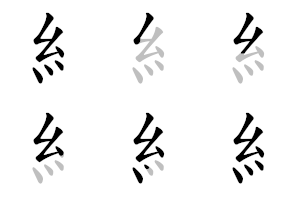 | |||
Alternative forms
Han character
糹 (Kangxi radical 120, 糸+0, 6 strokes, cangjie input 女戈火 (VIF) or 難女戈火 (XVIF), composition ⿱幺⿲丿丶丶(G) or ⿱幺⿲丶丶丶(HT))
- Kangxi radical #120, ⽷.
Derived characters
- Appendix:Chinese radical/糸
Related characters
References
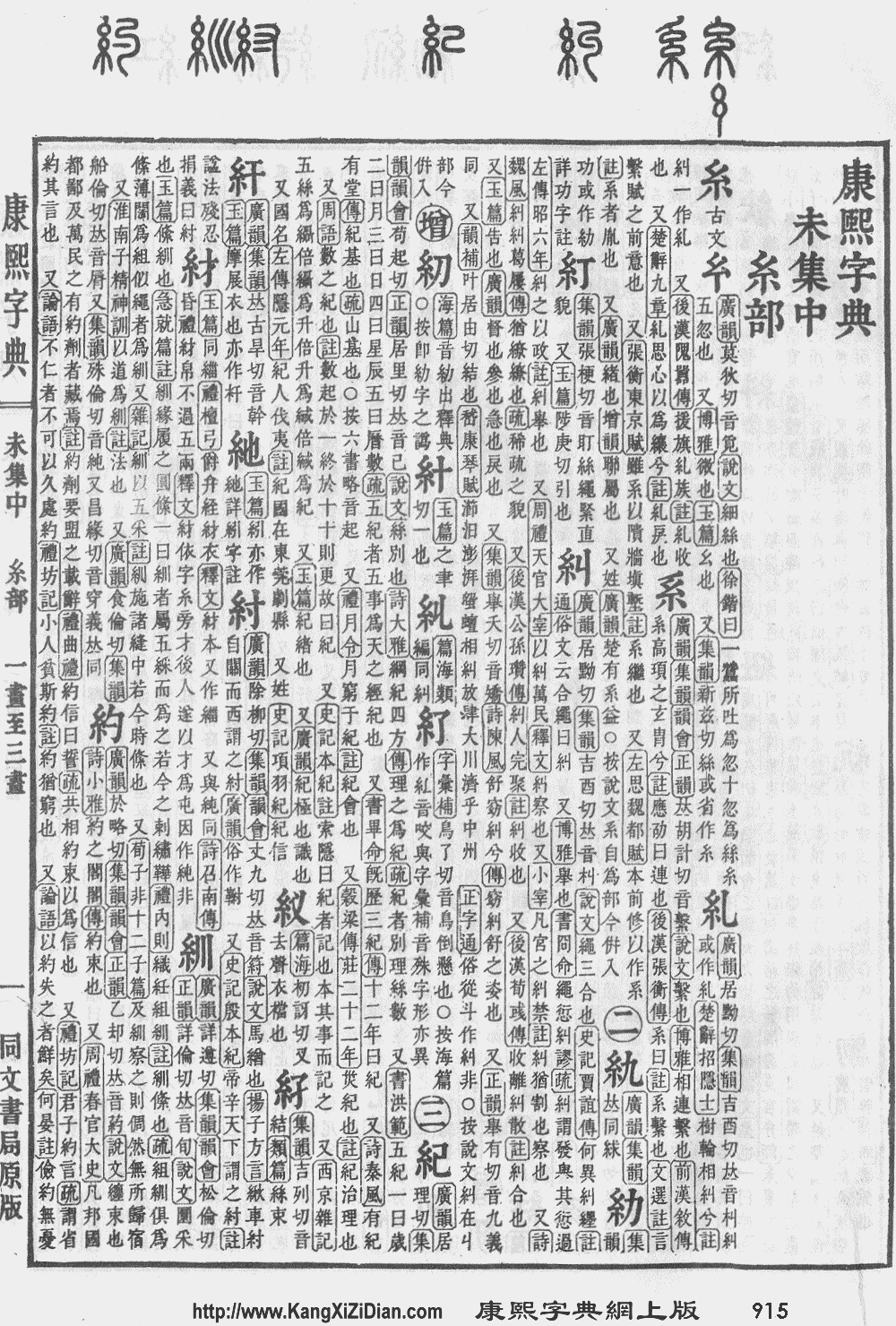
- Kangxi Dictionary: not present, would follow page 915, character 1
- Hanyu Da Zidian (first edition): not present, would follow volume 5, page 3361, character 1
- Unihan data for U+7CF9
Chinese
| trad. | 糹 | |
|---|---|---|
| simp. | 纟 | |
Pronunciation
Usage notes
This character is only used as a component in traditional Chinese characters and is not used on its own.
Vietnamese
Han character
糹: Hán Nôm readings: mịch, miên
- This term needs a translation to English. Please help out and add a translation, then remove the text
{{rfdef}}.
References
This article is issued from Wiktionary. The text is licensed under Creative Commons - Attribution - Sharealike. Additional terms may apply for the media files.