䍃
| ||||||||
Translingual
Han character
䍃 (Kangxi radical 121, 缶+4, 10 strokes, cangjie input 月人十山 (BOJU), composition ⿱爫缶(G) or ⿱𱼀缶(TJ))
Derived characters
- 谣, 摇, 遥, 滛, 瑶, 謡, 鳐, 飖, 鹞 (Based on mainland China character form containing ⿱爫缶) and 搖, 遙, 瑤, 謠 (Based on Taiwan or Japanese character forms) - Characters are unique and not unified
- 傜, 嗂, 媱, 徭, 愮, 暚, 榣, 熎, 猺, 䁘, 磘, 䌊, 䠛, 鎐, 䬙, 鰩, 繇, 颻, 鷂, 䔄, 窰 (Characters may contain China/Taiwan/Japanese component depending on font used)
References
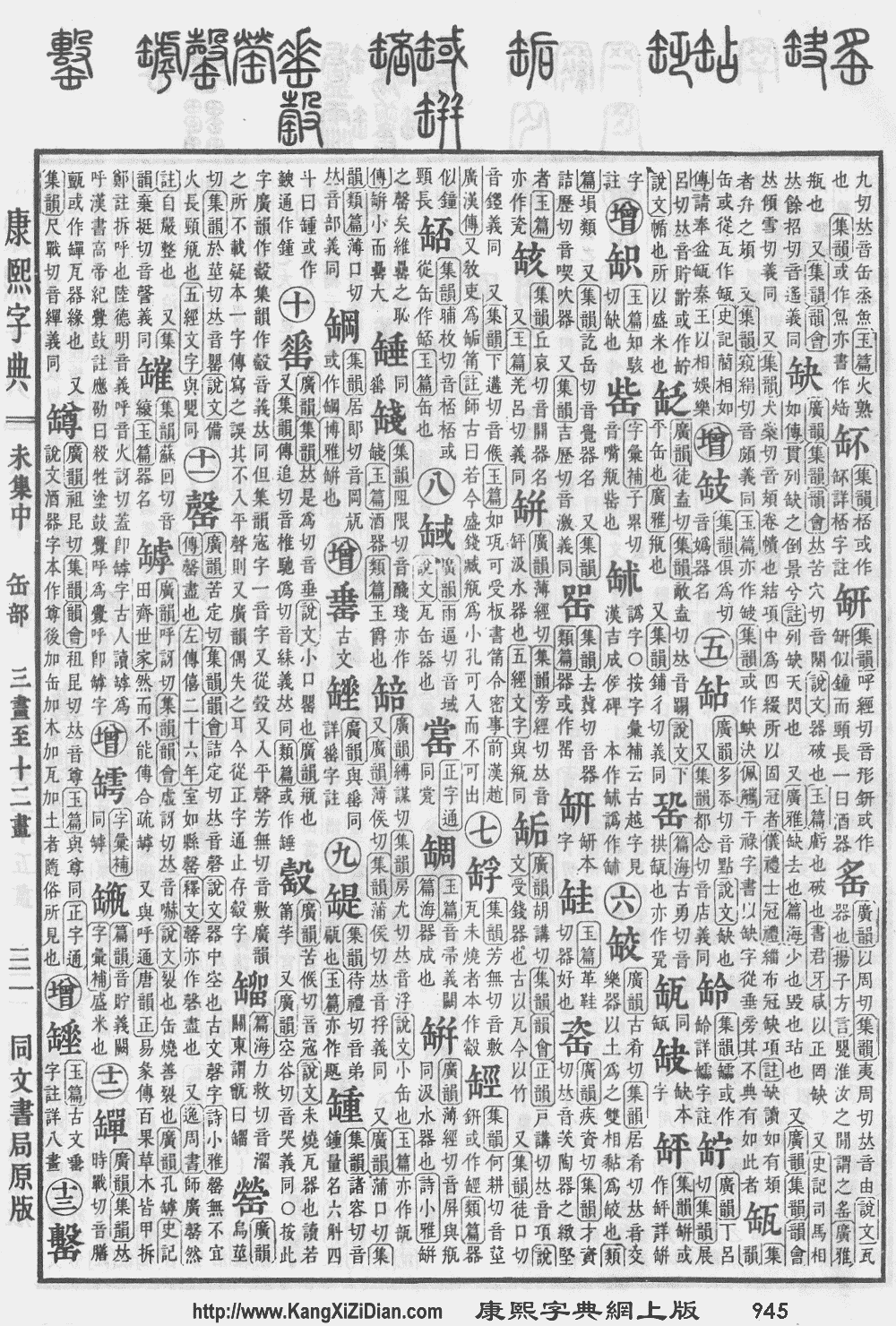
- Kangxi Dictionary: page 945, character 3
- Hanyu Da Zidian (first edition): volume 5, page 2936, character 1
- Unihan data for U+4343
Chinese
| trad. | 䍃 | |
|---|---|---|
| simp. # | 䍃 | |
Glyph origin
According to Shuowen, a phono-semantic compound (形聲/形声) : phonetic 肉 (OC *njuɡ) + semantic 缶.
Pronunciation
Japanese
Kanji
䍃
- This term needs a translation to English. Please help out and add a translation, then remove the text
{{rfdef}}.
Korean
This article is issued from Wiktionary. The text is licensed under Creative Commons - Attribution - Sharealike. Additional terms may apply for the media files.