伣
See also: 俔
| ||||||||
Translingual
Han character
伣 (Kangxi radical 9, 人+4, 6 strokes, cangjie input 人月竹山 (OBHU) or 難人月竹山 (XOBHU), four-corner 27212, composition ⿰亻见)
References
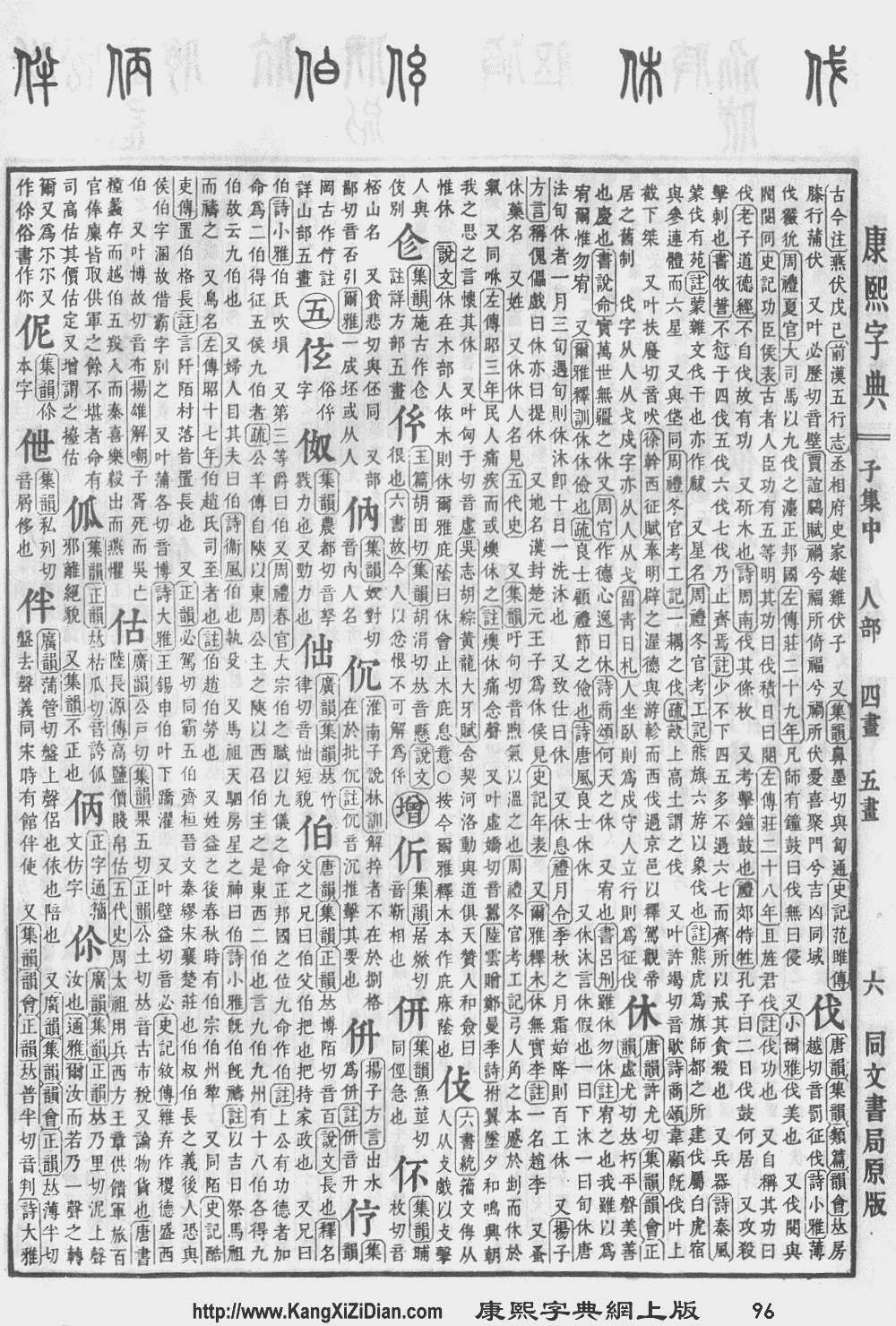
- Kangxi Dictionary: not present, would follow page 96, character 12
- Hanyu Da Zidian (first edition): not present, would follow volume 1, page 122, character 1
- Unihan data for U+4F23
Chinese
Glyph origin
Etymology 1
| For pronunciation and definitions of 伣 – see 俔 (“like, as”). (This character is the simplified form of 俔). |
Notes:
|
Etymology 2
| For pronunciation and definitions of 伣 – see 健 (“strong; robust; vigorous; healthy; in good health; etc.”). (This character is the second-round simplified form of 健). |
Notes:
|
This article is issued from Wiktionary. The text is licensed under Creative Commons - Attribution - Sharealike. Additional terms may apply for the media files.