叶
See also: 葉
| ||||||||
Translingual
Han character
叶 (Kangxi radical 30, 口+2, 5 strokes, cangjie input 口十 (RJ), composition ⿰口十)
Derived characters
- 𭈍
References
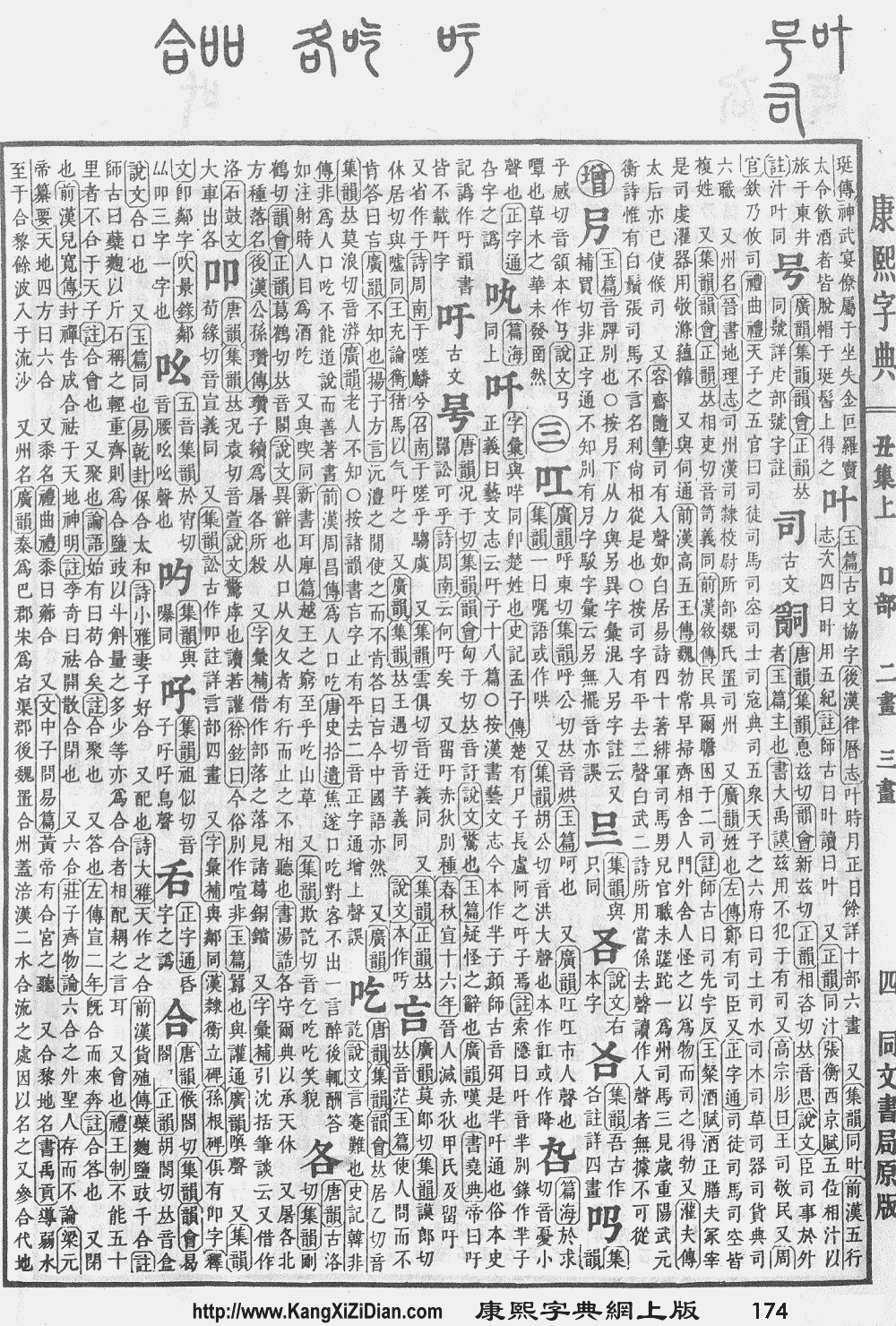
- Kangxi Dictionary: page 174, character 1
- Dai Kanwa Jiten: character 3255
- Dae Jaweon: page 385, character 6
- Hanyu Da Zidian (first edition): volume 1, page 568, character 2
- Unihan data for U+53F6
Chinese
Glyph origin
Characters in the same phonetic series (劦) (Zhengzhang, 2003)
Ideogrammic compound (會意/会意) : 口 (“mouth”) + 十 (“ten”) – many voices in harmony. 十 (OC *ɡjub) may also act as a phonetic component. It is an ancient variant form of 協 (OC *ɦleːb) used since antiquity.
It was later borrowed for 葉/叶 because 協/协 (xié) and 葉/叶 are homophones in some varieties of Northern Wu. This usage was made official in Simplified Chinese.
Etymology 1
| For pronunciation and definitions of 叶 – see 協 (“to cooperate; to work together; to collaborate; to assist; to help; etc.”). (This character is an ancient variant form of 協). |
Compounds
- 叶吉
- 叶韻 (xiéyùn)
- 夢蘭叶吉/梦兰叶吉
- 潭祉叶吉
Etymology 2
| For pronunciation and definitions of 叶 – see 葉 (“leaf; petal; era; epoch; etc.”). (This character is the simplified and variant form of 葉). |
Notes:
|
Japanese
Korean
Hanja
叶 • (hyeop) (hangeul 협, McCune–Reischauer hyŏp)
- This term needs a translation to English. Please help out and add a translation, then remove the text
{{rfdef}}.
This article is issued from Wiktionary. The text is licensed under Creative Commons - Attribution - Sharealike. Additional terms may apply for the media files.