囲炉裏
Japanese
| Kanji in this term | ||
|---|---|---|
| 囲 | 炉 | 裏 |
| い Grade: 5 (ateji) |
ろ Grade: S (ateji) |
り Grade: 6 (ateji) |
| kan’on | on’yomi | |
| Alternative spellings |
|---|
| 圍爐裏 (kyūjitai) 居炉裏 |
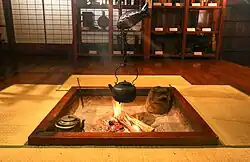
囲炉裏 (irori): traditional sunken hearth inside a house at the outskirts of Aizuwakamatsu, Fukushima
Noun
- a traditional sunken hearth or fireplace cut in the middle of a floor
- 1954, Satoshi Kubota (lyrics and music), “Kāsan no uta [Song of the mother]”:
- ふるさとの便りはとどく いろりをにおいがした
- furusato no tayori wa todoku irori o nioi ga shita
- I received [a letter] from my hometown; it smelled of the hearth.
- ふるさとの便りはとどく いろりをにおいがした
Derived terms
- 囲炉裏端 (iroribata)
- 庭囲炉裏 (niwairori)
See also
 囲炉裏 on the Japanese Wikipedia.Wikipedia ja
- Irori on Wikipedia.Wikipedia
References
- Matsumura, Akira, editor (2006), 大辞林 [Daijirin] (in Japanese), Third edition, Tōkyō: Sanseidō, →ISBN
This article is issued from Wiktionary. The text is licensed under Creative Commons - Attribution - Sharealike. Additional terms may apply for the media files.