塾
| ||||||||
Translingual
| Stroke order | |||
 | |||
Han character
塾 (Kangxi radical 32, 土+11, 14 strokes, cangjie input 卜戈土 (YIG), four-corner 05104, composition ⿱孰土)
Derived characters
- 𨷙
Related characters
References
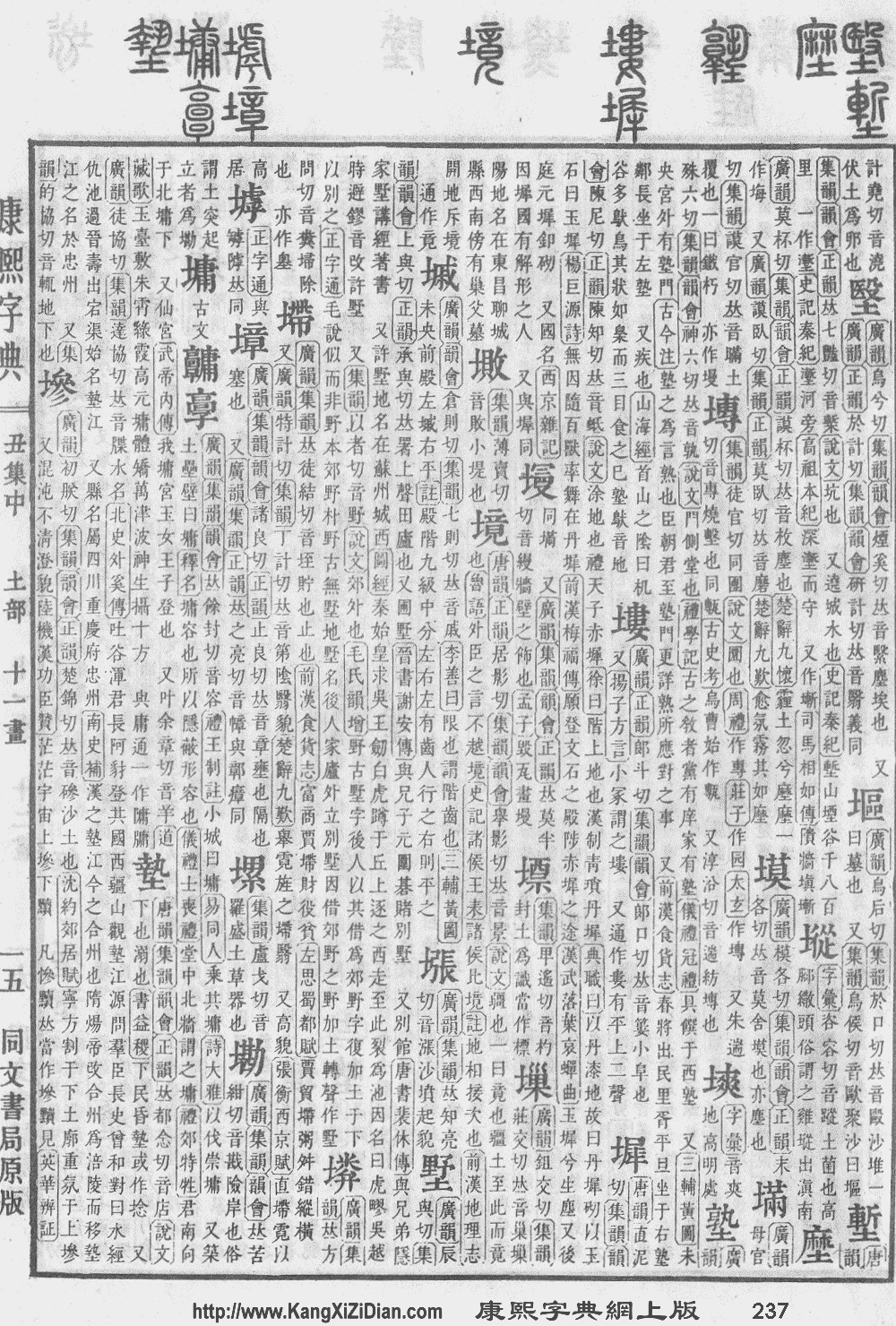
- Kangxi Dictionary: page 237, character 10
- Dai Kanwa Jiten: character 5402
- Dae Jaweon: page 475, character 17
- Hanyu Da Zidian (first edition): volume 1, page 481, character 10
- Unihan data for U+587E
Chinese
| simp. and trad. |
塾 | |
|---|---|---|
Glyph origin
| Historical forms of the character 塾 | |
|---|---|
| Shuowen Jiezi (compiled in Han) | Liushutong (compiled in Ming) |
| Small seal script | Transcribed ancient scripts |
 |
 |
Characters in the same phonetic series (孰) (Zhengzhang, 2003)
Phono-semantic compound (形聲/形声, OC *djɯwɢ) : phonetic 孰 (OC *djɯwɢ) + semantic 土 (“soil”).
Pronunciation
Japanese
Noun
塾 • (juku)
- a cram school
- Synonym: 学習塾 (gakushū juku)
- 2006 November 17, Seimaru Amagi with Sato, Fumiya, “獄門塾殺人事件1 [The Prison Gate Cram School Murder Case #1]”, in 獄門塾殺人事件(上) [The Prison Gate Cram School Murder Case (First Book)] (金田一少年の事件簿) (fiction), Tokyo: Kodansha, →ISBN:
- ところで草太君の通ってるこの塾——ホント名前どおりのコワソーな塾ね!
- Tokoro de Sōta-kun no kayotteru kono juku—— honto namae dōri no kowasō na juku ne!
- By the way Sōta, this cram school you’re studying at, it seems as hellish as its name suggests!
- Ā!“Gokumon-juku” daro? Honto wa gakumon o kiwameru tte iu imi no “Gokumon” rashii n da kedo anmari Suparuta na n de kotchi no “Gokumon”tte kage de wa iwareteru n da!
- Oh! You mean “Gokumon Cram School”? “Gokumon” actually means something like ‘studying a field deeply’, but people just go with “Gokumon” as in ‘prison gate’ because of its harsh conditions!
- Ya da! Kowai!
- No way! That’s spooky!
- ところで草太君の通ってるこの塾——ホント名前どおりのコワソーな塾ね!
Korean
Etymology
From Middle Chinese 塾 (MC dzyuwk). Recorded as Middle Korean 슉〮 (syúk) (Yale: syuk) in Hunmong Jahoe (訓蒙字會 / 훈몽자회), 1527.
Compounds
Compounds
- 서숙 (書塾, seosuk)
- 사숙 (私塾, sasuk)
- 숙당 (塾堂, sukdang)
Vietnamese
Han character
塾: Hán Nôm readings: thục
- This term needs a translation to English. Please help out and add a translation, then remove the text
{{rfdef}}.
This article is issued from Wiktionary. The text is licensed under Creative Commons - Attribution - Sharealike. Additional terms may apply for the media files.