岀
See also: 出
| ||||||||
Translingual
Han character
岀 (Kangxi radical 46, 山+3, 6 strokes, cangjie input 山山 (UU) or 難難難山山 (XXXUU), four-corner 22772, composition ⿱山山)
Derived characters
- 𣻮, 𡖕
Related characters
- 出 (Orthodox form)
References
- Kangxi Dictionary: not present, would follow page 307, character 27
- Dae Jaweon: page 607, character 23
- Hanyu Da Zidian (first edition): volume 1, page 761, character 10
- Unihan data for U+5C80
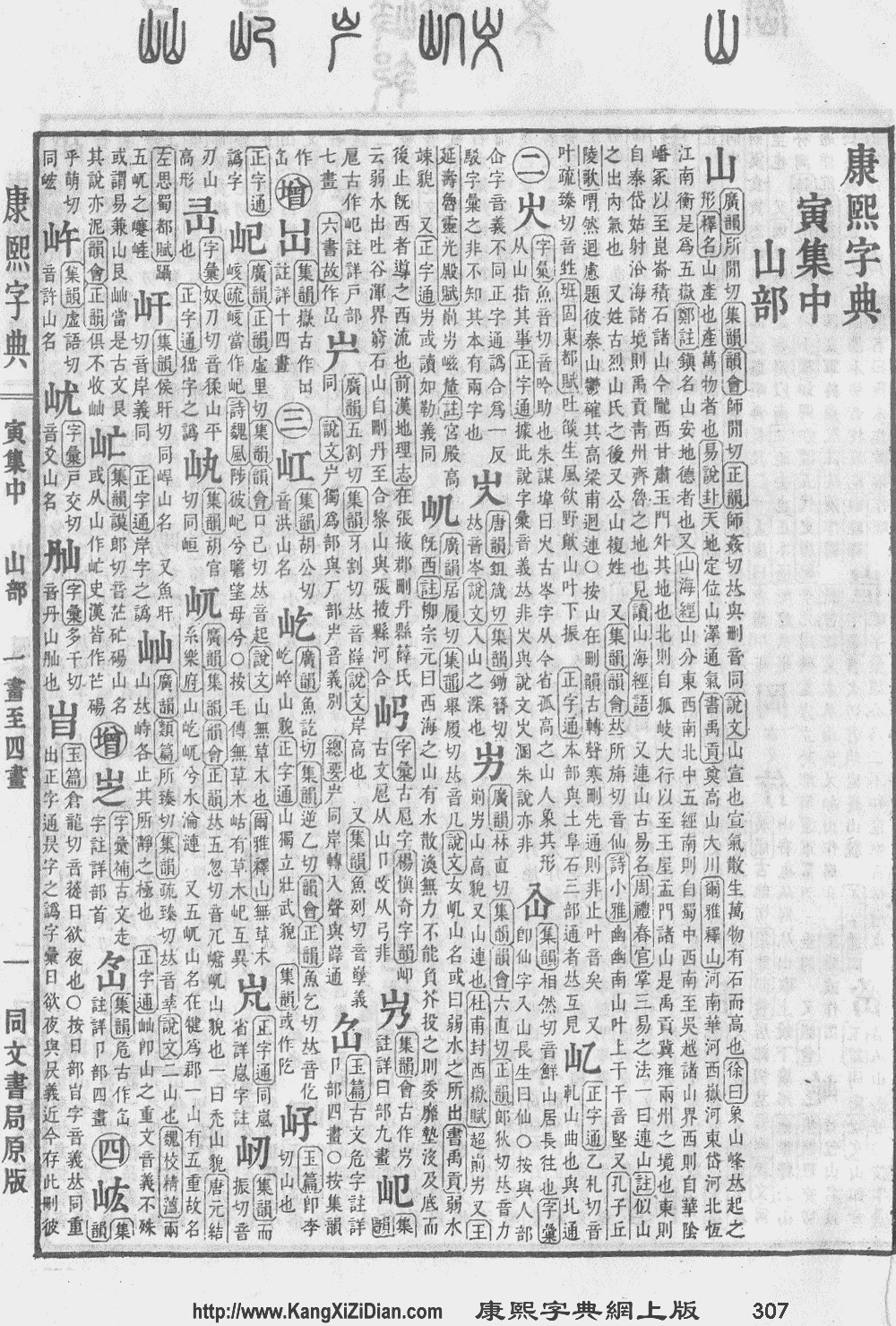
Usage notes
This character is not to be confused with 出 (U+51FA) that is written with only five strokes.
Chinese
Glyph origin
Duplication of 山 on top of one another, originally found in the historical Qing dynasty Zhengzitong dictionary (正字通 (Zhèngzìtōng)).
Japanese
Korean
This article is issued from Wiktionary. The text is licensed under Creative Commons - Attribution - Sharealike. Additional terms may apply for the media files.