彝
| ||||||||
Translingual
Han character
彝 (Kangxi radical 58, 彐+15, 18 strokes, cangjie input 女一火火廿 (VMFFT), four-corner 27449, composition ⿳彑⿰米糸廾)
Derived characters
- 𬯧
References
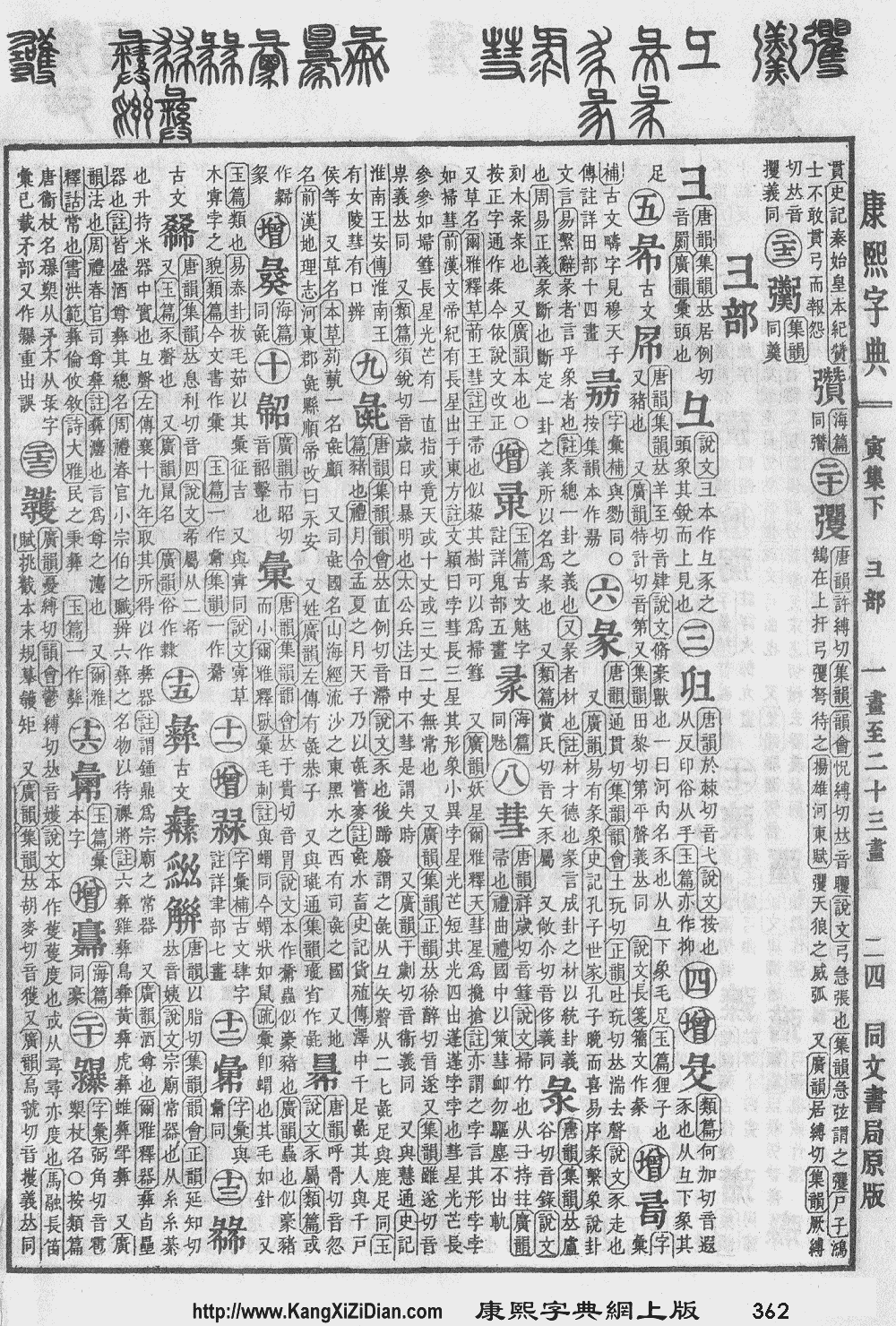
- Kangxi Dictionary: page 362, character 26
- Dai Kanwa Jiten: character 9950
- Hanyu Da Zidian (first edition): volume 2, page 962, character 18
- Unihan data for U+5F5D
Chinese
| For pronunciation and definitions of 彝 – see 彞 (“ritual vessel in ancestral halls; wine vessel; etc.”). (This character is the simplified and variant traditional form of 彞). |
Notes:
|
Japanese
Noun
彝 • (i)
References
- Matsumura, Akira, editor (2006), 大辞林 [Daijirin] (in Japanese), Third edition, Tōkyō: Sanseidō, →ISBN
Korean
Hanja
彝 (eum 이 (i))
- This term needs a translation to English. Please help out and add a translation, then remove the text
{{rfdef}}.
Vietnamese
Han character
- This term needs a translation to English. Please help out and add a translation, then remove the text
{{rfdef}}.
References
This article is issued from Wiktionary. The text is licensed under Creative Commons - Attribution - Sharealike. Additional terms may apply for the media files.