椙
| ||||||||
Translingual
Han character
椙 (Kangxi radical 75, 木+8, 12 strokes, cangjie input 木日日 (DAA), composition ⿰木昌)
References
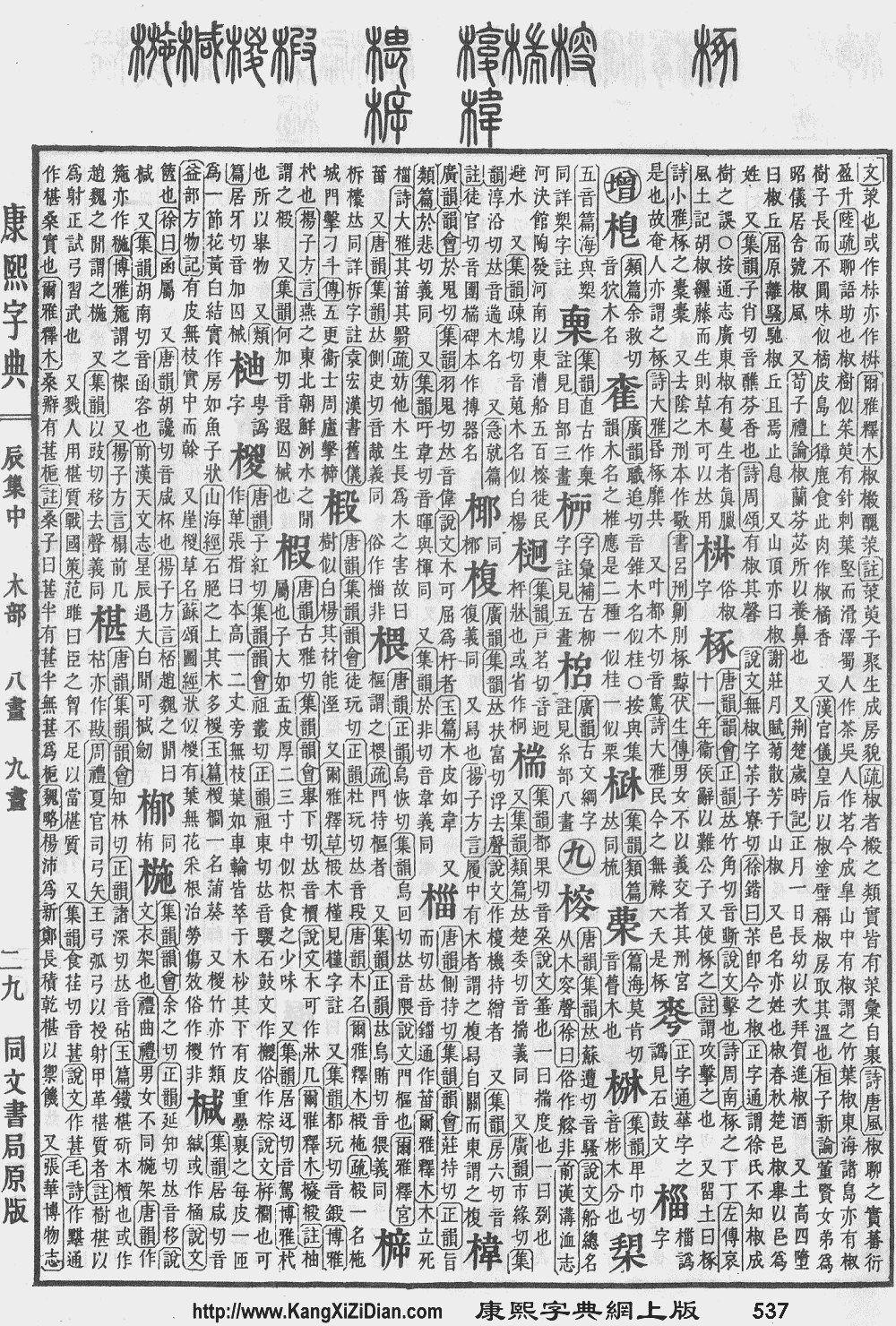
- Kangxi Dictionary: not present, would follow page 537, character 13
- Dai Kanwa Jiten: character 15063
- Dae Jaweon: page 924, character 16
- Hanyu Da Zidian (first edition): not present, would follow volume 2, page 1232, character 4
- Unihan data for U+6919
Japanese
Glyph origin
A 国字 (kokuji, “Japanese-coined character”).
Ideogrammic compound (會意/会意) : semantic 木 (“tree”) + semantic 昌 (“prosperous”).
Etymology
| Kanji in this term |
|---|
| 椙 |
| すぎ Hyōgaiji |
| kun’yomi |
| For pronunciation and definitions of 椙 – see the following entry. | ||
| ||
| (This term, 椙, is an alternative spelling of the above term.) |
Korean
Hanja
椙 • (chang) (hangeul 창, revised chang, McCune–Reischauer ch'ang, Yale chang)
- This term needs a translation to English. Please help out and add a translation, then remove the text
{{rfdef}}.
This article is issued from Wiktionary. The text is licensed under Creative Commons - Attribution - Sharealike. Additional terms may apply for the media files.