没
See also: 沒
| ||||||||
Translingual
| Stroke order | |||
|---|---|---|---|
 | |||
| Stroke order | |||
|---|---|---|---|
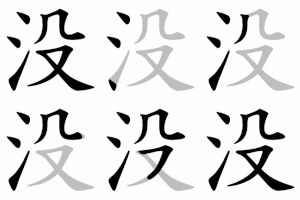 | |||
| Japanese | 没 |
|---|---|
| Simplified | 没 |
| Traditional | 沒 |
Glyph origin
Variant of 沒. Also used in Japanese shinjitai and simplified Chinese.
Han character
没 (Kangxi radical 85, 水+4, 7 strokes, cangjie input 水竹弓水 (EHNE), composition ⿰氵殳)
Related characters
- 沒 (Traditional form of 没)
References
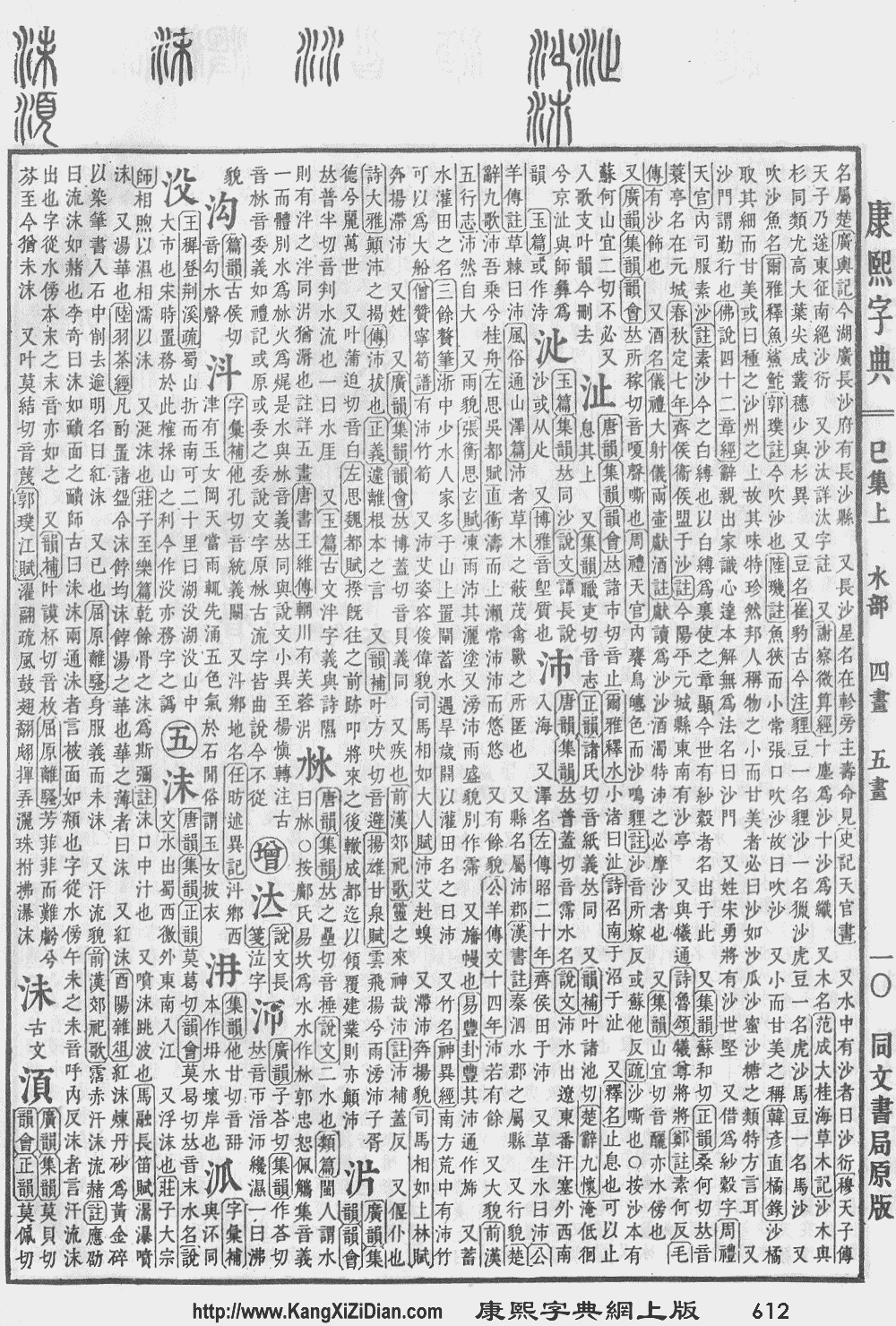
- Kangxi Dictionary: not present, would follow page 612, character 12
- Dai Kanwa Jiten: character 17233
- Dae Jaweon: page 1005, character 15
- Hanyu Da Zidian (first edition): volume 3, page 1570, character 7
- Unihan data for U+6CA1
Chinese
| For pronunciation and definitions of 没 – see 沒 (“not have; there is not; to be without; to be not so ... as; etc.”). (This character is the simplified and variant traditional form of 沒). |
Notes:
|
Japanese
| 没 | |
| 沒 |
See also 没する
Readings
Compounds
Etymology
| Kanji in this term |
|---|
| 没 |
| ぼつ Grade: S |
| on’yomi |
Noun
References
- “没”, in 漢字ぺディア (Kanjipedia) (in Japanese), 日本漢字能力検定協会, 2015–2024
- Matsumura, Akira, editor (2006), 大辞林 [Daijirin] (in Japanese), Third edition, Tōkyō: Sanseidō, →ISBN
Vietnamese
References
This article is issued from Wiktionary. The text is licensed under Creative Commons - Attribution - Sharealike. Additional terms may apply for the media files.