渇
| ||||||||
Translingual
Han character
渇 (Kangxi radical 85, 水+8, 11 strokes, cangjie input 水日心心 (EAPP) or 難水日心心 (XEAPP), composition ⿰氵⿱日匂)
References
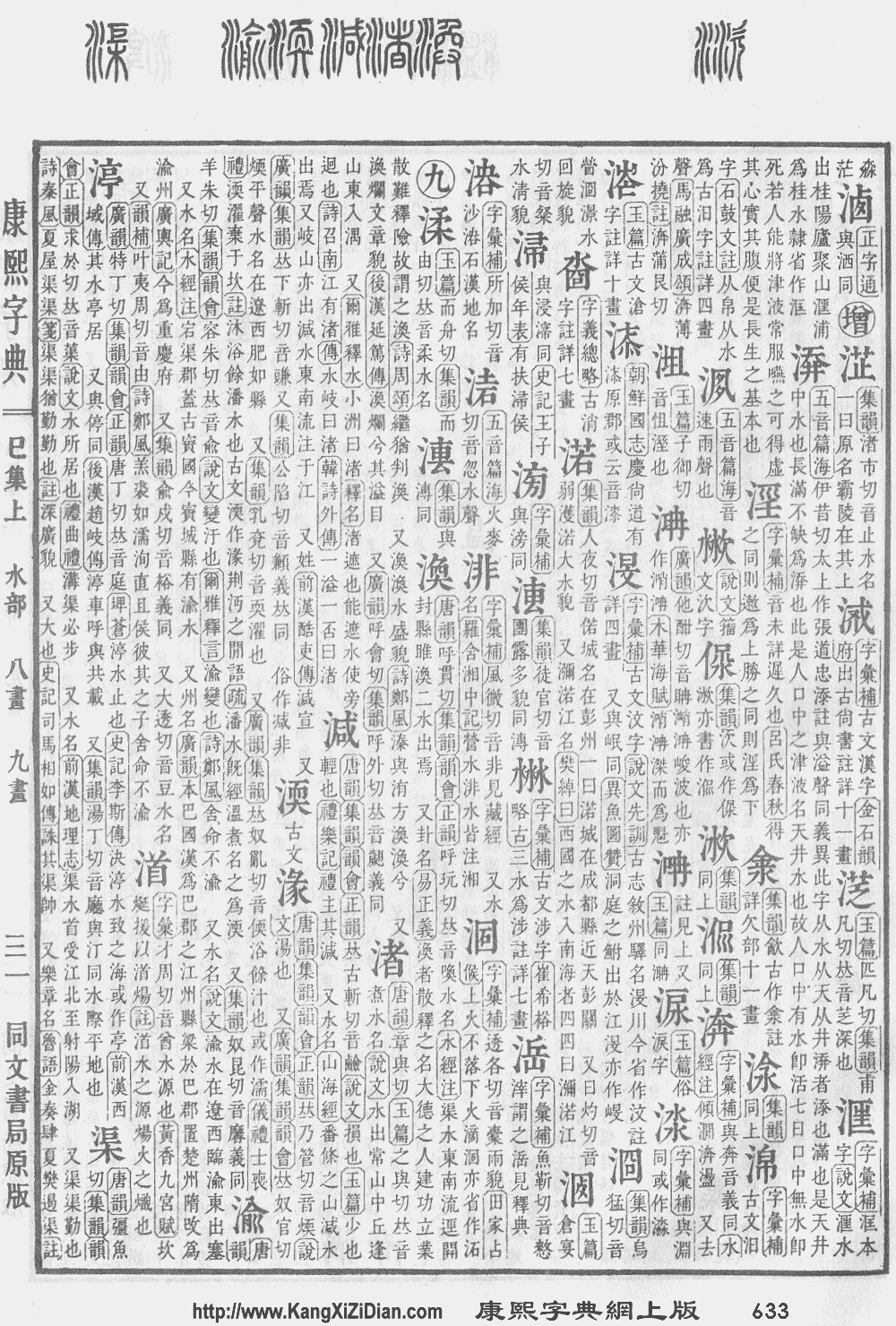
- Kangxi Dictionary: not present, would follow page 633, character 37
- Dai Kanwa Jiten: character 17748
- Hanyu Da Zidian (first edition): volume 8 (in addendum), page 23, character 21
- Unihan data for U+6E07
Chinese
| For pronunciation and definitions of 渇 – see 渴 (“thirsty; tired; etc.”). (This character is a variant form of 渴). |
Japanese
| 渇 | |
| 渴 |
Kanji
渇
(common “Jōyō” kanji, shinjitai kanji, kyūjitai form 渴)
- to dry up, parch, resect
- dryness
- thirst
Pronunciation
- IPA(key): [ka̠t͡sɨᵝ]
Korean
This article is issued from Wiktionary. The text is licensed under Creative Commons - Attribution - Sharealike. Additional terms may apply for the media files.