独
See also: 獨
| ||||||||
Translingual
| Stroke order | |||
|---|---|---|---|
 | |||
| Stroke order | |||
|---|---|---|---|
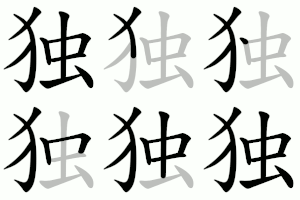 | |||
Han character
独 (Kangxi radical 94, 犬+6, 9 strokes, cangjie input 大竹中一戈 (KHLMI), composition ⿰犭虫)
Derived characters
- 𮋷
References
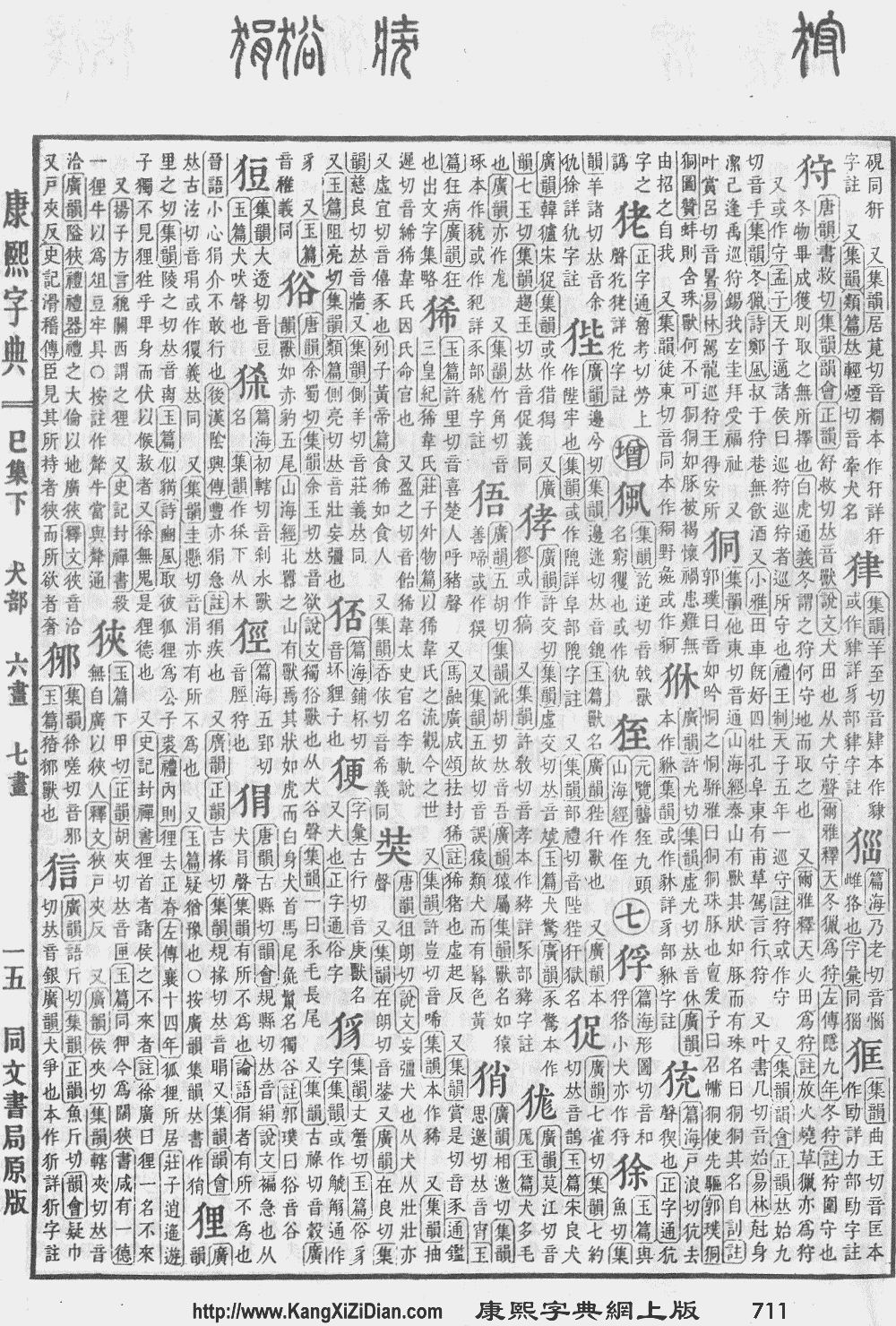
- Kangxi Dictionary: not present, would follow page 711, character 10
- Dai Kanwa Jiten: character 20406
- Dae Jaweon: page 1123, character 9
- Hanyu Da Zidian (first edition): volume 2, page 1344, character 6
- Unihan data for U+72EC
Chinese
| For pronunciation and definitions of 独 – see 獨 (“alone; single; solitary; the old and childless; etc.”). (This character is the simplified form of 獨). |
Notes:
|
Japanese
| 独 | |
| 獨 |
Compounds
Etymology
| Kanji in this term |
|---|
| 独 |
| どく Grade: 5 |
| on’yomi |
| Alternative spelling |
|---|
| 獨 (kyūjitai) |
From Middle Chinese 独.
Pronunciation
- IPA(key): [do̞kɯ̟ᵝ]
Affix
- solitary
- Short for ドイツ/独逸 (Doitsu, “Germany (a country)”).
- 1947, Ango Sakaguchi, 『二十七歳』
- 独探のケンギを受けて、大正五年だかに国外退去を命じられたという。
- Dokutan no kengi o ukete, taishō gonen daka ni kokugai taikyo o meijirareta to iu.
- [He was] accused of being a German spy and was officially deported in some time around 1916, as the story goes.
- 独探のケンギを受けて、大正五年だかに国外退去を命じられたという。
- 1947, Ango Sakaguchi, 『二十七歳』
This article is issued from Wiktionary. The text is licensed under Creative Commons - Attribution - Sharealike. Additional terms may apply for the media files.