脾
| ||||||||
| ||||||||
Translingual
Han character
脾 (Kangxi radical 130, 肉+8, 12 strokes, cangjie input 月竹田十 (BHWJ), four-corner 76240, composition ⿰月卑)
References
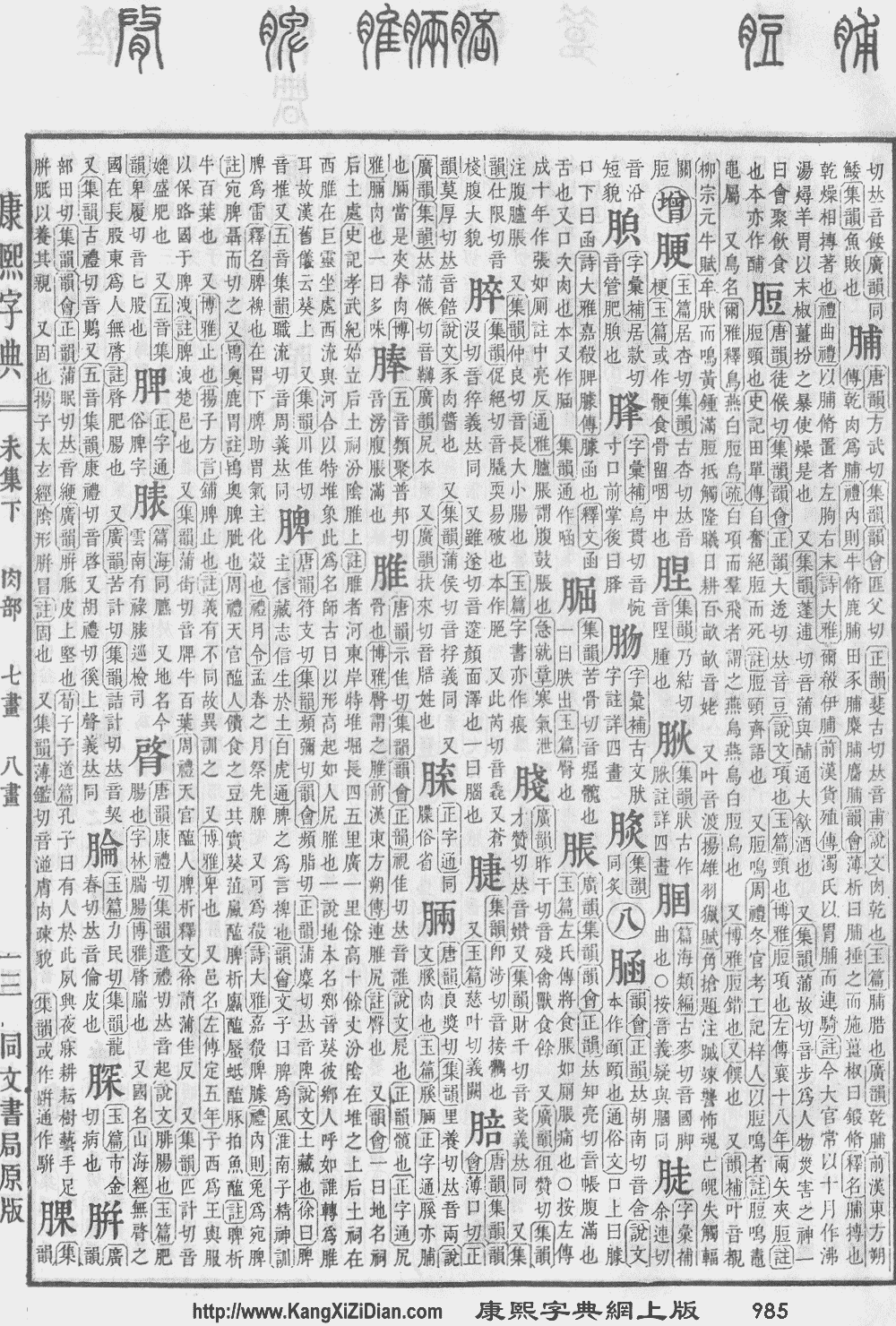
- Kangxi Dictionary: page 985, character 23
- Dai Kanwa Jiten: character 29579
- Dae Jaweon: page 1438, character 19
- Hanyu Da Zidian (first edition): volume 3, page 2089, character 3
- Unihan data for U+813E
- Unihan data for U+2F985
Chinese
| trad. | 脾 | |
|---|---|---|
| simp. # | 脾 | |
Glyph origin
Characters in the same phonetic series (卑) (Zhengzhang, 2003)
| Old Chinese | |
|---|---|
| 捭 | *preːʔ |
| 牌 | *breː, *breː |
| 郫 | *breː, *bre, *be |
| 蠯 | *breː, *be, *breːŋʔ |
| 猈 | *breːʔ, *breː |
| 稗 | *breːs |
| 粺 | *breːs |
| 𥱼 | *breː |
| 豍 | *peː |
| 箄 | *peː, *pe, *peʔ |
| 錍 | *pʰeː, *pe |
| 睥 | *pʰeːs |
| 渒 | *pʰeːs, *pe |
| 鼙 | *beː |
| 鞞 | *beː, *pe, *peʔ, *peːŋʔ |
| 椑 | *beː, *pe, *beɡ, *beːɡ |
| 崥 | *beː, *peʔ |
| 髀 | *beːʔ, *peʔ, *piʔ |
| 卑 | *pe |
| 鵯 | *pe, *pʰiɡ |
| 裨 | *pe, *be |
| 痺 | *pe |
| 碑 | *pre |
| 婢 | *peʔ, *beʔ |
| 諀 | *pʰeʔ |
| 脾 | *be |
| 埤 | *be |
| 陴 | *be |
| 蜱 | *be, *mbew |
| 焷 | *be |
| 螷 | *be, *breːŋʔ |
| 庳 | *beʔ |
| 琕 | *biːŋ |
| 萆 | *beɡ, *slɯʔ |
| 綼 | *biɡ, *peːɡ |
Phono-semantic compound (形聲/形声, OC *be) : semantic ⺼ (“organ”) + phonetic 卑 (OC *pe).
Etymology 1
From Proto-Sino-Tibetan *r-paj (“spleen”) (STEDT).
Pronunciation
Definitions
脾
- (~臟) (traditional Chinese medicine) a functionally defined organ of the digestive system, corresponding largely to the anatomical organ of the pancreas
- (~臟) (Western medicine, anatomy) spleen
- (figurative) disposition; liking; temperament
Compounds
- 不傷脾胃/不伤脾胃
- 使脾氣/使脾气
- 古怪脾氣/古怪脾气
- 噪脾
- 大發脾氣/大发脾气 (dàfā píqì)
- 巢脾
- 巨脾症
- 心脾
- 感人心脾
- 投脾胃
- 暴脾氣/暴脾气
- 沁人心脾 (qìnrénxīnpí)
- 沁入心脾
- 沒脾氣/没脾气 (méi píqi)
- 灰脾氣/灰脾气
- 燥脾
- 牛脾氣/牛脾气 (niúpíqi)
- 犯脾氣/犯脾气 (fàn píqi)
- 痛入心脾
- 痛澈心脾
- 發脾寒/发脾寒
- 發脾氣/发脾气 (fā píqi)
- 硬脾氣/硬脾气
- 耍脾氣/耍脾气 (shuǎ píqi)
- 肝脾
- 脾味
- 脾和
- 脾土 (pî-thó͘) (Min Nan)
- 脾寒
- 脾性 (píxìng)
- 脾憋
- 脾氣/脾气
- 脾氣情性/脾气情性
- 脾火
- 脾癉/脾瘅
- 脾胃 (píwèi)
- 脾腫/脾肿
- 脾臟/脾脏 (pízàng)
- 脾虛/脾虚
- 脾鱉/脾鳖
- 軟調脾/软调脾
- 醒脾
- 長脾氣/长脾气
- 鬧脾氣/闹脾气 (nào píqi)
References
- “脾”, in 漢語多功能字庫 (Multi-function Chinese Character Database), 香港中文大學 (the Chinese University of Hong Kong), 2014–
Japanese
Pronunciation
- IPA(key): [jokoɕi]
Noun
脾 • (yokoshi)
- (anatomy) spleen
- 938, Minamoto no Shitagō, Wamyō Ruijushō, volume 2, page 35:
- 脾 白虎通云 脾 俾移反 與古之 [...] 土之精也 色黄 [...] 土藏也 [...]
- 脾 白虎通云 脾 俾移反 與古之 [...] 土之精也 色黄 [...] 土藏也 [...]
- (please add an English translation of this quotation)
References
- Minamoto, Shitagō with Kyōto Daigaku Bungakubu Kokugogaku Kokubungaku Kenkyūshitu (931–938) Shohon Shūsei Wamyō Ruijushō: Honbunhen (in Japanese), Kyōto: Rinsen, published 1968, →ISBN.
Korean
Etymology
From Middle Chinese 脾 (MC bjie). Recorded as Middle Korean 비 (pi) (Yale: pi) in Hunmong Jahoe (訓蒙字會 / 훈몽자회), 1527.
Vietnamese
This article is issued from Wiktionary. The text is licensed under Creative Commons - Attribution - Sharealike. Additional terms may apply for the media files.