蘁
| ||||||||
Translingual
Han character
蘁 (Kangxi radical 140, 艸+16, 22 strokes in traditional Chinese and Korean, 21 strokes in simplified Chinese and Japanese, cangjie input 廿一土口 (TMGR), four-corner 44106, composition ⿱艹噩)
Further reading
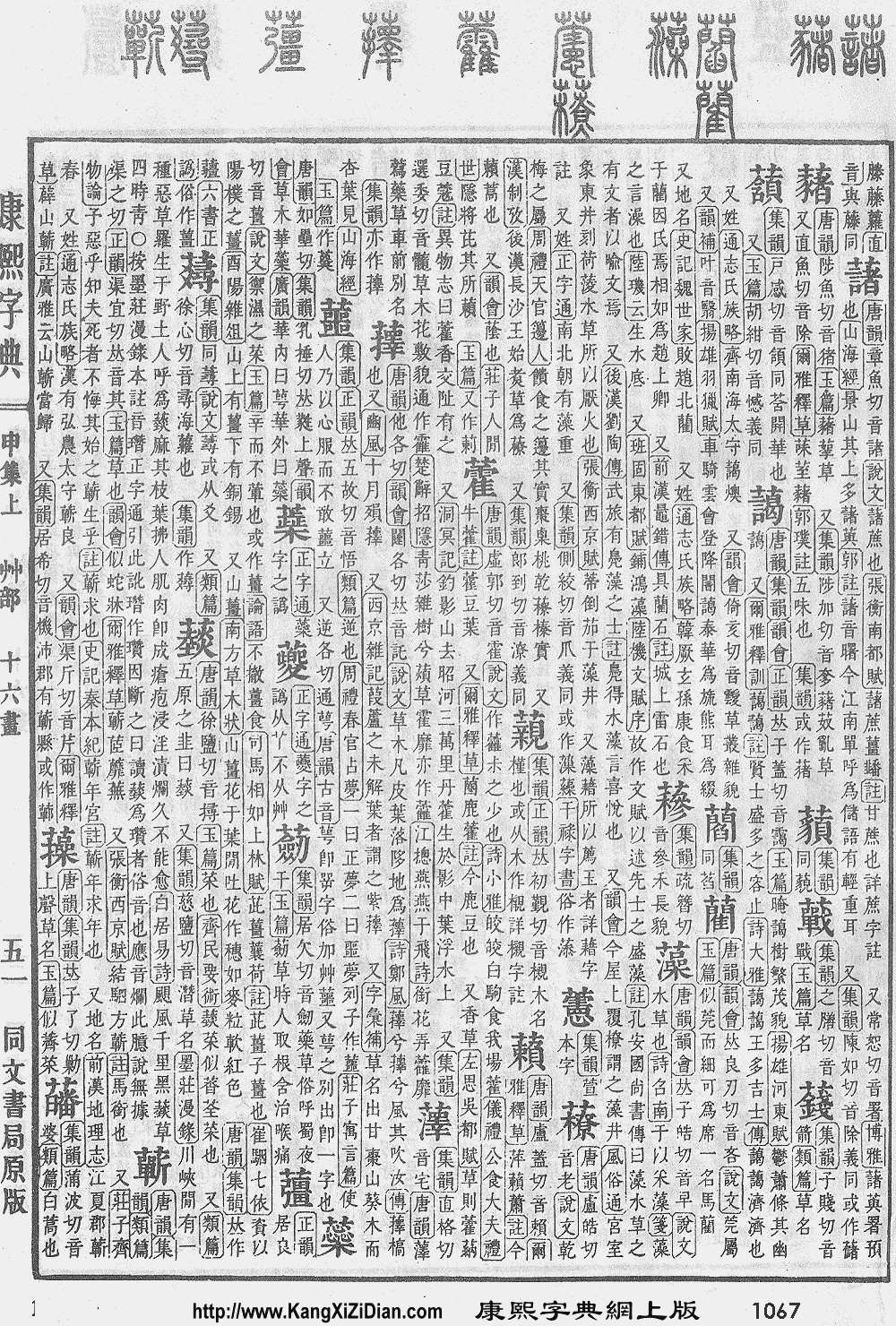
- Kangxi Dictionary: page 1067, character 19
- Dai Kanwa Jiten: character 32409
- Dae Jaweon: page 1533, character 16
- Hanyu Da Zidian (first edition): volume 5, page 3324, character 6
- Unihan data for U+8601
Chinese
| trad. | 蘁 | |
|---|---|---|
| simp. # | 蘁 | |
Glyph origin
Phono-semantic compound (形聲/形声) : semantic 艹 (“grass”) + phonetic 噩 (OC *ŋaːɡ).
Pronunciation
Definitions
蘁
- † to oppose; to disobey
- 使人乃以心服而不敢蘁立,定天下之定。 [Classical Chinese, trad. and simp.]
- From: Zhuangzi, circa 3rd – 2nd centuries BCE, translated based on James Legge's version
- Shǐ rén nǎi yǐ xīn fú ér bùgǎn wù lì, dìng tiānxià zhī dìng. [Pinyin]
- To make men in heart submit, and not dare to stand opposed to him; to establish the fixed law for all under heaven.
Korean
Hanja
蘁 (eumhun 거스를 오 (geoseureul o))
- This term needs a translation to English. Please help out and add a translation, then remove the text
{{rfdef}}.
Hanja
蘁 (eumhun 꽃받침 악 (kkotbatchim ak))
- This term needs a translation to English. Please help out and add a translation, then remove the text
{{rfdef}}.
References
This article is issued from Wiktionary. The text is licensed under Creative Commons - Attribution - Sharealike. Additional terms may apply for the media files.