辷
| ||||||||
Translingual
Han character
辷 (Kangxi radical 162, 辵+1, 5 strokes, cangjie input 難卜一 (XYM) or 卜一 (YM), composition ⿺辶一)
References
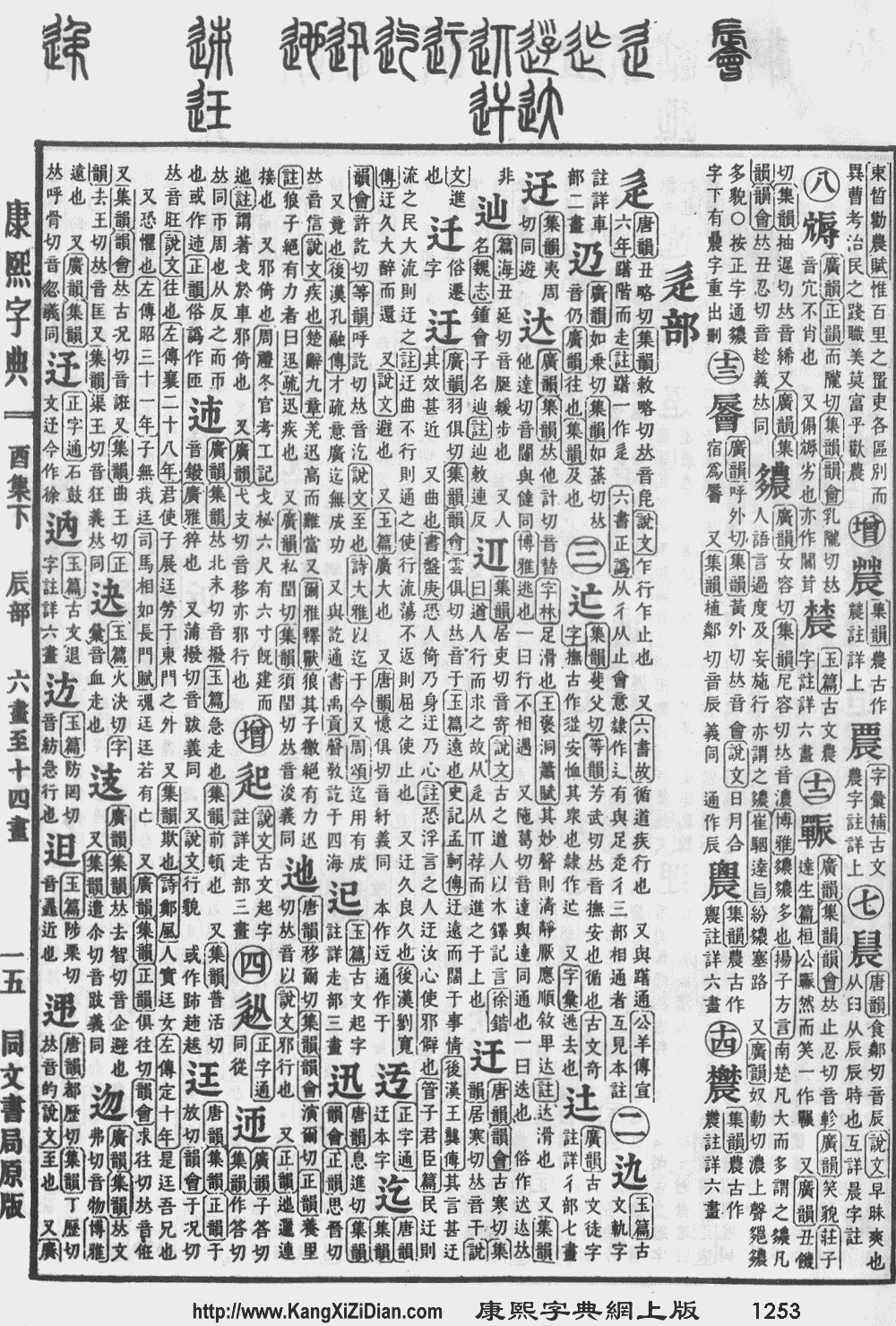
- Kangxi Dictionary: not present, would follow page 1253, character 11
- Dai Kanwa Jiten: character 38703
- Dae Jaweon: page 1735, character 4
- Hanyu Da Zidian (first edition): not present, would follow volume 6, page 3815, character 1
- Unihan data for U+8FB7
Japanese
Glyph origin
A 国字 (kokuji, “Japanese-coined character”). Ideogrammic compound (會意/会意) : 辶 (“to walk”) + 一 (“flat place”).[1]
References
- “辷”, in 漢字ぺディア (Kanjipedia) (in Japanese), 日本漢字能力検定協会, 2015–2024
Korean
Etymology
Orthographic borrowing from Japanese 辷. Spelling pronunciation, following the reading of 一 (il).
Pronunciation
- (SK Standard/Seoul) IPA(key): [iɭ]
- Phonetic hangul: [일]
Hanja
Wikisource 辷 (eumhun 미끄러질 일 (mikkeureojil il))
- This term needs a translation to English. Please help out and add a translation, then remove the text
{{rfdef}}.
References
This article is issued from Wiktionary. The text is licensed under Creative Commons - Attribution - Sharealike. Additional terms may apply for the media files.