靫
| ||||||||
Translingual
Han character
靫 (Kangxi radical 177, 革+3, 12 strokes, cangjie input 廿十水戈 (TJEI), composition ⿰革叉)
- strong and pliable, resilient
References
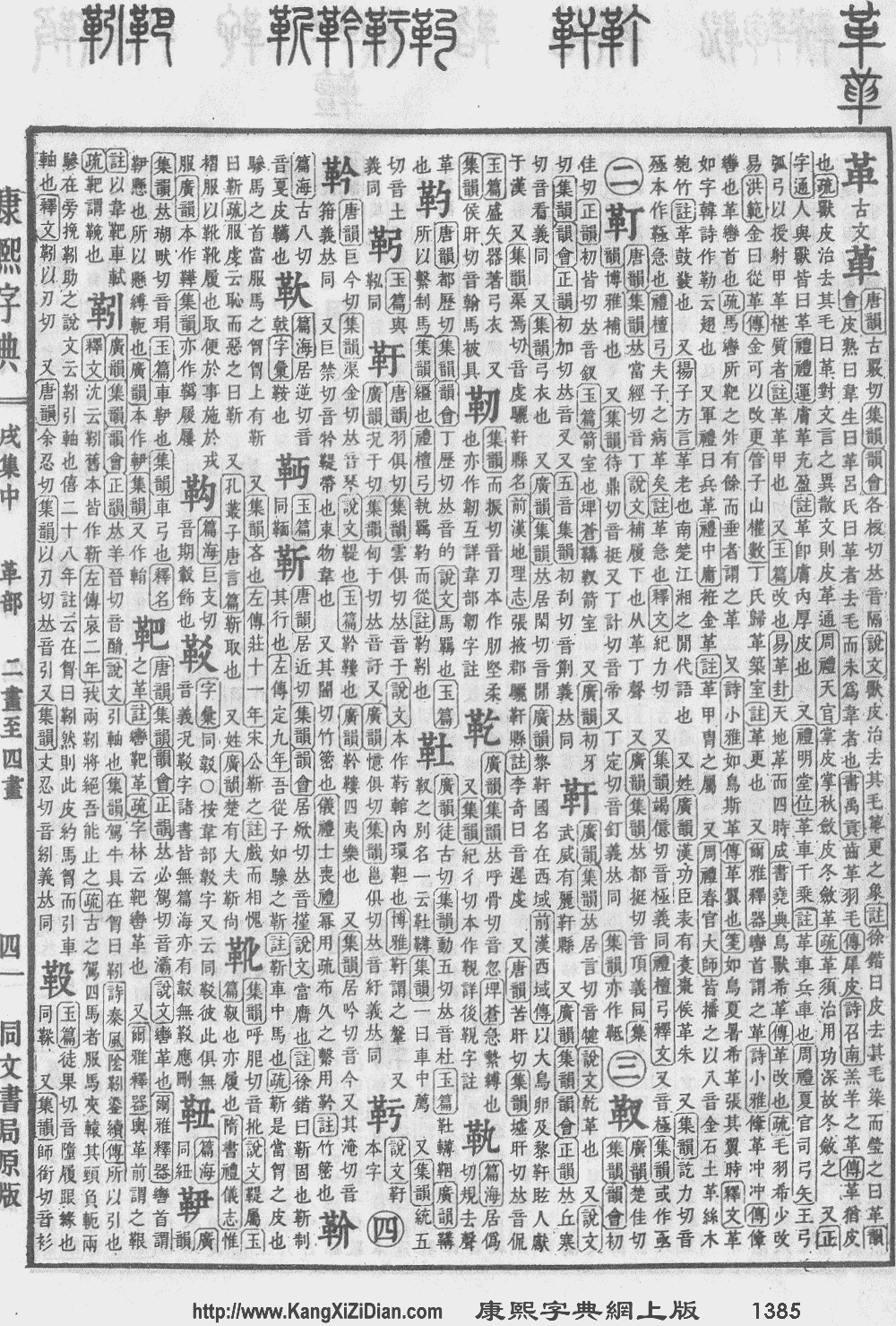
- Kangxi Dictionary: page 1385, character 4
- Dai Kanwa Jiten: character 42713
- Dae Jaweon: page 1899, character 18
- Hanyu Da Zidian (first edition): volume 7, page 4327, character 4
- Unihan data for U+976B
Chinese
| simp. and trad. |
靫 | |
|---|---|---|
Glyph origin
Pronunciation
Definitions
靫
- This term needs a translation to English. Please help out and add a translation, then remove the text
{{rfdef}}.
Japanese
Alternative forms
- 空穂
Kanji
靫
- This term needs a translation to English. Please help out and add a translation, then remove the text
{{rfdef}}.
Readings
Etymology
| Kanji in this term |
|---|
| 靫 |
| うつお Hyōgaiji |
| kun’yomi |
| Kanji in this term |
|---|
| 靫 |
| うつぼ Hyōgaiji |
| kun’yomi |
(This etymology is missing or incomplete. Please add to it, or discuss it at the Etymology scriptorium.)
Noun
靫 • (utsubo) (alternative reading hiragana うつお, rōmaji utsuo, historical hiragana うつほ)
- quiver (arrow container)
References
- Matsumura, Akira, editor (2006), 大辞林 [Daijirin] (in Japanese), Third edition, Tōkyō: Sanseidō, →ISBN
- NHK Broadcasting Culture Research Institute, editor (1998), NHK日本語発音アクセント辞典 [NHK Japanese Pronunciation Accent Dictionary] (in Japanese), Tōkyō: NHK Publishing, →ISBN
- Kindaichi, Kyōsuke et al., editors (1997), 新明解国語辞典 [Shin Meikai Kokugo Jiten] (in Japanese), Fifth edition, Tōkyō: Sanseidō, →ISBN
This article is issued from Wiktionary. The text is licensed under Creative Commons - Attribution - Sharealike. Additional terms may apply for the media files.