鯥
| ||||||||
Translingual
Han character
鯥 (Kangxi radical 195, 魚+8, 19 strokes, cangjie input 弓火土金土 (NFGCG), four-corner 24314, composition ⿰魚坴)
References
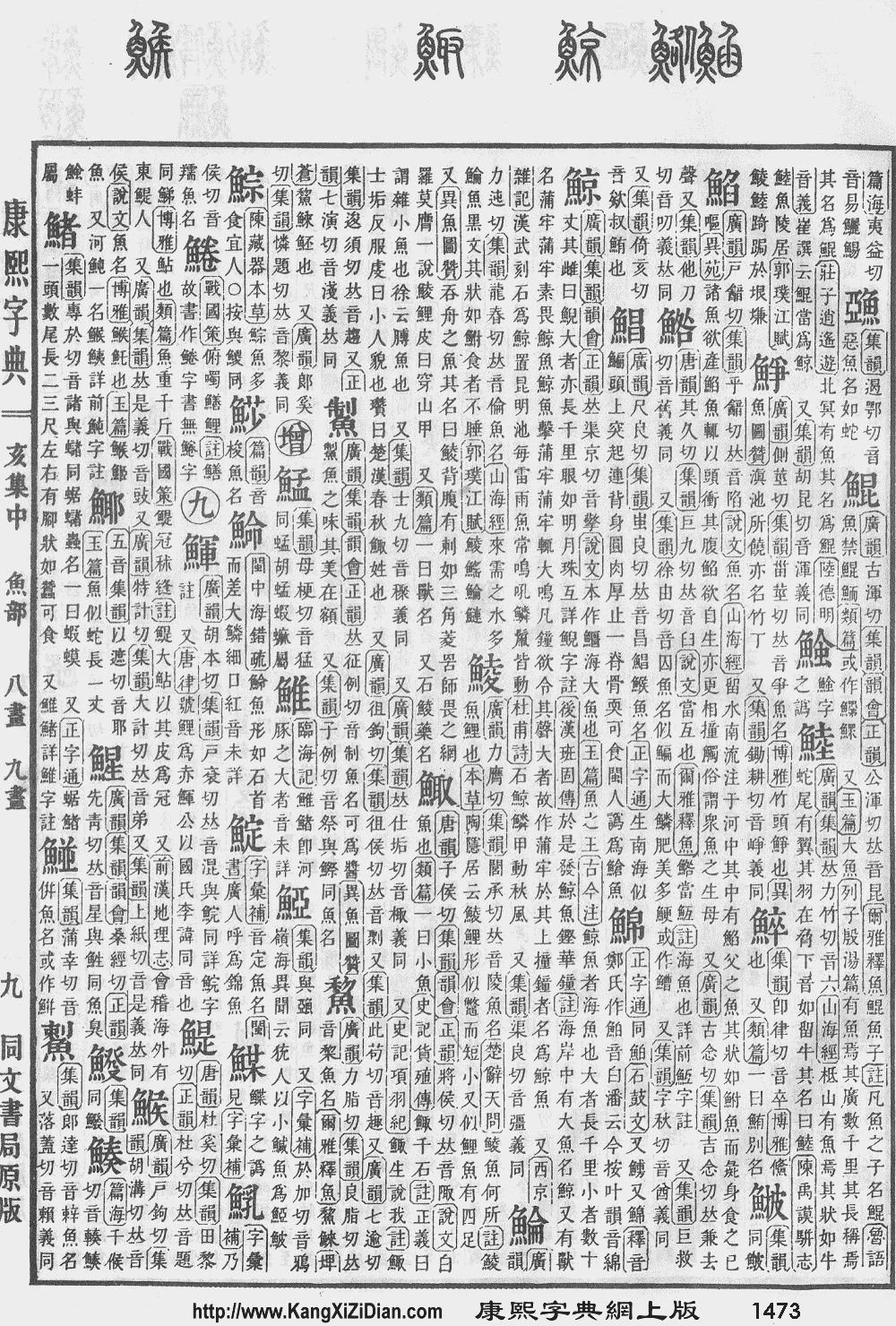
- Kangxi Dictionary: page 1473, character 4
- Dai Kanwa Jiten: character 46249
- Dae Jaweon: page 2005, character 2
- Hanyu Da Zidian (first edition): volume 7, page 4694, character 8
- Unihan data for U+9BE5
Chinese
| trad. | 鯥 | |
|---|---|---|
| simp. | 𱇶 | |
Glyph origin
Pronunciation
Definitions
鯥
- This term needs a translation to English. Please help out and add a translation, then remove the text
{{rfdef}}.
Japanese
Glyph origin
A 国字 (kokuji, “Japanese-coined character”), combining the fish radical 魚 with 陸 (mutsu, “six”) or 睦 (mutsu-, “in good relations”) to represent むつ (mutsu, “gnomefish”).
Etymology
| Kanji in this term |
|---|
| 鯥 |
| むつ Hyōgaiji |
| kun’yomi |
| For pronunciation and definitions of 鯥 – see the following entry. | ||
| ||
| (This term, 鯥, is an alternative spelling of the above term.) |
This article is issued from Wiktionary. The text is licensed under Creative Commons - Attribution - Sharealike. Additional terms may apply for the media files.