麿
| ||||||||
Translingual
Han character
麿 (Kangxi radical 200, 麻+7, 18 strokes, cangjie input 戈木口口 (IDRR), composition ⿸麻吕(G) or ⿸麻呂(HTJK))
References
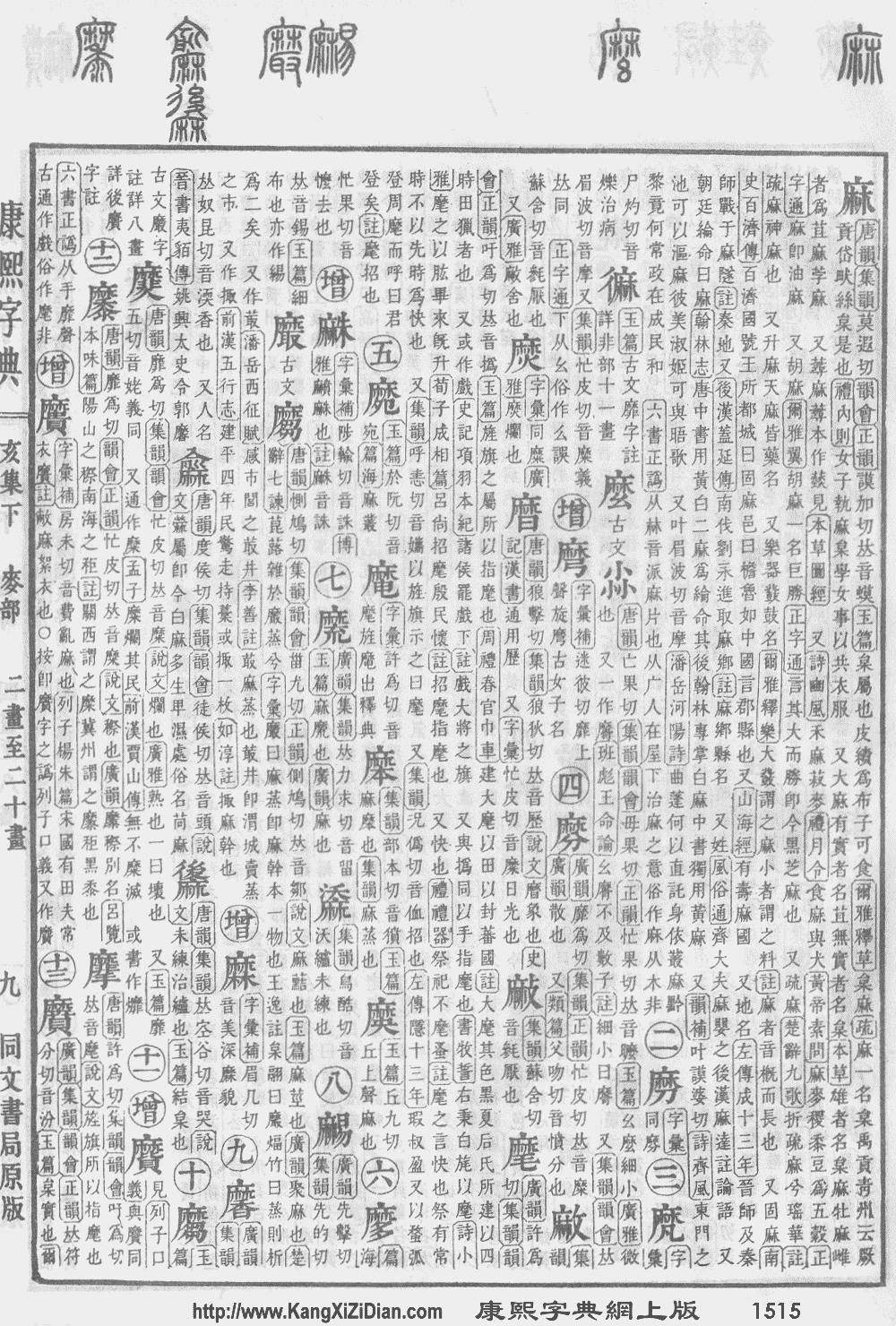
- Kangxi Dictionary: not present, would follow page 1515, character 21
- Dai Kanwa Jiten: character 47909
- Dae Jaweon: page 2045, character 25
- Hanyu Da Zidian (first edition): volume 7, page 4724, character 16
- Unihan data for U+9EBF
Japanese
| Shinjitai | 麿 | |
| Kyūjitai [1] |
麿󠄁 麿+ 󠄁?(Adobe-Japan1) |
 |
| 麿󠄃 麿+ 󠄃?(Hanyo-Denshi) (Moji_Joho) | ||
| The displayed kanji may be different from the image due to your environment. See here for details. | ||
Glyph origin
A 国字 (kokuji, “Japanese-coined character”), from 麻 (ma) + 呂 (ro). Compare 粂 (kume), 杢 (moku).
Etymology
| Kanji in this term |
|---|
| 麿 |
| まろ Jinmeiyō |
| kun’yomi |
| For pronunciation and definitions of 麿 – see the following entry. | ||
| ||
| (This term, 麿, is an alternative spelling of the above term.) |
References
- “麿”, in 漢字ぺディア (Kanjipedia) (in Japanese), 日本漢字能力検定協会, 2015–2024
Korean
Hanja
麿 (eum 마 (ma))
- This term needs a translation to English. Please help out and add a translation, then remove the text
{{rfdef}}.
This article is issued from Wiktionary. The text is licensed under Creative Commons - Attribution - Sharealike. Additional terms may apply for the media files.