齢
See also: 齡
| ||||||||
Translingual
| Traditional | 齡 |
|---|---|
| Shinjitai | 齢 |
| Simplified | 龄 |
Han character
齢 (Kangxi radical 211, 歯+5, 20 strokes in Chinese, 17 strokes in Japanese, cangjie input 難難卜山人 (XXYUO) or 卜山人戈戈 (YUOII), composition ⿰歯令)
References
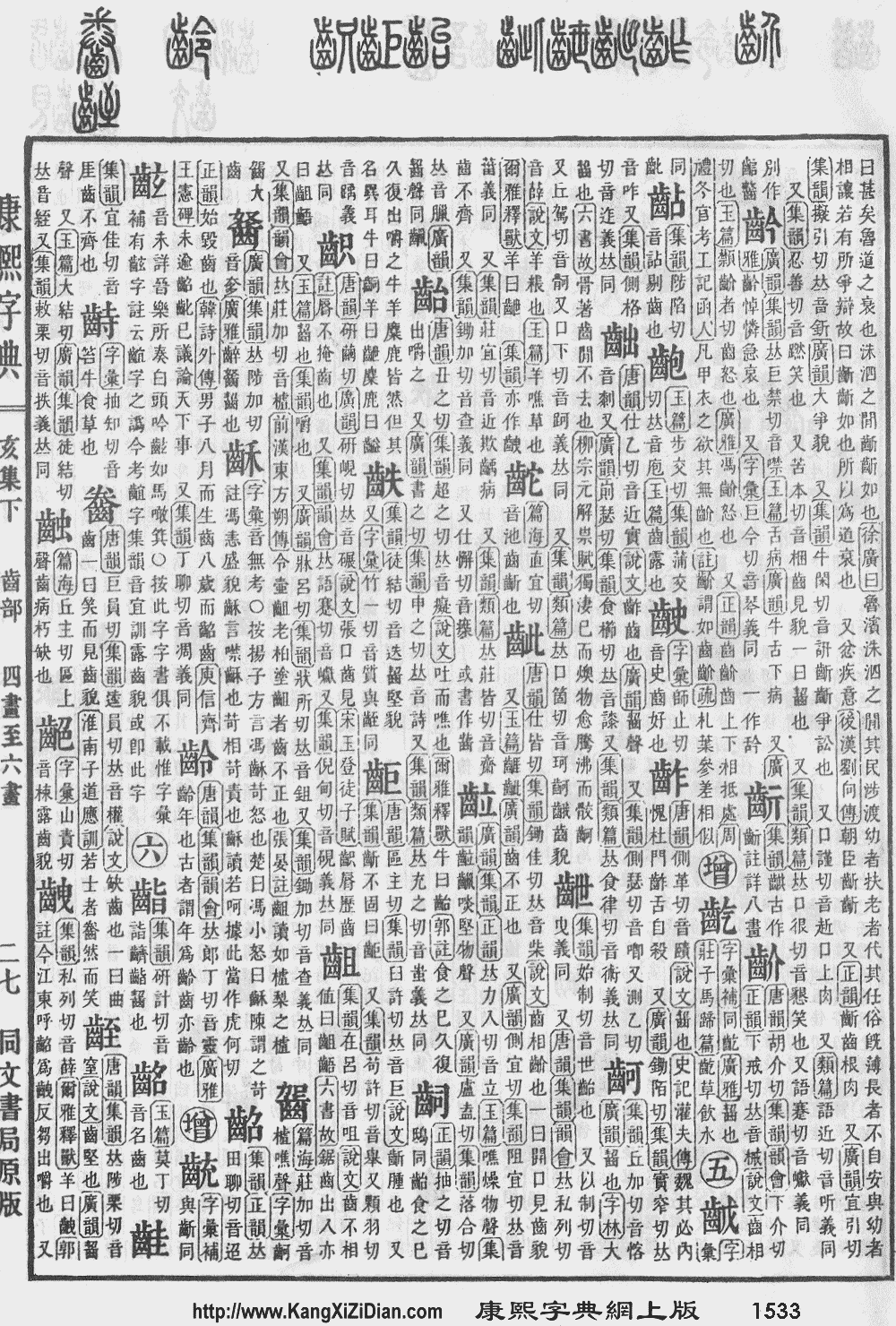
- Kangxi Dictionary: not present, would follow page 1533, character 28
- Dai Kanwa Jiten: character 48632
- Hanyu Da Zidian (first edition): not present, would follow volume 2, page 1446, character 6
- Unihan data for U+9F62
Japanese
| 齢 | |
| 齡 |
Readings
- Go-on: りょう (ryō)←りやう (ryau, historical)
- Kan-on: れい (rei, Jōyō)←れい (rei, historical)
- Kun: よわい (yowai, 齢)←よはひ (yofafi, 齢, historical)
Compounds
- 齢人 (yowaibito)
- 齢草 (yowaigusa)
Etymology 1
| Kanji in this term |
|---|
| 齢 |
| よわい Grade: S |
| kun’yomi |
| Alternative spelling |
|---|
| 齡 (kyūjitai) |
yopapi > yoɸaɸi > yowawi > yowai.
Alternative forms
Pronunciation
References
- Matsumura, Akira, editor (2006), 大辞林 [Daijirin] (in Japanese), Third edition, Tōkyō: Sanseidō, →ISBN
- NHK Broadcasting Culture Research Institute, editor (1998), NHK日本語発音アクセント辞典 [NHK Japanese Pronunciation Accent Dictionary] (in Japanese), Tōkyō: NHK Publishing, →ISBN
This article is issued from Wiktionary. The text is licensed under Creative Commons - Attribution - Sharealike. Additional terms may apply for the media files.