𦬸
| ||||||||
Translingual
Alternative forms
- In traditional Chinese (based on the character form used in Taiwan), the component under the grass radical contains 朮.
- In mainland China (based on the Xin Zixing (新字形) standardized character form), the component under the grass radical contains 术.
Han character
𦬸 (Kangxi radical 140, 艸+5, 9 strokes in traditional Chinese, 8 strokes in mainland China, cangjie input 廿戈木 (TID), composition ⿱艹术(G) or ⿱艹朮(T))
Derived characters
References
- Kangxi Dictionary: page 1024, character 13
- Hanyu Da Zidian (first edition): volume 5, page 3187, character 2
- Unihan data for U+26B38
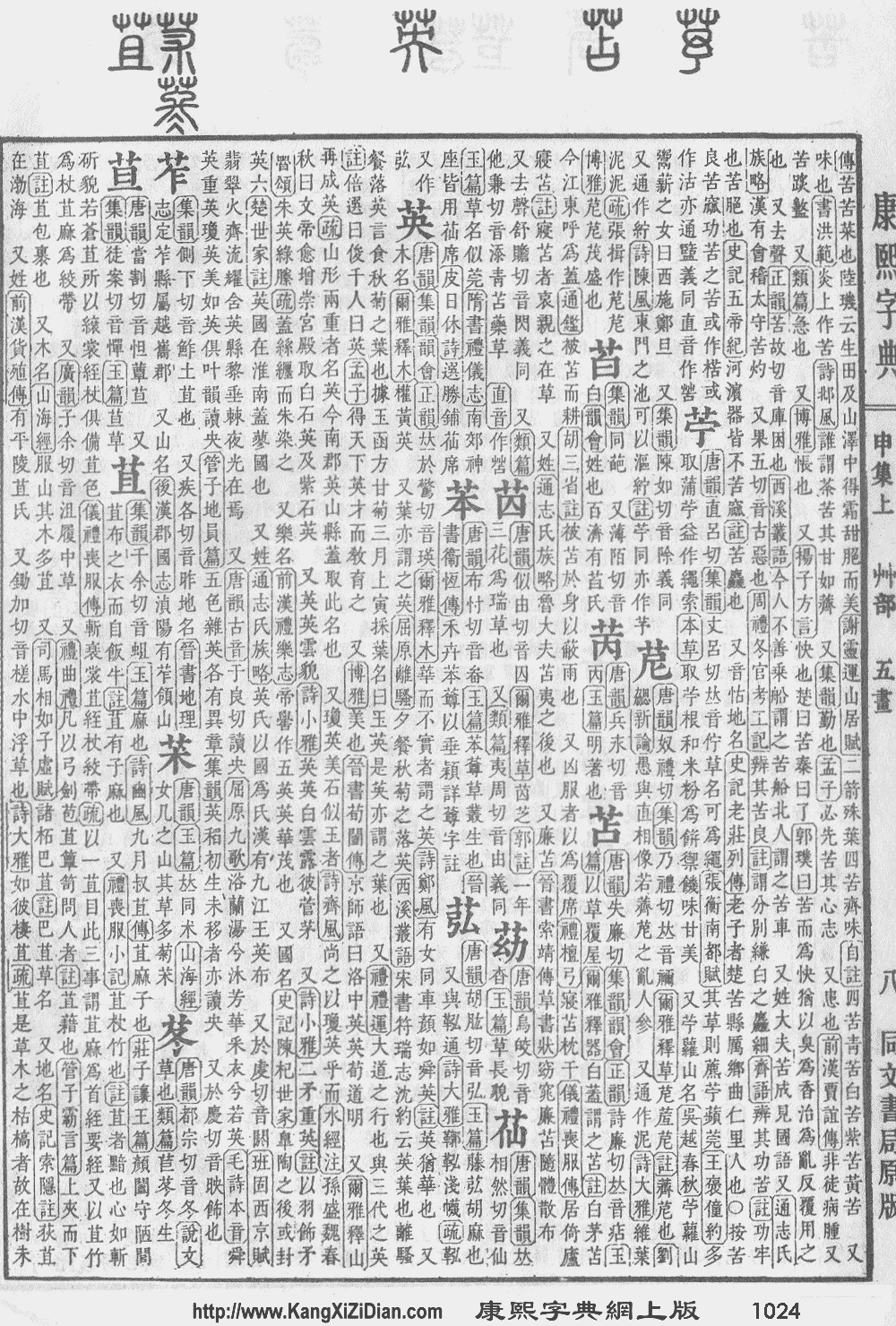
Chinese
Etymology 1
| For pronunciation and definitions of 𦬸 – see 朮 (“glutinous millet; sorghum”). (This character is a variant form of 朮). |
Etymology 2
| For pronunciation and definitions of 𦬸 – see 薯 (“Chinese yam”). (This character is the second-round simplified form of 薯). |
Notes:
|
Etymology 3
| For pronunciation and definitions of 𦬸 – see 蔬 (“vegetables; greens”). (This character is the second-round simplified form of 蔬). |
Notes:
|
This article is issued from Wiktionary. The text is licensed under Creative Commons - Attribution - Sharealike. Additional terms may apply for the media files.