Gemüse
German
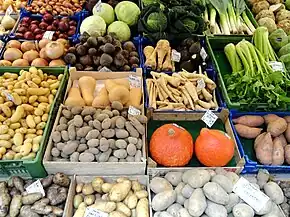
Gemüse
Etymology
From Middle High German gemüese, a derivative of Old High German muos (“food, victuals, porridge”), from Proto-Germanic *mōsą (“porridge, food”), from Proto-Indo-European *meh₂d- (“wet, fat, dripping”). Cognate to Bavarian Gmias, Pennsylvania German Gemies, Luxembourgish Geméis, and possibly English mush.
Pronunciation
- IPA(key): /ɡəˈmyːzə/
audio (Berlin) (file) audio (Austria) (file)
Noun
Gemüse n (strong, genitive Gemüses, plural Gemüse)
- (uncountable, countable) vegetable; vegetables (kinds of plants)
- Iss dein Gemüse! ― Eat your vegetables!
- (uncountable, countable) a seasoned vegetable-based side dish, such as a relish (not necessarily pickled and not usually in the form of a paste)
- Wir essen heute Hähnchenschnitzel mit Zwiebel-Möhren-Gemüse.
- Today we’re having chicken cutlets with an onion and carrot relish.
Declension
Derived terms
- Gemüseabteilung
- Gemüsegeschäft
- Gemüsehändler
- Gemüsehandlung
- Gemüseladen
- Gemüsemarkt
- Gemüsemischung
- junges Gemüse
This article is issued from Wiktionary. The text is licensed under Creative Commons - Attribution - Sharealike. Additional terms may apply for the media files.