< Reconstruction:Proto-Sino-Tibetan < (s
Reconstruction:Proto-Sino-Tibetan/(s/z)a-j

Proto-Sino-Tibetan
Etymology
- Proto-Sino-Tibetan: ?
- Proto-Tibeto-Burman: *sa-y ⪤ za-y (Matisoff, STEDT); *z(l)a-y (Matisoff, 2003); *sa (Matisoff, 2003)
The palatal coda is perhaps a diminutive suffix (Matisoff, 1995).
Proto-Tai *zwɯəjᴬ (“sand”), whence Thai ทราย (saai, “sand”), Lao ຊາຍ (sāi, “sand”) and Zhuang saiz (“sand”), is a loan either from Old Chinese 沙 (OC *sraːl, *sraːls, “sand”) or from this Proto-Sino-Tibetan root itself.
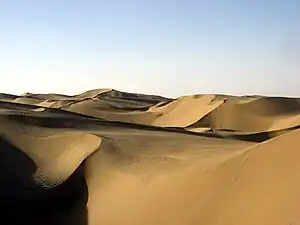
Descendants
- Old Chinese: 沙 /*sˤraj/ (B-S), /*sraːl, sraːls/ (ZS) ("sand")
- Middle Chinese: 沙 sræ (/ʃˠa/) ("sand")
5=saPlease see Module:checkparams for help with this warning.
**:
→ Japanese: 沙 (しゃ, sha)
Korean: 사 (沙, sa)
Vietnamese: sa, xa (沙)
- Tangkhulic
- Tangkhul Naga: si (“sand”)
- Sal
- Jingpho [Kachin]: zai-bru (“sand”)
- Himalayish
- Tibeto-Kanauri
- Bodic
- Tibetan
- Written: ས (sa, “sand, earth, ground”)
- Tibetan
- Bodic
- Tibeto-Kanauri
- Tangut-Qiang
- Lolo-Burmese-Naxi
- Lolo-Burmese:
- *say² ("sand")
- Burmish
- Written: သဲ (sai:, “sand”)
- Loloish
- Central Loloish
- Lahu: šɛ̂ (“sand”)
- Central Loloish
- Lolo-Burmese:
- Proto-Kuki-Chin:
- Khomic
- Khumi Chin: sä-i
- Khomic
Notes
-
- Sofronov, Mikhail Viktorovich (1968) Грамматика тангутского языка [Grammatika tangutskovo jazyka, Grammar of the Tangut Language] (in Russian), character 4161
See also
- *ts(j)a (“earth, ground”)
- *r-ka (“earth, ground, soil”)
- *m-lej ~ m-ləj (“earth, ground, mud; country”)
This article is issued from Wiktionary. The text is licensed under Creative Commons - Attribution - Sharealike. Additional terms may apply for the media files.