aukla
See also: auklā
Latvian
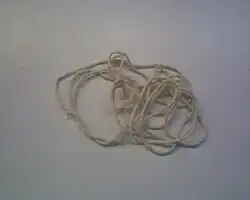
Aukla
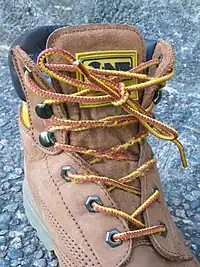
Kurpju auklas

Makšķeres aukla
Etymology
From the same source as the verb aut “to put on (shoes):” Proto-Baltic *autlā- (with tl > kl), from Proto-Indo-European *ow- “to tie, to bind” with an extra nominalizing suffix *-tlo, used to derive names of tools or weapons relating to the action described by the original stem (i.e., the original meaning of aukla was probably “thing for binding, tying (with)”). Cognates include Lithuanian aũklas “(primitive) shoe laces,” “(primitive) shoes,” aũklė “(primitive) shoe laces,” “rope,” “sock without soles,” Old Prussian auclo ([auklo]) “bridle without bit.”[1]
Pronunciation
- IPA(key): [àwkla]
| (file) |
Noun
aukla f (4th declension)
- string, cord, line, lace (long, usually thin, braiding of vegetable or plastic filaments, used for tying or binding)
- tieva, resna aukla ― thin, thick string, cord
- linu aukla ― flax string
- papīra aukla ― paper string
- kaprona aukla ― nylon string, cord
- kaņepāju aukla ― hemp rope
- pātagas aukla ― whip rope
- kurpju auklas ― shoelaces
- makšķeres aukla ― fishing line
- pārsiet saini ar auklu ― to tie a bundle with a string, rope
- vīt auklu ― to make (lit. twist, wreathe) a string
- sasiet kurpju auklas ― to tie the shoelaces
- es turu ciet maisu un tveru pēc auklas, ar ko aizsiet ― I keep the bag closed and reach for the strings to close it
Declension
Declension of aukla (4th declension)
Synonyms
Related terms
References
- Karulis, Konstantīns (1992) “aukla”, in Latviešu Etimoloģijas Vārdnīca (in Latvian), Rīga: AVOTS, →ISBN
This article is issued from Wiktionary. The text is licensed under Creative Commons - Attribution - Sharealike. Additional terms may apply for the media files.