bjt
See also: BJT
Egyptian
Etymology
Heavily disputed. The final -t is usually considered a separate feminine ending in origin rather than a part of the root, but this is not wholly certain. Etymological hypotheses include:
- Cognate with Beja wíyu.
- From an earlier form *brt, in which case there are a number of mutually exclusive possibilities:
- From an earlier form *blt, cognate with Kulere ʾabyál (“honey”), Mazagway bŏlŏ́m (“honey”), Musey mbulyuma (“honey”), Lele (Chad) bùlò (“hive”).
Several linguists have also proposed an areal connection with Proto-Indo-European *bʰey- (“bee”), noting the existence of a number of parallels between Afroasiatic and Indo-European bee-keeping terminology.
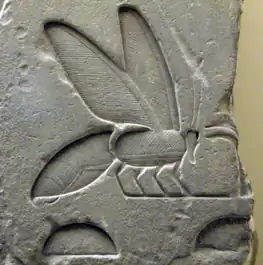
Bee hieroglyph from the tomb complex of Senusret I (d. 1,926 BC)
Pronunciation
- (reconstructed) IPA(key): /biˈjat/ → /biˈjaʔ/ → /bəˈjaʔ/ → /βəˈjaʔ/
- (modern Egyptological) IPA(key): /bit/
- Conventional anglicization: bit


Usage notes
Commonly used as a symbol of Lower Egypt.


References
- Takács, Gábor (2001) Etymological Dictionary of Egyptian, volume 2, Leiden: Brill, →ISBN, pages 107–110, →ISBN
This article is issued from Wiktionary. The text is licensed under Creative Commons - Attribution - Sharealike. Additional terms may apply for the media files.