bruņas
Latvian
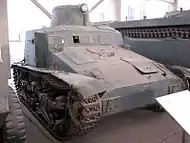
Tanka bruņas (3)
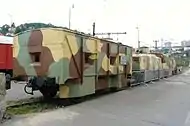
Bruņuvilciens (4)

Bruņurupuča bruņas (2)
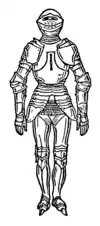
Bruņas (1)
Etymology
Together with its Old Prussian cognate brunyos, an early borrowing either from Gothic 𐌱𐍂𐌿𐌽𐌾𐍉 (brunjō, “breastplate”) or from Old High German brunja (“breastplate”) (compare German Brünne (“coat of mail, mail shirt”)), either directly, or via a Slavic language (compare Old Church Slavonic брънѩ (brŭnję), Russian броня́ (bronjá, “armor, breastplate”)).[1]
Pronunciation
- IPA(key): [bruɲɑs]
Noun
bruņas f (4th declension) (plural only)
- (history) armor (metal suit or cover that protects the body or a part of it during fights)
- tērauda, dzelzs bruņas ― steel, iron armor
- galvas, krūšu, roku bruņas ― head, chest, arm armor
- kaldināt bruņas ― to forge an armor
- uzvilkt bruņas ― to put on an armor
- bruņās tērpts jātnieks ― a knight dressed in armor
- (zoology) protective layer or shell on animals, often made of bone or horn
- kaula bruņas ― bone protective layer
- bruņurupuča bruņas ― turtle shell
- (military) armor (protective layer of metal which covers warships, military equipment, etc.)
- kreisera, tanka bruņas ― cruiser, tank armor
- (usually in genitive) armored, provided with a protective metal layer
- bruņu vilciens, bruņuvilciens ― armored train
- bruņu cepure, bruņucepure ― helmet, hard hat (lit. armored hat)
- bruņu krekls, tērps ― armored shirt, vest
Declension
Declension of bruņas (4th declension)
| singular (vienskaitlis) | plural (daudzskaitlis) | |
|---|---|---|
| nominative (nominatīvs) | — | bruņas |
| accusative (akuzatīvs) | — | bruņas |
| genitive (ģenitīvs) | — | bruņu |
| dative (datīvs) | — | bruņām |
| instrumental (instrumentālis) | — | bruņām |
| locative (lokatīvs) | — | bruņās |
| vocative (vokatīvs) | — | bruņas |
Derived terms
References
- Karulis, Konstantīns (1992) “bruņas”, in Latviešu Etimoloģijas Vārdnīca (in Latvian), Rīga: AVOTS, →ISBN
This article is issued from Wiktionary. The text is licensed under Creative Commons - Attribution - Sharealike. Additional terms may apply for the media files.