gnīda
Latvian
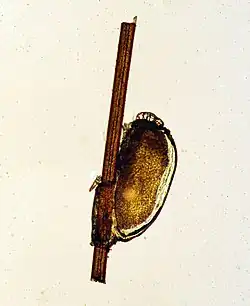
Gnīda (1)
Etymology
From Proto-Balto-Slavic *gnī́ˀdāˀ.[1] Cognates include Lithuanian glìnda (< *gninda), Proto-Slavic *gňida (Russian, Ukrainian, Bulgarian гни́да (gnída), Belarusian гні́да (hnída), Czech hnida, Polish gnida), Old Norse gnit, Swedish gnet, English nit.[2]
Pronunciation
- IPA(key): [ɡnīːda]
| (file) |
Noun
gnīda f or m (4th declension)
- nit (lice eggs)
- gnīdas matos ― nits in the hair
- galvas utis apmetas cilvēka matos; pie matiem tās pielīmē savas oliņas - gnīdas ― head lice settle on human hair; and by that hair they stick their eggs: nits
- vārīja ilgi un teica, ka nu vairs neviena gnīda dzīva nebūšot palikusi ― she boiled (the clothes) for a long time and (then) said that not a single living nit had remained
- (figuratively) (also masculine, dat. gnīdam) nit, maggot (despicable, worthless person)
- tas bijis turpat kaimiņa saimnieks, īsts gnīda ― that had been the neighbor, a true nit (= despicable person)
- “tu mani te nebaidi, gnīda!” tēvocis izkliedza ― “so you're not afraid of me here, you maggot!” (his) uncle shouted
Usage notes
In the sense of "nit", gnīda is always feminine; in the sense of "despicable person", however, it is ambigenous. It is masculine when it refers to males and feminine when it refers to females. It is, however, always declined as a feminine noun, with the exception of its dative singular form, which is gnīdam when it refers to a male and gnīdai when it refers to a female.
Declension
Declension of gnīda (4th declension)
References
- Derksen, Rick (2008) Etymological Dictionary of the Slavic Inherited Lexicon (Leiden Indo-European Etymological Dictionary Series; 4), Leiden, Boston: Brill, →ISBN, →ISSN, page 169
- Karulis, Konstantīns (1992) “gnīda”, in Latviešu Etimoloģijas Vārdnīca (in Latvian), Rīga: AVOTS, →ISBN
This article is issued from Wiktionary. The text is licensed under Creative Commons - Attribution - Sharealike. Additional terms may apply for the media files.