govs
English
Latvian
Etymology
From earlier Latvian *gùovis, from Eastern Proto-Baltic *guowis (an i-stem), from Proto-Balto-Slavic *gaw- ~ *gōw-, from Proto-Indo-European *gʷṓws (“cattle”).
Cognates include Hittite [script needed] (guwau-), Old Armenian կով (kov), Proto-Slavic *govędo (“cattle”) (Russian говя́дина (govjádina, “beef”), dialectal говя́до (govjádo, “cattle, beef, butter”), Belarusian гавя́да (havjáda, “domestic animal”), Bulgarian говедо (govedo, “cow, cattle”), Czech hovado (“cow, cattle”)), Old High German chuo (German Kuh, Dutch koe, English cow, Swedish ko, Icelandic kýr), Proto-Celtic *bow- (Old Irish bó, Irish bó, Scottish Gaelic bò, Middle Welsh bu) Latin bōs, bōvis (“ox, cattle”), dialectal vos (Italian bove, bue, French bœuf, Romanian bou, Spanish buey, Portuguese boi).[1]
Pronunciation
- IPA(key): [ɡùows]
audio (file)
Noun
govs f (6th declension)
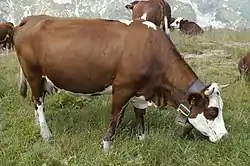
- cattle (bovines in general, syn. liellops)
- govju ferma ― cow farm, cattle ranch
- govju ēdināšana ― the feeding of the cattle
- cow (specifically female)
- piena govs ― milk cow, dairy cow
- slaukt govis ― to milk the cows
- govs stāv ciet, ir ciet ― the cow stands, is closed (= does not give milk, before calving)
Declension
References
- Karulis, Konstantīns (1992) “govs”, in Latviešu Etimoloģijas Vārdnīca (in Latvian), Rīga: AVOTS, →ISBN