grīda
Latvian
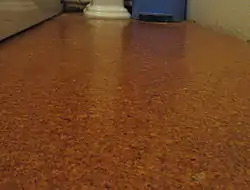
Grīda
Alternative forms
- (archaic) grīds
Etymology
From Proto-Balto-Slavic *grindā́ˀ, from Proto-Indo-European *gʰr̥ndʰ-éh₂, from *gʰrendʰ- (“beam, plank”), from *gʰer- (“to have protuberances, protrusions”). Cognates include Lithuanian grindà (“bridge plank, beam; a covering of planks, beams; earthen floor”), grindìs (“floor plank, (pl.) floor”), Old Prussian grandico (“think plank, beam”) (< *grandikā, diminutive of *grandā), Russian гряда́ (grjadá, “stack; flowerbed; (dialectal) plank cover; shelf; main beam”), Old Norse grind (“grid, lattice”), Old English grindel, Old High German grintil (“ridge, pole”), Latin grunda (“roof”) (< *grondʰeh₂).[1]
Noun
grīda m
- (archaic) genitive singular of grīds
grīda f (4th declension)
- floor, flooring (covering of the lower surface of a room, on which people walk)
- dēļu grīda ― plank floor
- parketa grīda ― inlaid floor
- ķieģeļu grīda ― brick floor
- grīdas dēlis ― floor plank
- likt grīdu ― to lay the floor
- mazgāt grīdu ― to wash the floor'
- kaila grīda ― naked floor (a floor not covered with anything)
- deju grīda ― dance floor
Declension
Declension of grīda (4th declension)
References
- Karulis, Konstantīns (1992) “grīda”, in Latviešu Etimoloģijas Vārdnīca (in Latvian), Rīga: AVOTS, →ISBN
This article is issued from Wiktionary. The text is licensed under Creative Commons - Attribution - Sharealike. Additional terms may apply for the media files.