gurķis
Latvian

Gurķis (1)
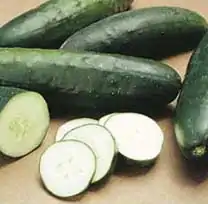
Gurķis (2)
Etymology
Borrowed from Middle Low German augurke (cf. German Gurke); the Germanic term is itself a borrowing from Polish ogórek, originally from Greek άγουρος (ágouros) “unripe, immature”) which replaced an earlier term krievāboli.
First attested in 17th-century dictionaries as augurķis, later agurķe, agurķis, also (already in the 17th century) gurķis, it became gurķis, gurķe in 18th-century literature. In the mid-19th century, only the form gurķis remained.[1]
Pronunciation
- IPA(key): [ɡûɾcis]
| (file) |
Noun
gurķis m (2nd declension)
- cucumber (plant of the family Cucurbitaceae, species Cucumis sativus, often cultivated in gardens for its edible vegetable fruit)
- gurķu dobe ― cucumber bed
- gurķa ziedi ― cucumber flowers
- gurķu sēklas ― cucumber seeds
- gurķu šķirnes ― cucumber varieties
- sēt gurķus ― to sow cucumbers
- laistīt gurķus ― to water the cucumbers
- audzēt gurķus siltumnīcā ― to grow cucumbers in a greenhouse
- cucumber (the edible vegetable fruit of this plant)
- skābēts gurķis ― pickled cucumber
- sālīts gurķis ― salted cucumber
- marinēts gurķis ― marinated cucumber
- gurķu salāti ― cucumber salad
- jūnija beigās pilsētas darbaļaudis varēs iepirkt kāpostus, tomātus, gurķus un citus dārzeņus ― at the end of June, the city workers will be able to buy cabbages, tomatoes, cucumbers and other vegetables
Declension
Declension of gurķis (2nd declension)
References
- Karulis, Konstantīns (1992) “gurķis”, in Latviešu Etimoloģijas Vārdnīca (in Latvian), Rīga: AVOTS, →ISBN
This article is issued from Wiktionary. The text is licensed under Creative Commons - Attribution - Sharealike. Additional terms may apply for the media files.