ierocis
Latvian

Ieroči
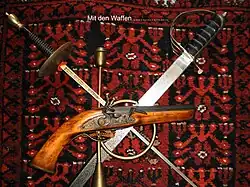
Ieroči
Etymology
Derived from ie- + roka (“hand”) and made into a second-declension masculine noun (ending -is). The original meaning was probably “handle” (“in-hand”), maybe “sword handle” (in some older sourcers, ierocis is given as a synonym of zobens “sword”). In the 18th and 19th centuries, ierocis, like its Lithuanian cognate, could also mean “tool, instrument” (< “something held with one's hand”); its military meaning grew gradually more important, becoming dominant by the end of the 19th century. Cognates include Lithuanian į́rankis (“tool, instrument, weapon”).[1]
Pronunciation
- IPA(key): [ìɛɾuôtsis]
| (file) |
Noun
ierocis m (2nd declension)
- weapon (instrument used to injure, kill, or destroy)
- medību ierocis ― hunting weapon
- šaujamais ierocis, šaujamierocis ― firearm
- eksplozīvie ieroči ― explosive weapons
- aukstie ieroči ― blade (lit. cold) weapons
- masveida iznīcināšanas ieroči ― weapons of mass destruction
- bakterioloģiskie, bioloģiskie, ķīmiskie ieroči ― bacteriological, biological, chemical weapons
Declension
Declension of ierocis (2nd declension)
| singular (vienskaitlis) | plural (daudzskaitlis) | |
|---|---|---|
| nominative (nominatīvs) | ierocis | ieroči |
| accusative (akuzatīvs) | ieroci | ieročus |
| genitive (ģenitīvs) | ieroča | ieroču |
| dative (datīvs) | ierocim | ieročiem |
| instrumental (instrumentālis) | ieroci | ieročiem |
| locative (lokatīvs) | ierocī | ieročos |
| vocative (vokatīvs) | ieroci | ieroči |
Derived terms
References
- Karulis, Konstantīns (1992) “ierocis”, in Latviešu Etimoloģijas Vārdnīca (in Latvian), Rīga: AVOTS, →ISBN
This article is issued from Wiktionary. The text is licensed under Creative Commons - Attribution - Sharealike. Additional terms may apply for the media files.