kukainis
Latvian
| Picture dictionary | ||||||||||
|---|---|---|---|---|---|---|---|---|---|---|
|
| ||||||||||
| ||||||||||
|


Etymology
Derived with the suffix + -ains (and made into a masculine 2nd-declension noun in -is) from an old verb *kukt (“to bend, to be/become bent, twisted”), from Proto-Baltic *kuk-, from Proto-Indo-European *kew-, *kū-, *ku- (“to bend, to flex”). Alongside kukt, there are other verbs derived from the same stem that refer to ways of moving around: kukņāties (dialectal) “to huddle up, to roll up, to become entangled, to try to stand up,” kuknīties “to do something clumsily, to go with effort, to jostle, to hustle,” kūkurot “to drag oneself along, to trudge.” If these terms are semantically related to kukainis, then its original meaning was something like “(little) animal that creeps, trudges along, rolls up into a ball (e.g., when touched).” The word originally applied only to certain species of (usually harmful) insects; its meaning began expanding in the 18th century, but in the late 19th century it was still mostly applied only to winged insects. The extension to all insects was suggested by H. Kavals in the 1860s, and adopted by K. Valdemārs in his dictionary. Cognates include Lithuanian dialectal kukainis (“toad”), kukainiai (“amphibians”) (probably borrowings from Latvian).[1]
Pronunciation
- IPA(key): [kukâjnis]
| (file) |
Noun
kukainis m (2nd declension)
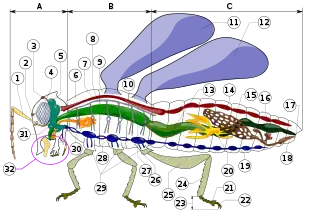
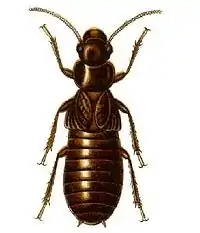
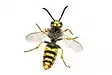
- insect, bug (arthropod with a three-part body, three pairs of legs, sometimes also wings (class: Insecta); less specifically, also other kinds of arthropods, such as spiders)
- asinssūcēji kukaiņi ― blood-sucking insects
- indīgie kukaiņi ― poisonous insects
- ūdens kukaiņi ― aquatic (lit. water) insects
- lidojošie kukaiņi ― flying insects
- bezspārnu kukaiņi ― apterous (= wingless) insects
- nakts kukaiņi ― nocturnal insects
- kaitīgie kukaiņi ― harmful insects
- kukaiņu kāpuri ― insect larvae
- kukaiņu dzēlumi ― insect stings
- kukaiņa inde ― insect poison
- kukaiņu klase ― the (taxonomic) class Insecta
- kukaiņi ir vislielākā dzīvnieku klase, tajā ietilpst gandrīz trīs ceturtdaļas vispār pazīstamo sugu ― insects are the largest class of animals, in which almost three fourths of all known species are contained
- vasarā dabā mēs ik uz soļa sastopamies ar dažādiem kukaiņiem: gan krāšņie tauriņi, kas lido no zieda uz ziedu, gan veiklās spāres, gan sienāži, gan dažādas vaboles un mušas ― in summer, in nature, we find various insects at every step: splendid butterflies flying from flower to flower, agile dragonflies, grasshoppers, various beetles and flies
- bērns bija netīrs un pilns kukaiņiem ― the child was dirty and full of insects (= parasites, lice)
- (colloquial, usually of people) being, creature
- un tu nāci pie briesmīgā Arka atvainoties? vai zini, tu gan esi viens jokains kukainis ― and you came to the terrible Arks to apologize (to him)? you know, you are indeed one funny creature (lit. insect, bug)
Usage notes
Kukainis is the usual term for “insect” in Latvian; its synonym insekts is rarer, and usually more academic or learned.
Declension
| singular (vienskaitlis) | plural (daudzskaitlis) | |
|---|---|---|
| nominative (nominatīvs) | kukainis | kukaiņi |
| accusative (akuzatīvs) | kukaini | kukaiņus |
| genitive (ģenitīvs) | kukaiņa | kukaiņu |
| dative (datīvs) | kukainim | kukaiņiem |
| instrumental (instrumentālis) | kukaini | kukaiņiem |
| locative (lokatīvs) | kukainī | kukaiņos |
| vocative (vokatīvs) | kukaini | kukaiņi |
Synonyms
References
- Karulis, Konstantīns (1992) “kukainis”, in Latviešu Etimoloģijas Vārdnīca (in Latvian), Rīga: AVOTS, →ISBN