nāss
Latvian
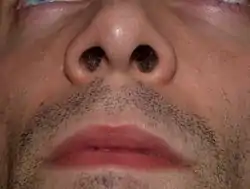
Nāsis
Etymology
From Proto-Balto-Slavic *nāsis, from Proto-Indo-European *nās-, an allomorph of *nas- (“nostril”). Semantic changes from “nose” to “nostril” or vice-versa were frequent in Indo-European. Cognates include Lithuanian nósis, Old Prussian nozy ([nōsi]), Sudovian nasis ([nāsis]) “nose”, Proto-Slavic *nosъ “nose” (from Proto-Balto-Slavic *nasús), Old English nasu, Old High German nasa, German Nase, English nose, Sanskrit नासा (nā́sā), Latin nāsus (“nose”), nāris (“nostril”) (< *nāsis).[1]
Pronunciation
- IPA(key): [nāːs]
Noun
nāss f (6th declension)
- (anatomy) nostril (one of two openings at the bottom of the nose)
- jutīgas nāsis ― sensitive nostrils
- platas nāsis ― wide nostrils
- nāsis dreb ― the nostrils are trembling
- aizspiest nāsis ― to clip one's nostrils
- knišļi lien zirgam nāsīs ― midges are crawling into the horse's nostrils
- zaķa purniņš sāka raustīties, nāsis dzīvāk ošņāt ― the hare's little muzzle began to twitch, (its) nostrils to sniff more actively
- salda medus dvaša spiedās viņam mutē un nāsīs ― the sweet breath (= smell) of honey pressed itself into his mouth and nostrils
Declension
Declension of nāss (6th declension)
Derived terms
See also
References
- Karulis, Konstantīns (1992) “nāss”, in Latviešu Etimoloģijas Vārdnīca (in Latvian), Rīga: AVOTS, →ISBN
This article is issued from Wiktionary. The text is licensed under Creative Commons - Attribution - Sharealike. Additional terms may apply for the media files.