oge
Middle Dutch
Noun
ôge n
Inflection
This noun needs an inflection-table template.
Alternative forms
Further reading
- “oghe”, in Vroegmiddelnederlands Woordenboek, 2000
- Verwijs, E., Verdam, J. (1885–1929) “oge”, in Middelnederlandsch Woordenboek, The Hague: Martinus Nijhoff, →ISBN
Old Galician-Portuguese
Alternative forms
Pronunciation
- IPA(key): /ˈod͡ʒe/
Adverb
oge
- today
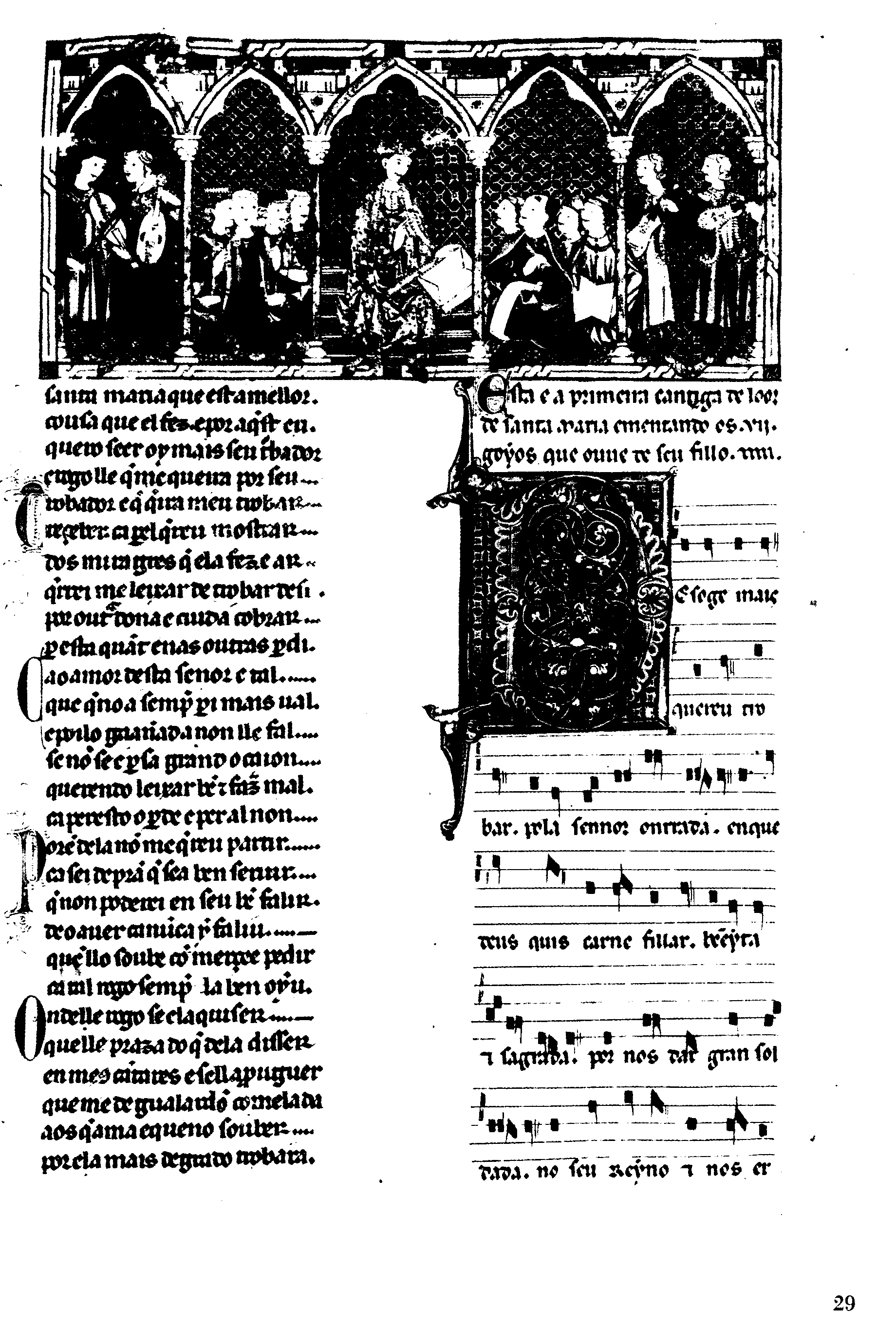
- 13th century CE, Alfonso X of Castile, Cantigas de Santa Maria, E codex, cantiga 1 (facsimile):
- Deſoge mais quereu trobar. pola ſennor onrrada
- From today on I wish to sing only to my honoured Lady
- Deſoge mais quereu trobar. pola ſennor onrrada
Descendants
Yoruba
Pronunciation
- IPA(key): /ō.ɡē/
Noun
oge
- fashion, style, beautification, ostentation
- Synonym: akọ
- obìnrin yìí fẹ́ràn oge púpọ̀ ― This woman loves fashion very much
- fashionista, fashion-conscious
- ṣókí ni ọbẹ̀ oge ― The stew of a fashionista is always to the right quality
Derived terms
- ẹyẹ ológe (“peacock”)
- ológe (“someone who is fashionable”)
- ọmọge (“beautiful young lady”)
- Yèyé oge

Pronunciation
- IPA(key): /ò.ɡé/
This article is issued from Wiktionary. The text is licensed under Creative Commons - Attribution - Sharealike. Additional terms may apply for the media files.