pûm
Akkadian
| Picture dictionary | ||
|---|---|---|
| ||
|

Pronunciation
- (Old Babylonian) IPA(key): /ˈpuːm/
Etymology 1
From Proto-Semitic *pay- (“mouth”). Cognate with Arabic فَم (fam) and Biblical Hebrew פֶּה (pɛ).
Noun
pûm m (base pī or pā, construct state pī, pronominal state pī, plural pâtum f) (from Old Akkadian on)
Alternative forms
- pû (non-mimated)
- pā'um (Old Akkadian, Old Assyrian)
- pī'um (Old Akkadian, Old Assyrian)
| Logograms | Phonetic |
|---|---|
|
Related terms
- ana pîm
- ana pī
- ina pîm
- piam epēšum
- piam šakānum
- ša pī
- ṣīt pîm
Etymology 2
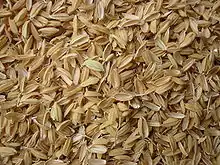
𒅔𒇧𒇧 (pû)
Unknown.
Usage notes
Often used in the plural.
Alternative forms
| Logograms | Phonetic |
|---|---|
|
|
References
- “pû A”, in The Assyrian Dictionary of the Oriental Institute of the University of Chicago (CAD), Chicago: University of Chicago Oriental Institute, 1956–2011
- “pû B”, in The Assyrian Dictionary of the Oriental Institute of the University of Chicago (CAD), Chicago: University of Chicago Oriental Institute, 1956–2011
- Black, Jeremy, George, Andrew, Postgate, Nicholas (2000) “pû(m) I”, in A Concise Dictionary of Akkadian, 2nd corrected edition, Wiesbaden: Otto Harrassowitz Verlag
- Black, Jeremy, George, Andrew, Postgate, Nicholas (2000) “pû(m) II”, in A Concise Dictionary of Akkadian, 2nd corrected edition, Wiesbaden: Otto Harrassowitz Verlag
This article is issued from Wiktionary. The text is licensed under Creative Commons - Attribution - Sharealike. Additional terms may apply for the media files.