rower
English
Etymology
From Middle English rower, rowere, roware, equivalent to row + -er. Cognate with Dutch roeier (“rower”), Danish roer (“rower”), Norwegian roer (“rower”). Compare also Old English rōwend (“rower”).
Pronunciation
- (UK) IPA(key): /ˈɹəʊ.ə(ɹ)/
Audio (Southern England) (file) Audio (US) (file)
Noun
rower (plural rowers)
- One who rows.
- 1874, Marcus Clarke, chapter VI, in For the Term of His Natural Life:
- It had been a sort of race hitherto, and the rowers, with set teeth and compressed lips, had pulled stroke for stroke.
- 1905, Lord Dunsany [i.e., Edward Plunkett, 18th Baron of Dunsany], The Gods of Pegāna, London: [Charles] Elkin Mathews, […], →OCLC, page 89:
- Upon her deck were rowers with dream-made oars, and the rowers were the people of men’s fancies, and princes of old story and people who had died, and people who had never been.
- A rowing machine.
- 1988, Richard Allen Winett, Ageless athletes, page 65:
- Aerobic and weight training sessions should also complement each other. For example, on a day you work your upper body with weights, you can use a rower for aerobics.
Translations
person who rows a boat
|
See also
Afrikaans
Pronunciation
- IPA(key): /ˈrʊə̯.vər/
Polish
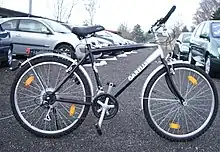
rower
Etymology
Genericized trademark of the British company Rover.
Pronunciation
- IPA(key): /ˈrɔ.vɛr/
Audio (file) - Rhymes: -ɔvɛr
- Syllabification: ro‧wer
Declension
This article is issued from Wiktionary. The text is licensed under Creative Commons - Attribution - Sharealike. Additional terms may apply for the media files.