salna
Latvian
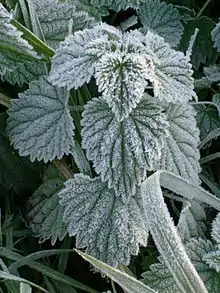
Salna
Etymology
From Proto-Balto-Slavic *śalˀnā́ˀ, from Proto-Indo-European *ḱolH-n-eh₂. Morphologically from the salt (“to freeze”). Historically (and dialectally), salna was often used to mean the same as sarma or sals.[1] Cognate with Lithuanian šalná and Proto-Slavic *solna.
Noun
salna f (4th declension)
- (weather) light frost, especially in spring or winter, with temperatures below 0°C at night
- pavasara salna ― spring frost
- salna nokodusi puķes ― frost bitten flowers
- augļu dārzu aizsardzība pret salnām ― orchard protection against frost
- thin layer of ice crystals that form under such low temperatures
- balta salna klāj zāli ― white forst covered the grass
Declension
Declension of salna (4th declension)
Derived terms
References
- Karulis, Konstantīns (1992) “salna”, in Latviešu Etimoloģijas Vārdnīca (in Latvian), Rīga: AVOTS, →ISBN
This article is issued from Wiktionary. The text is licensed under Creative Commons - Attribution - Sharealike. Additional terms may apply for the media files.