smiekls
Latvian
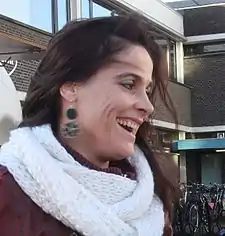
Smiekli

Smiekli
Etymology
Apparently a parallel form to an older *smietl(a)s (“laugh, laughter”), derived from the verb smiet (“to laugh”) with an additional l.[1]
Pronunciation
- IPA(key): [smiɛ̂kls]
Noun
smiekls m (1st declension)
- (usually plural) laugh, laughter (rhythmic, relatively short vocal sound produced by humans to express mirth, joy, well-being, but also contempt, rejection)
- priecīgi smiekli ― happy laugh, laughter
- labsirdīgi smiekli ― good-natured laugh
- skaļi smiekli ― loud laughter
- klusi smiekli ― quiet laughter
- ļauni smiekli ― evil laughter
- valdīt smeklus ― to control one's laugh (= to refrain from laughing)
- izspiest smieklu ― to squeeze out a laugh (= to make oneself laugh)
- plīst no, aiz smiekliem ― to burst into laughter
- izplūst smieklos ― to start laughing (lit. to exude in laughter)
- viņas smiekli skanēja dzidri un gaiši ― her laughter sounded clear and bright
- apkārt Andrim skan tik sirsnīgi smiekli, ka pilnīgi pret paša gribu arī Andris sāk smaidīt, un tad jau viņš skaļi smejas ― around Andris there was such sincere, warm laughter, that wholly against his will Andris began to smile, and soon he was laughing loudly
- (in art) laugh (humor, satire)
- mākslā vajadzīgi šie kontrasti: smiekli un nopietnība, bezbēdība un traģika ― art needs these contrasts: laughter and seriousness, light-heartedness and tragedy
- (colloquial) trifle (something insignificant, unimportant)
- kā atnācu, tā arī aiziešu, nav jau nemaz tik tālu; vasarā tīrais smiekls... ar divriteni pusstundā ― as I came, I will also leave, it is not that far; in the summer just a laugh (= trifle, piece of cake)... half an hour by bike
- (colloquial, in the genitive, used adjectivally) ridiculous, insignificant, unimportant
- smiekla lieta ― ridiculous, insignificant thing
- pirkt par smiekla cenu ― to buy (something) for a ridiculous, insignificant price
- par smiekla naudu te varēja iebaudīt cīsiņus ar kartupeļu biezeni ― for a ridiculous, insignificant (amount of) money one could here enjoy sausages with mashed potatoes
Usage notes
In the basic sense of "laugh", "laughter", the plural forms are almost always used instead of the singular forms.
Declension
Declension of smiekls (1st declension)
| singular (vienskaitlis) | plural (daudzskaitlis) | |
|---|---|---|
| nominative (nominatīvs) | smiekls | smiekli |
| accusative (akuzatīvs) | smieklu | smieklus |
| genitive (ģenitīvs) | smiekla | smieklu |
| dative (datīvs) | smieklam | smiekliem |
| instrumental (instrumentālis) | smieklu | smiekliem |
| locative (lokatīvs) | smieklā | smieklos |
| vocative (vokatīvs) | smiekl | smiekli |
Derived terms
Related terms
- smiet, smieties
See also
References
- Karulis, Konstantīns (1992) “smiekls”, in Latviešu Etimoloģijas Vārdnīca (in Latvian), Rīga: AVOTS, →ISBN
This article is issued from Wiktionary. The text is licensed under Creative Commons - Attribution - Sharealike. Additional terms may apply for the media files.