vēstule
See also: vēstulē
Latvian
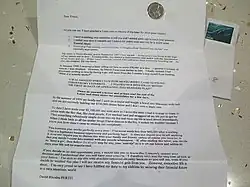
Vēstule
Etymology
Coined by Atis Kronvalds in 1869, derived from vēstīt (“to herald, to announce”) (compare vēsts (“news”)). Its form was influenced by Ancient Greek ἐπιστολή (epistolḗ, “letter; command, commission; will”). Krovanlds proposed other related words (vēstulēties “to correspond, exchange letters,” and also vēstulēšanās, vēstulējums, vēstulība) which did not find acceptance. Before Kronvalds' vēstule, the concept of “letter” was expressed as (rakstīta) grāmata; the term breve (from Italian breve (“short writing”), from Latin brevis (“short”); compare German Brief), introduced by the journal Pēterburgas Avīzes (probably by J. Alunāns), did not find acceptance either.[1]
Pronunciation
- IPA(key): [væ̀ːstulɛ]
| (file) |
Noun
vēstule f (5th declension)
- letter (a written message for someone, especially if sent by mail)
- privāta vēstule ― private letter
- oficiāla vēstule ― official letter
- mīlestības vēstule ― love letter
- atplēst vēstuli ― to open a letter
- ierakstīta, apdrošināta vēstule ― registered letter
- atklāta vēstule ― open letter (published in a newspaper)
- vēstules nosūtītājs, saņēmējs ― letter sender, receiver (addressee)
Declension
Declension of vēstule (5th declension)
| singular (vienskaitlis) | plural (daudzskaitlis) | |
|---|---|---|
| nominative (nominatīvs) | vēstule | vēstules |
| accusative (akuzatīvs) | vēstuli | vēstules |
| genitive (ģenitīvs) | vēstules | vēstuļu |
| dative (datīvs) | vēstulei | vēstulēm |
| instrumental (instrumentālis) | vēstuli | vēstulēm |
| locative (lokatīvs) | vēstulē | vēstulēs |
| vocative (vokatīvs) | vēstule | vēstules |
Synonyms
- (dated in this sense) grāmata
References
- Karulis, Konstantīns (1992) “vēstule”, in Latviešu Etimoloģijas Vārdnīca (in Latvian), Rīga: AVOTS, →ISBN
This article is issued from Wiktionary. The text is licensed under Creative Commons - Attribution - Sharealike. Additional terms may apply for the media files.