vilna
Latvian
Etymology 1
See vilns
Etymology 2
From Proto-Balto-Slavic *wilnā, from Proto-Indo-European *h₂wĺ̥h₁neh₂. Cognates include Lithuanian vìlna, Old Prussian wilna, wilnis (“skirt [< made of wool]”), Old East Slavic вълна (vŭlna), Russian dialectal во́лна (vólna, “wool, woolen fabric”), Belarusian во́ўна (vóŭna), Ukrainian во́вна (vóvna), Bulgarian въ́лна (vǎ́lna), Czech vlna, Slovak vlna, Polish wełna, Proto-Germanic *wullō (Gothic 𐍅𐌿𐌻𐌻𐌰 (wulla), Old High German wolla, German Wolle, English wool), Hittite ḫulana-, Sanskrit ऊर्णा (ū́rṇā) (from *ul̥), Ancient Greek λῆνος (lênos) (Doric λᾶνος (lânos), Latin lāna (Italian, Spanish lana, Romanian lână, Portuguese lã).[1]
Pronunciation
- IPA(key): [vīlna]
Noun
vilna f (4th declension)
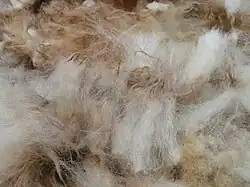
- wool (the hair of certain animals (especially sheep)
- aitas vilna ― sheep wool
- bieza, gara vilna ― thick, long wool
- cirpt vilnu ― to shear wool
- kārst vilnu ― to card wool
- vērpt vilnu ― to spin wool
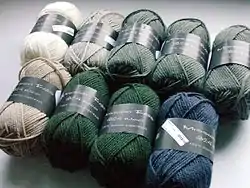
- wool (something made of this animal hair: yarn, fabric, clothes)
- vilnas dzija, audums ― wool yarn, fabric
- vilnas cimdi, zeķes, sega ― wool gloves, socks, blanket
- vilnas lakats, kleita ― wool scarf, dress
Declension
Declension of vilna (4th declension)
| singular (vienskaitlis) | plural (daudzskaitlis) | |
|---|---|---|
| nominative (nominatīvs) | vilna | — |
| accusative (akuzatīvs) | vilnu | — |
| genitive (ģenitīvs) | vilnas | — |
| dative (datīvs) | vilnai | — |
| instrumental (instrumentālis) | vilnu | — |
| locative (lokatīvs) | vilnā | — |
| vocative (vokatīvs) | vilna | — |
See also
- dzija f
References
- Karulis, Konstantīns (1992) “vilna”, in Latviešu Etimoloģijas Vārdnīca (in Latvian), Rīga: AVOTS, →ISBN
Lithuanian
Etymology
From Proto-Balto-Slavic *wílˀnāˀ, from Proto-Indo-European *h₂wĺ̥h₁neh₂.
Declension
Declension of vìlna
| singular (vienaskaita) | plural (daugiskaita) | |
|---|---|---|
| nominative (vardininkas) | vìlna | vìlnos |
| genitive (kilmininkas) | vìlnos | vìlnų |
| dative (naudininkas) | vìlnai | vìlnoms |
| accusative (galininkas) | vìlną | vìlnas |
| instrumental (įnagininkas) | vìlna | vìlnomis |
| locative (vietininkas) | vìlnoje | vìlnose |
| vocative (šauksmininkas) | vìlna | vìlnos |
See also
- vilnonas m
This article is issued from Wiktionary. The text is licensed under Creative Commons - Attribution - Sharealike. Additional terms may apply for the media files.