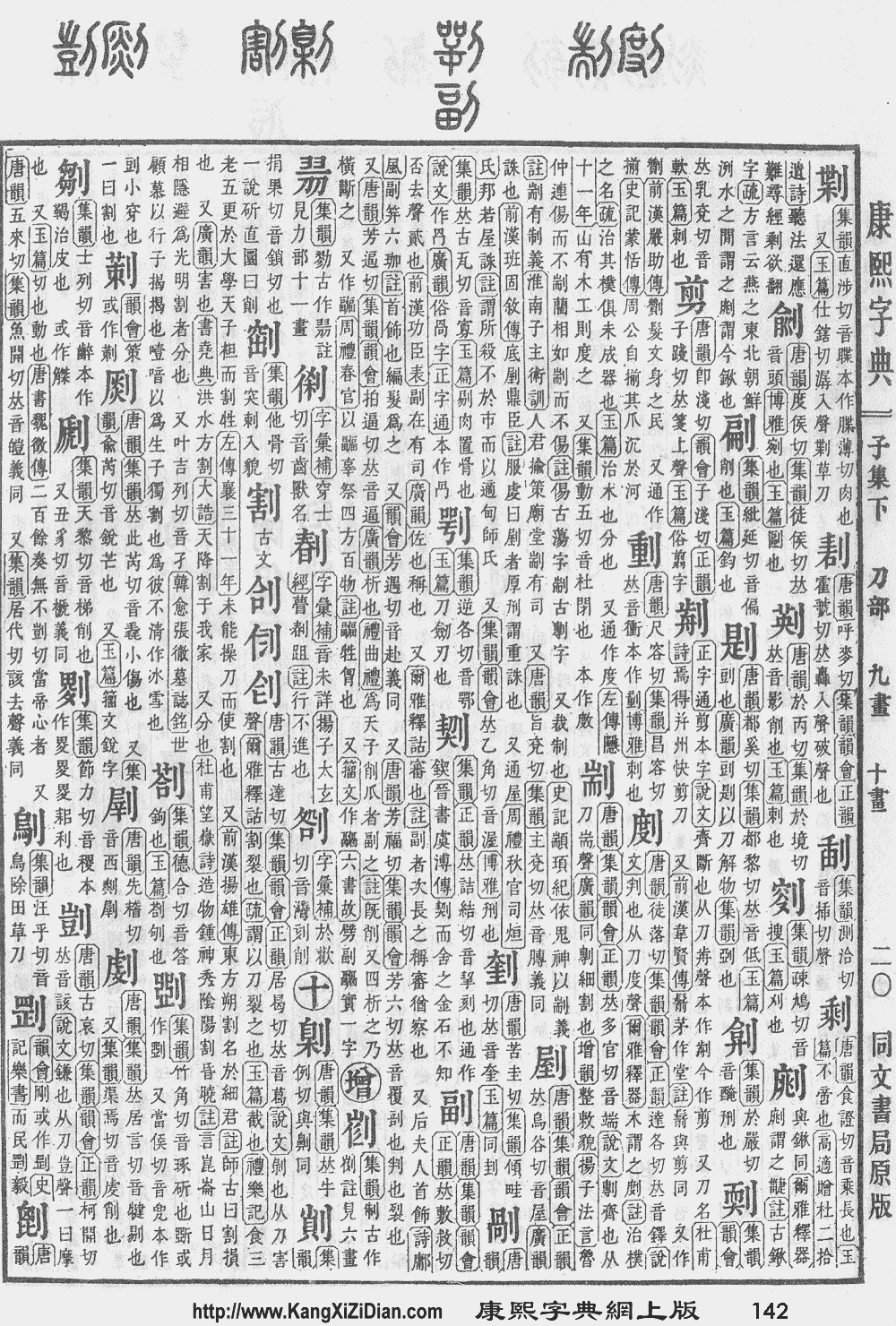
㓷

㓷 U+34F7, 㓷
CJK UNIFIED IDEOGRAPH-34F7
← 㓶
[U+34F6]
CJK Unified Ideographs Extension A 㓸 →
[U+34F8]

Translingual

Han character

㓷 (Kangxi radical 18, 刀+10, 12 strokes, cangjie input 竹木中弓 (HDLN), composition ⿰臬刂)

References

Chinese

simp. and trad.
㓷

Pronunciation


Rime
Character 㓷
Reading # 1/1
Initial (聲) 疑 (31)
Final (韻) 祭 (37)
Tone (調) Departing (H)
Openness (開合) Open
Division (等) III
Fanqie 牛例切
Baxter ngjejH
Reconstructions
Zhengzhang
Shangfang
/ŋˠiᴇiH/
Pan
Wuyun
/ŋᵚiɛiH/
Shao
Rongfen
/ŋiæiH/
Edwin
Pulleyblank
/ŋjiajH/
Li
Rong
/ŋjɛiH/
Wang
Li
/ŋĭɛiH/
Bernard
Karlgren
/ŋi̯ɛiH/
Expected
Mandarin
Reflex
yì
Expected
Cantonese
Reflex
ngai6
Baxter–Sagart system 1.1 (2014)
Character 㓷
Reading # 1/1
Modern
Beijing
(Pinyin)
yì
Middle
Chinese
‹ ngjejH ›
Old
Chinese
/*ŋ<r>[a][t]-s/
English cut off the nose

Notes for Old Chinese notations in the Baxter–Sagart system:

* Parentheses "()" indicate uncertain presence;
* Square brackets "[]" indicate uncertain identity, e.g. *[t] as coda may in fact be *-t or *-p;
* Angle brackets "<>" indicate infix;
* Hyphen "-" indicates morpheme boundary;

* Period "." indicates syllable boundary.

Definitions

㓷

  1. (same as 劓) to cut off the nose
  2. cut off
This article is issued from Wiktionary. The text is licensed under Creative Commons - Attribution - Sharealike. Additional terms may apply for the media files.