例
| ||||||||
| ||||||||
Translingual
| Stroke order | |||
|---|---|---|---|
 | |||
Han character
例 (Kangxi radical 9, 人+6, 8 strokes, cangjie input 人一弓弓 (OMNN), four-corner 22200, composition ⿰亻列)
Derived characters
- 𠅜, 𣈙, 𡂲, 𥵘
References
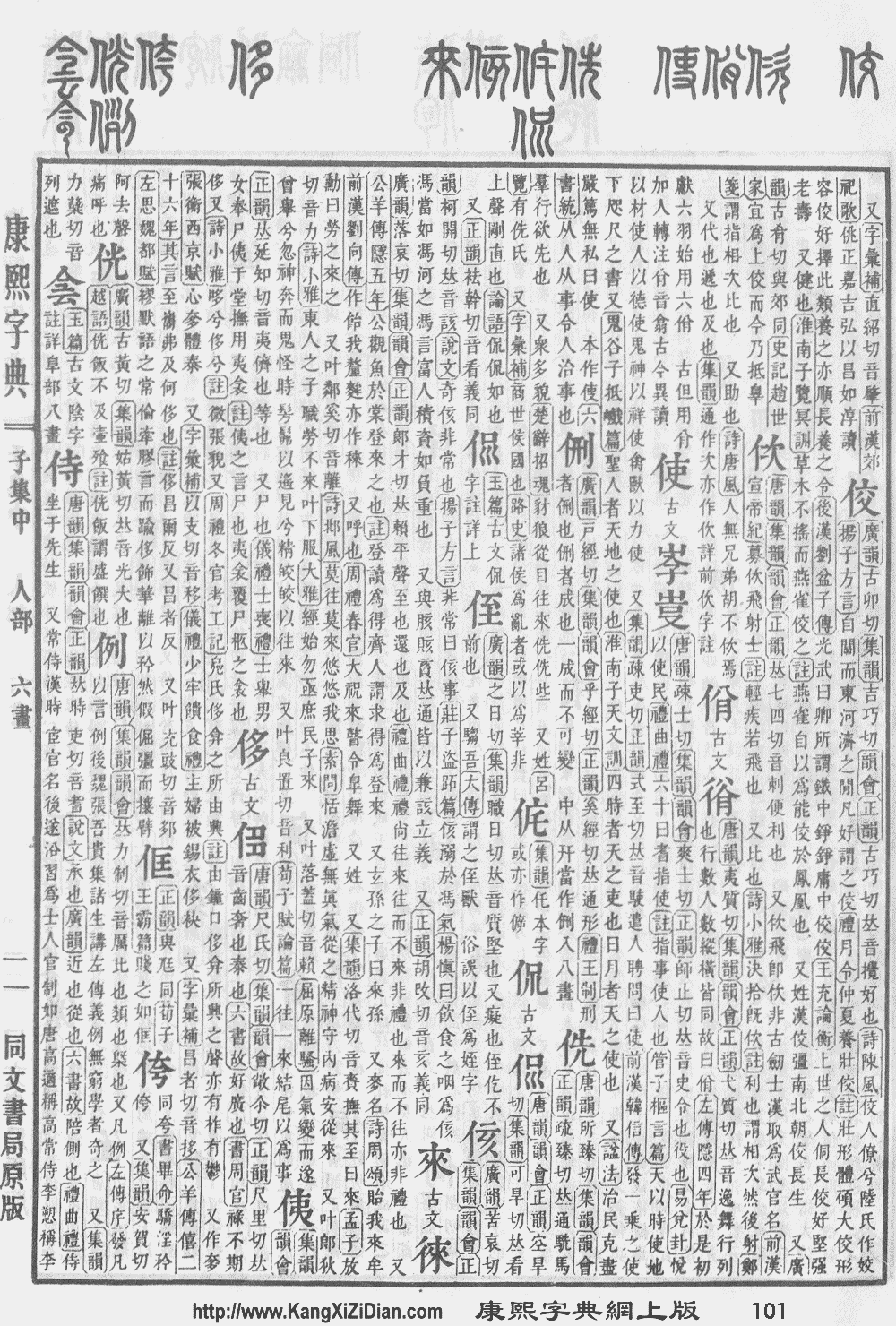
- Kangxi Dictionary: page 101, character 24
- Dai Kanwa Jiten: character 587
- Dae Jaweon: page 215, character 5
- Hanyu Da Zidian (first edition): volume 1, page 146, character 8
- Unihan data for U+4F8B
- Unihan data for U+F9B5
Chinese
| trad. | 例 | |
|---|---|---|
| simp. # | 例 | |
Glyph origin
| Historical forms of the character 例 | |
|---|---|
| Shuowen Jiezi (compiled in Han) | |
| Small seal script | |
 | |
| |
|
References: Mostly from Richard Sears' Chinese Etymology site (authorisation),
|
Characters in the same phonetic series (列) (Zhengzhang, 2003)
Phono-semantic compound (形聲/形声, OC *reds) : semantic 亻 + phonetic 列 (OC *red).
Pronunciation
Definitions
例
Synonyms
- (example):
- (precedent):
- (rule):
- 則度/则度 (zédù) (literary)
- 守則/守则 (shǒuzé)
- 方案 (fāng'àn)
- 條例/条例 (tiáolì)
- 條規/条规 (tiáoguī)
- 法度 (fǎdù)
- 程度 (chéngdù) (archaic)
- 紀綱/纪纲 (jìgāng) (literary)
- 綱目/纲目 (gāngmù) (Classical Chinese)
- 繩墨/绳墨 (shéngmò) (figurative)
- 規/规 (literary, or in compounds)
- 規則/规则 (guīzé)
- 規定/规定 (guīdìng)
- 規條/规条 (guītiáo)
- 規準/规准 (guīzhǔn) (literary)
- 規矩/规矩 (guījǔ)
- (to compare):
Compounds
- 一例 (yīlì)
- 下不為例/下不为例 (xiàbùwéilì)
- 不成比例 (bùchéngbǐlì)
- 事例 (shìlì)
- 例假 (lìjià)
- 例假日
- 例句 (lìjù)
- 例外 (lìwài)
- 例如 (lìrú)
- 例子 (lìzi)
- 例年
- 例會/例会 (lìhuì)
- 例監/例监
- 例行 (lìxíng)
- 例行公事 (lìxínggōngshì)
- 例規/例规
- 例言
- 例證/例证 (lìzhèng)
- 例貢/例贡
- 例題/例题 (lìtí)
- 俗例 (súlì)
- 先例 (xiānlì)
- 公例 (gōnglì)
- 凡例 (fánlì)
- 分例
- 刊例
- 判例 (pànlì)
- 則例/则例
- 前例 (qiánlì)
- 反比例 (fǎnbǐlì)
- 古例
- 史無前例/史无前例 (shǐwúqiánlì)
- 向例
- 品例
- 國際慣例/国际惯例
- 圖例/图例 (túlì)
- 契文舉例/契文举例
- 姓名條例/姓名条例
- 定例 (dìnglì)
- 家例
- 實例/实例 (shílì)
- 常例 (chánglì)
- 常例錢/常例钱
- 年例
- 往例
- 後不為例/后不为例
- 律例 (lǜlì)
- 循例 (xúnlì)
- 恆例/恒例 (hénglì)
- 惡例/恶例
- 慣例/惯例 (guànlì)
- 成例 (chénglì)
- 戰例/战例 (zhànlì)
- 打破慣例/打破惯例
- 按例 (ànlì)
- 按分比例
- 援例 (yuánlì)
- 攀例
- 文例
- 易例
- 有例可援
- 案例 (ànlì)
- 格於成例/格于成例
- 條例/条例 (tiáolì)
- 正比例 (zhèngbǐlì)
- 比例 (bǐlì)
- 比例尺 (bǐlìchǐ)
- 沿例
- 法例 (fǎlì)
- 照例 (zhàolì)
- 照例話/照例话
- 特例 (tèlì)
- 病例 (bìnglì)
- 發凡舉例/发凡举例
- 破例 (pòlì)
- 示例 (shìlì)
- 禁例 (jìnlì)
- 範例/范例 (fànlì)
- 罰例/罚例
- 義例/义例
- 老例 (lǎolì)
- 舉例/举例 (jǔlì)
- 舉例發凡/举例发凡
- 舊例/旧例 (jiùlì)
- 諸如此例/诸如此例
- 譜例/谱例
- 變例/变例 (biànlì)
- 通例 (tōnglì)
- 違例/违例 (wéilì)
- 配分比例
- 釋例/释例 (shìlì)
- 金石例
- 開例/开例
- 開先例/开先例
- 體例/体例 (tǐlì)
References
- “例”, in 漢語多功能字庫 (Multi-function Chinese Character Database), 香港中文大學 (the Chinese University of Hong Kong), 2014–
Japanese
Readings
Compounds
Etymology 1
| Kanji in this term |
|---|
| 例 |
| れい Grade: 4 |
| kan’on |
Noun
例 • (rei)
- a custom, usual practice, habit
- Synonym: 慣例 (kanrei)
- 例によって
- rei ni yotte
- as usual
- 例に無く
- rei ni naku
- contrary to habit
- メールで連絡するのが例となっている。
- Mēru de renraku suru no ga rei to natteiru.
- It has become customary practice to correspond by email.
- a precedent
- 例のない出来事
- rei no nai dekigoto
- an unprecedented incident
- 例のない出来事
- the aforementioned
- 例の男
- rei no otoko
- that man (who we were speaking about)
- 例の男
- a case, an instance, an illustration, an example
Noun
例 • (tameshi)
Usage notes
The most common reading is れい (rei).
References
- Matsumura, Akira, editor (2006), 大辞林 [Daijirin] (in Japanese), Third edition, Tōkyō: Sanseidō, →ISBN
- Kindaichi, Kyōsuke et al., editors (1997), 新明解国語辞典 [Shin Meikai Kokugo Jiten] (in Japanese), Fifth edition, Tōkyō: Sanseidō, →ISBN
Korean
Etymology
From Middle Chinese 例 (MC ljejH). Recorded as Middle Korean 례〯 (lyěy) (Yale: lyěy) in Hunmong Jahoe (訓蒙字會 / 훈몽자회), 1527.
Pronunciation
- (initial position)
- (SK Standard/Seoul) IPA(key): [je̞(ː)]
- Phonetic hangul: [예(ː)]
- Though still prescribed in Standard Korean, most speakers in both Koreas no longer distinguish vowel length.
- (non-initial position)
- (SK Standard/Seoul) IPA(key): [ɾje̞]
- Phonetic hangul: [례]
Compounds
Compounds
- 전례 (前例, jeollye)
- 선례 (先例, seollye)
- 관례 (慣例, gwallye)
- 차례 (次例, charye)
- 사례 (事例, sarye)
- 유례 (類例, yurye)
- 조례 (條例, jorye)
- 예외 (例外, ye'oe)
- 예년 (例年, yenyeon)
- 비례 (比例, birye)
- 연례 (年例, yeollye)
- 예규 (例規, yegyu)
- 범례 (凡例, beomnye)
- 판례 (判例, pallye)
- 예시 (例示, yesi)
- 실례 (實例, sillye)
- 특례 (特例, teungnye)
- 예문 (例文, yemun)
- 예제 (例題, yeje)
- 범례 (範例, beomnye)
- 용례 (用例, yongnye)
- 이례 (異例, irye)
- 예화 (例話, yehwa)
- 일례 (一例, illye)
Vietnamese
This article is issued from Wiktionary. The text is licensed under Creative Commons - Attribution - Sharealike. Additional terms may apply for the media files.