㱿
| ||||||||
Translingual
Han character
㱿 (Kangxi radical 79, 殳+6, 10 strokes, cangjie input 土月竹弓水 (GBHNE), composition ⿰⿱士𠔼殳)
References
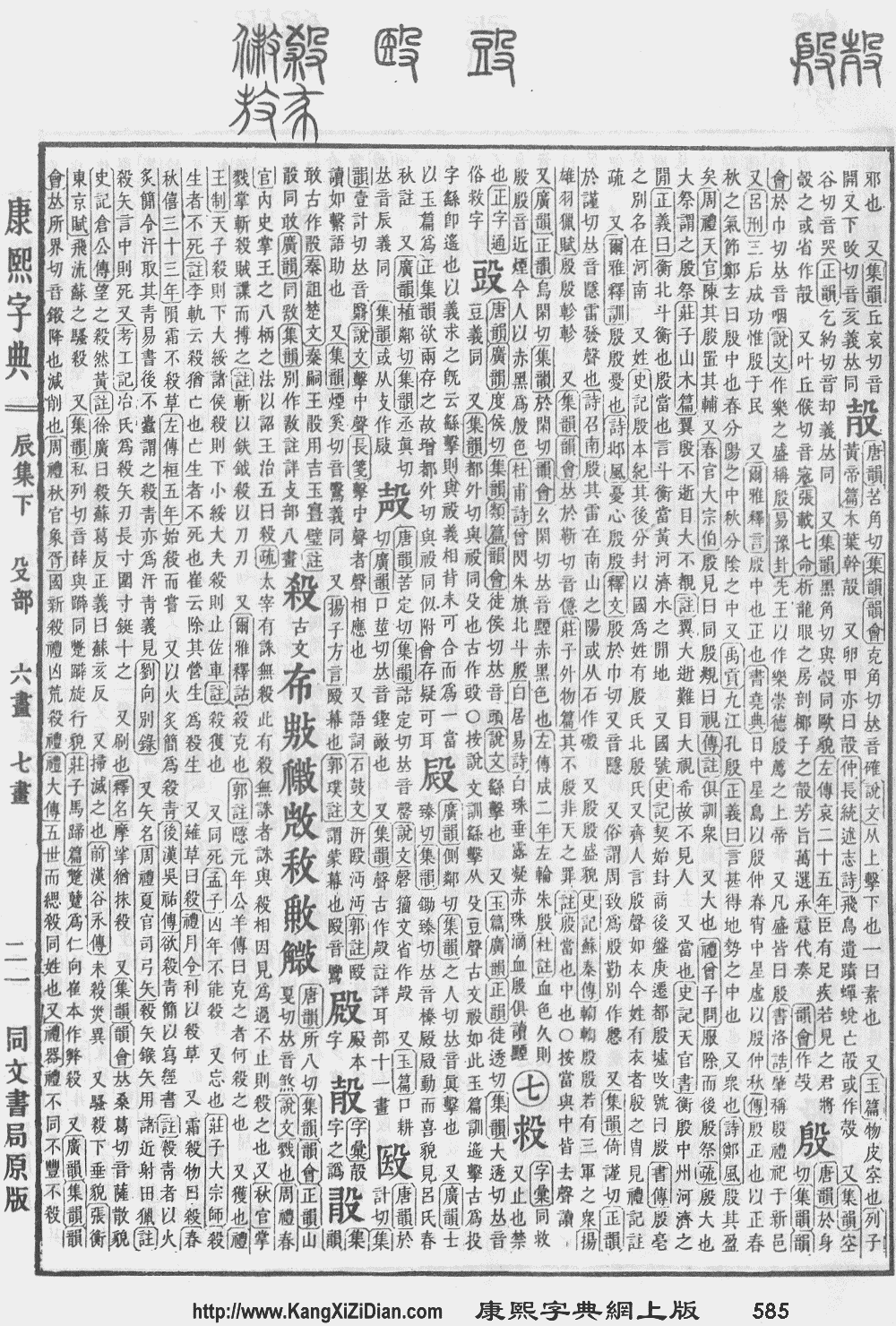
- Kangxi Dictionary: page 585, character 1
- Hanyu Da Zidian (first edition): volume 3, page 2156, character 2
- Unihan data for U+3C7F
Chinese
| simp. and trad. |
㱿 | |
|---|---|---|
| alternative forms | 𣪊 | |
Glyph origin
Originally ideogrammic compound (會意/会意) : a hand with a weapon-like object (殳) - presumably a mallet - preparing to strike a hanging percussion instrument. The instrument part is corrupted into 𡉉 and the current character can be interpreted as phono-semantic compound (形聲/形声) : phonetic 𡉉 () + semantic 殳.
Pronunciation 1
Definitions
㱿
Pronunciation 2
| For pronunciation and definitions of 㱿 – see 嗀 (“to vomit, to throw up”). (This character is a variant form of 嗀). |
Pronunciation 3
This article is issued from Wiktionary. The text is licensed under Creative Commons - Attribution - Sharealike. Additional terms may apply for the media files.