丄
| ||||||||
Translingual
Han character
丄 (Kangxi radical 1, 一+1, 2 strokes, cangjie input 中一 (LM), four-corner 20100, composition ⿱丨一)
- Shuowen Jiezi radical №2
References
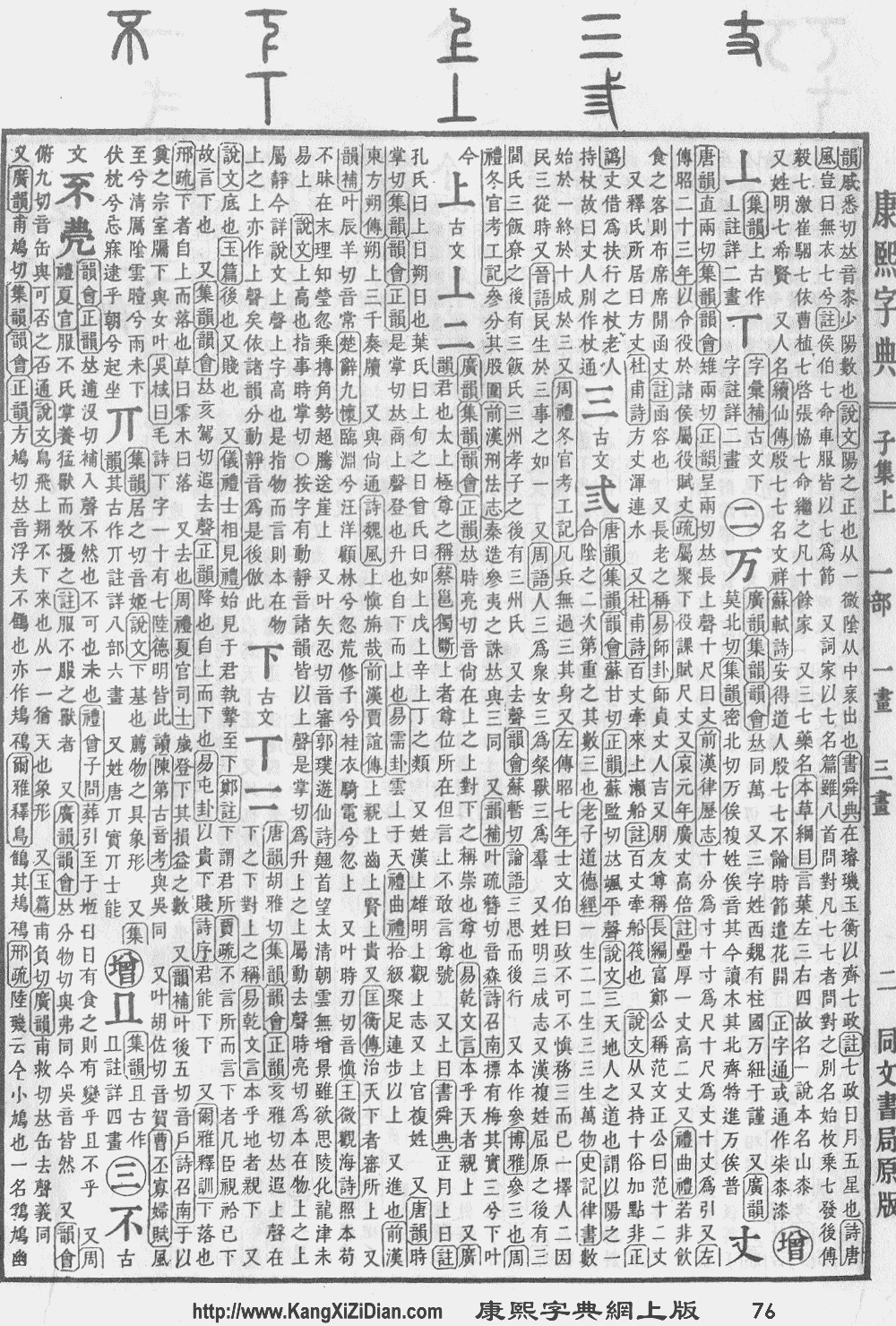
- Kangxi Dictionary: page 76, character 1
- Dai Kanwa Jiten: character 7
- Dae Jaweon: page 137, character 2
- Hanyu Da Zidian (first edition): volume 1, page 3, character 1
- Unihan data for U+4E04
Chinese
| Historical forms of the character 丄 | ||
|---|---|---|
| Shuowen Jiezi (compiled in Han) | Liushutong (compiled in Ming) | |
| Small seal script | Transcribed ancient scripts | |
 |
 | |
| ||
|
References: Mostly from Richard Sears' Chinese Etymology site (authorisation),
| ||

Characters in the same phonetic series (上) (Zhengzhang, 2003)
| For pronunciation and definitions of 丄 – see 上 (“upper part; high position; up; emperor; etc.”). (This character is an ancient form of 上). |
| For pronunciation and definitions of 丄 – see 浪 (“on; above”). (This character is a variant form of 浪). |
Japanese
This article is issued from Wiktionary. The text is licensed under Creative Commons - Attribution - Sharealike. Additional terms may apply for the media files.