上
| ||||||||
Translingual
| Stroke order | |||
|---|---|---|---|
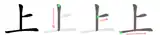 | |||
| Stroke order | |||
|---|---|---|---|
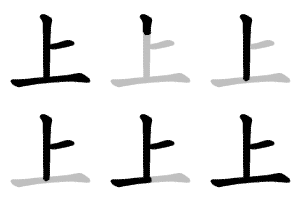 | |||
Han character
上 (Kangxi radical 1, 一+2, 3 strokes, cangjie input 卜一 (YM), four-corner 21100, composition ⿱⺊一)
Derived characters
References
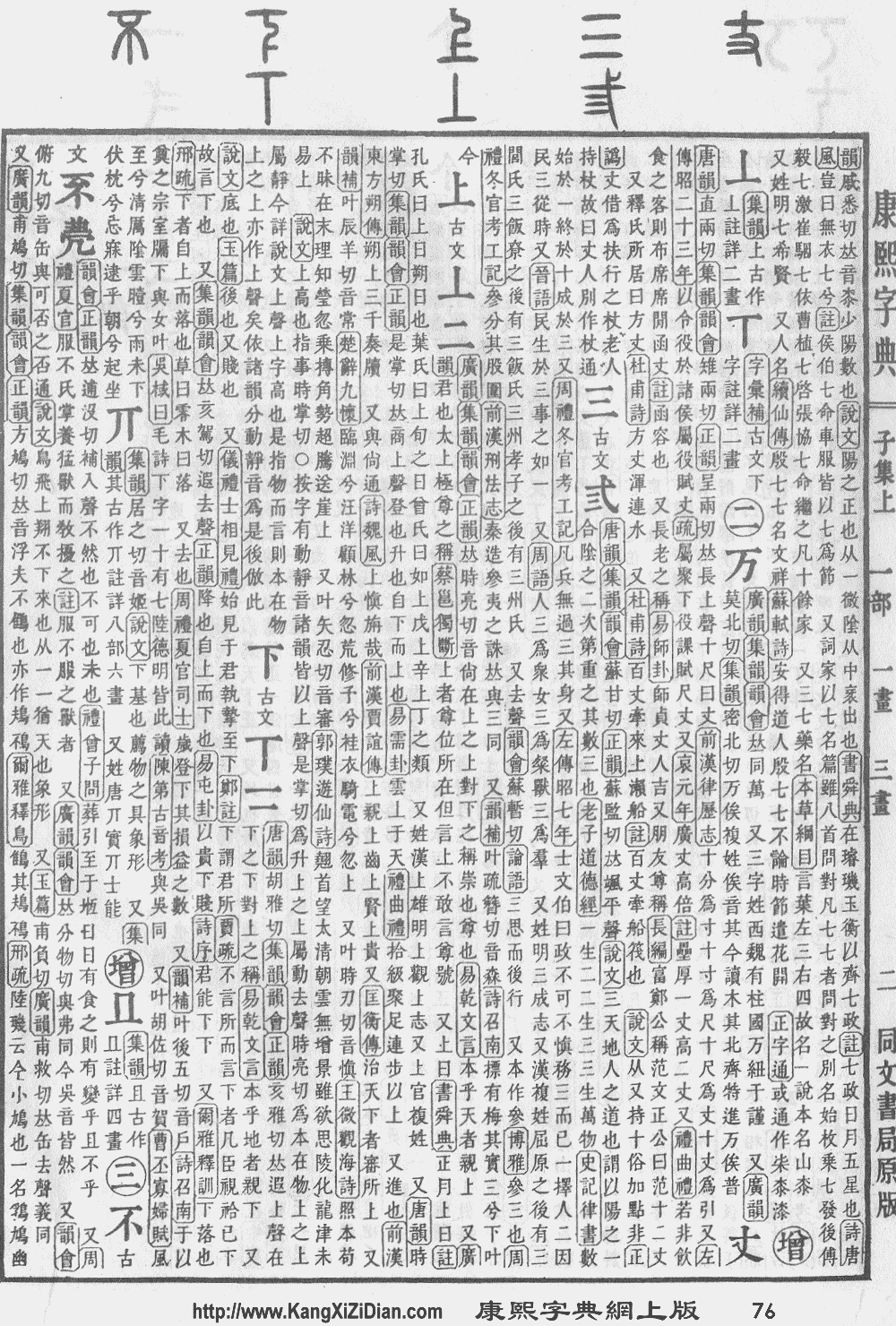
- Kangxi Dictionary: page 76, character 7
- Dai Kanwa Jiten: character 13
- Dae Jaweon: page 145, character 1
- Hanyu Da Zidian (first edition): volume 1, page 5, character 4
- Unihan data for U+4E0A
Chinese
Glyph origin
| Historical forms of the character 上 | |||||||||||||||||||||||||||||||||||||||||||||||||||||||||||||
|---|---|---|---|---|---|---|---|---|---|---|---|---|---|---|---|---|---|---|---|---|---|---|---|---|---|---|---|---|---|---|---|---|---|---|---|---|---|---|---|---|---|---|---|---|---|---|---|---|---|---|---|---|---|---|---|---|---|---|---|---|---|
| Shang | Western Zhou | Spring and Autumn | Warring States | Shuowen Jiezi (compiled in Han) | Liushutong (compiled in Ming) | Libian (compiled in Qing) | Kangxi Dictionary (compiled in Qing) | ||||||||||||||||||||||||||||||||||||||||||||||||||||||
| Oracle bone script | Bronze inscriptions | Bronze inscriptions | Bronze inscriptions | Chu slip and silk script | Qin slip script | Ancient script | Small seal script | Transcribed ancient scripts | Clerical script | Ming typeface | |||||||||||||||||||||||||||||||||||||||||||||||||||
 |
 |
 |
 |
 |
 |
 |
 |
 |
 |
 | |||||||||||||||||||||||||||||||||||||||||||||||||||
||||||||||
|
References: Mostly from Richard Sears' Chinese Etymology site (authorisation),
| |||||||||||||||||||||||||||||||||||||||||||||||||||||||||||||


Ideogram (指事) : a line above another (contrast 下 (xià)) — up. Originally written as 𠄞, but changed to this form to prevent confusion with 二 (èr).
Etymology 1
| simp. and trad. |
上 | |
|---|---|---|
| alternative forms | 丄 ancient 𠄞 尚 Min Nan “most” | |
From Proto-Sino-Tibetan *s-tjaŋ (“top”). Cognate with Tibetan སྟེང (steng), Tibetan ཡང་རྩེ (yang rtse, “summit; pinnacle”) (Bodman, 1980), Mizo zo (“to be high”), zah (“to respect; to revere”) (STEDT).
Shijing rimes indicate occasional level tone for pronunciation 2 (Schuessler, 2007).
Pronunciation 1 is the exopassive of pronunciation 2 with suffix *-s, literally meaning "what has been raised" (Schuessler, 2007). The rising tone in Middle Chinese words with voiced stop initials regularly evolves into departing tone in Mandarin; pronunciation 3 results from 叶韻 (xiéyùn), which artificially preserves classical poetry rhyming words' pronunciations.
Pronunciation 1
Definitions
上
- upper part; high position; up
- Antonym: 下 (xià)
- † emperor
- on; above
- superior; senior; top
- preceding; previous; last; former
- first of several (usually two or three) partitions
- within; in; from the standpoint of; according to
- (Southern Min) most; extremely
Synonyms
Pronunciation 2
Definitions
上
- to go up; to ascend
- to charge; to advance
- 上啊! ― Shàng a! ― Charge!
- to go to; to leave for (a place) (usually to a more developed place)
- 上省城 ― shàng xǐngchéng ― to go to the province capital
- to board; to get on
- to serve; to present; to offer
- to attend (class, work)
- to enter (a field); to appear (on stage, TV)
- to fit; to install; to apply
- 上油漆 ― shàng yóuqī ― to apply paint
- to screw; to tighten, to twist
- (colloquial) Short for 上線 (“to go online”).
- to connect to; browse (a website)
- 上谷歌 ― shàng Gǔgē ― to go on Google; to google
- (Cantonese) to go north
- (Min) to pull upwards or hang with a rope
- 上水 [Hokkien] ― chhiūⁿ-chúi [Pe̍h-ōe-jī] ― to draw water from a well
- (Southern Min) to grow and attach
- 上青苔 [Hokkien] ― chhiūⁿ chheⁿ-thî [Pe̍h-ōe-jī] ― to grow moss
- (Xiamen Hokkien) to pile up
- 上貨/上货 [Hokkien] ― chhiūⁿ-hòe [Pe̍h-ōe-jī] ― to pile up goods
- (vulgar, usually of a male) to fuck; to have intercourse (usually with a female)
- Particle following verbs, indicating direction or achievement.
- 7th tetragram of the Taixuanjing; "ascension" (𝌌)
- (mahjong, Cantonese) chow; to call a discarded tile to produce a chow
Usage notes
- When playing mahjong in Cantonese, a player may say this word as a call when forming a chowing another player's discard
Synonyms
| Variety | Location | Words |
|---|---|---|
| Formal (Written Standard Chinese) | 上 | |
| Mandarin | Beijing | 上 |
| Taiwan | 上 | |
| Malaysia | 上 | |
| Singapore | 上 | |
| Cantonese | Guangzhou | 上 |
| Hong Kong | 上 | |
| Kuala Lumpur (Guangfu) | 上 | |
| Singapore (Guangfu) | 上 | |
| Southern Min | Xiamen | 𬦰, 上, 起 |
| Quanzhou | 𬦰, 上, 起 | |
| Jinjiang | 𬦰 | |
| Zhangzhou | 𬦰, 上, 起 | |
| Tainan | 上, 起 | |
| Penang (Hokkien) | 起 | |
| Singapore (Hokkien) | 起 | |
| Manila (Hokkien) | 𬦰 | |
| Chaozhou | 起 | |
| Shantou | 上, 起 | |
| Singapore (Teochew) | 起 | |
| Wenchang | 上 | |
| Qionghai | 上 | |
| Singapore (Hainanese) | 上 | |
| Wu | Shanghai | 上 |
Pronunciation 3
See also
| The tones (of Chinese) in Mandarin · 聲調/声调 (shēngdiào) (layout · text) | ||||||||||
|---|---|---|---|---|---|---|---|---|---|---|
| 平仄 (píngzè) | 平 (píng) 平聲/平声 (píngshēng) |
仄 (zè) 仄聲/仄声 (zèshēng) | ||||||||
| 平上去入 (píngshǎngqùrù) 四聲/四声 (sìshēng) |
平 (píng) 平聲/平声 (píngshēng) |
上 (shǎng) 上聲/上声 (shǎngshēng) |
去 (qù) 去聲/去声 (qùshēng) |
入 (rù) 入聲/入声 (rùshēng) | ||||||
| 標調方法/标调方法 (biāodiào fāngfǎ) 標調法/标调法 |
四角標調法/四角标调法 | ꜀◌ | ꜂◌ | ◌꜄ | ◌꜆ | |||||
| [Term?] | ◌〪 | ◌〫 | ◌〬 | ◌〭 | ||||||
| 傍點/傍点 | ∅ | ◌〮 | ◌〯 | ∅ | ||||||
| 四聲八調/四声八调 | 陰平/阴平 (yīnpíng) | 陽平/阳平 (yángpíng) | 陰上/阴上 (yīnshǎng) | 陽上/阳上 (yángshǎng) | 陰去/阴去 (yīnqù) | 陽去/阳去 (yángqù) | 陰入/阴入 (yīnrù) | 陽入/阳入 (yángrù) | ||
| 陰/阴 (yīn) | 陽/阳 (yáng) | |||||||||
| 標調方法/标调方法 (biāodiào fāngfǎ) 標調法/标调法 |
四角標調法/四角标调法 | ꜀◌ | ꜁◌ | ꜂◌ | ꜃◌ | ◌꜄ | ◌꜅ | ◌꜆ | ◌꜇ | |
| The tones (of Standard Mandarin) in Mandarin · 聲調/声调 (shēngdiào) (layout · text) | ||||||||||
|---|---|---|---|---|---|---|---|---|---|---|
| 四聲/四声 (sìshēng) | 陰平/阴平 (yīnpíng) 一聲/一声 |
陽平/阳平 (yángpíng) 二聲/二声 (èrshēng) |
上聲/上声 (shǎngshēng) 三聲/三声 (sānshēng) |
去聲/去声 (qùshēng) 四聲/四声 (sìshēng) |
輕聲/轻声 (qīngshēng) | |||||
Compounds
- 一上 (yīshàng)
- 一哄而上
- 一擁而上/一拥而上 (yīyǒng'érshàng)
- 一箭上垛
- 七上八下 (qīshàngbāxià)
- 七上八落
- 七十瓦上霜,八十不稀奇 (qīshí wǎ shàng shuāng, bāshí bù xīqí)
- 上丁 (shàngdīng)
- 三上
- 上上 (shàngshàng)
- 上下 (shàngxià)
- 上下一心
- 上上下下 (shàngshàngxiàxià)
- 三上五落
- 上下交困
- 上下其手 (shàngxiàqíshǒu)
- 上下同心
- 上下床 (shàngxiàchuáng)
- 上下文 (shàngxiàwén)
- 上下爭輝/上下争辉
- 上下相安
- 上不來/上不来
- 上不去 (shàngbùqù)
- 上不著天,下不著地/上不着天,下不着地 (shàngbùzháotiān, xiàbùzháodì)
- 上世 (shàngshì)
- 上中農/上中农 (shàngzhōngnóng)
- 上乘 (shàngchéng)
- 上九
- 上了歲數/上了岁数
- 上京 (shàngjīng)
- 上人
- 上人兒/上人儿
- 上代 (shàngdài)
- 上仙
- 上任 (shàngrèn)
- 上位 (shàngwèi)
- 上來/上来 (shànglái)
- 上供 (shànggòng)
- 上僂/上偻 (shànglǚ)
- 上元 (Shàngyuán)
- 上元節/上元节 (Shàngyuánjié)
- 上公
- 上凍/上冻 (shàngdòng)
- 上刀山
- 上分 (shàngfen)
- 上刑 (shàngxíng)
- 上列 (shàngliè)
- 上前 (shàngqián)
- 上剎/上刹
- 上則/上则 (shàngzé)
- 上勁/上劲
- 上升 (shàngshēng)
- 上午 (shàngwǔ)
- 上半 (shàngbàn)
- 上半場/上半场 (shàngbànchǎng)
- 上半年 (shàngbànnián)
- 上半截 (shàngbànjié)
- 上半晌 (shàngbànshǎng)
- 上半時/上半时 (shàngbànshí)
- 上半晌兒/上半晌儿 (shàngbànshǎngr)
- 上卿 (shàngqīng)
- 上去 (shàngqù)
- 上口 (shàngkǒu)
- 上口字 (shàngkǒuzì)
- 上司 (shàngsī)
- 上古 (shànggǔ)
- 上吊 (shàngdiào)
- 上吐下瀉/上吐下泻 (shàngtùxiàxiè)
- 上告 (shànggào)
- 上命 (shàngmìng)
- 上和下睦
- 上呼吸道 (shànghūxīdào)
- 上品 (shàngpǐn)
- 上回 (shànghuí)
- 上國/上国 (shàngguó)
- 上圈套 (shàngquāntào)
- 上坡 (shàngpō)
- 上堂 (shàngtáng)
- 上報/上报 (shàngbào)
- 上場/上场 (shàngchǎng)
- 上場白/上场白
- 上場門兒/上场门儿
- 上塘 (Shàngtáng)
- 上境 (Shàngjìng)
- 上墳/上坟 (shàngfén)
- 上壩/上坝 (Shàngbà)
- 上士 (shàngshì)
- 上壽/上寿 (shàngshòu)
- 上夜 (shàngyè)
- 上大人
- 上天 (shàngtiān)
- 上天入地
- 上天無路,入地無門/上天无路,入地无门 (shàngtiānwúlù, rùdìwúmén)
- 上套 (shàngtào)
- 上好 (shànghǎo)
- 上妝/上妆 (shàngzhuāng)
- 上學/上学 (shàngxué)
- 上官 (shàngguān)
- 上客 (shàngkè)
- 上家 (shàngjiā)
- 上宿
- 上將/上将 (shàngjiàng)
- 上尉 (shàngwèi)
- 上尊
- 上尖兒/上尖儿
- 上屋 (shàngwū)
- 上層/上层 (shàngcéng)
- 上山 (shàngshān)
- 上岸 (shàng'àn)
- 上峰 (shàngfēng)
- 上工 (shànggōng)
- 上巳 (Shàngsì)
- 上己菜
- 上巴河 (Shàngbāhé)
- 上市 (shàngshì)
- 上帝 (Shàngdì)
- 上帝教
- 上席
- 上師/上师
- 上帳/上帐 (shàngzhàng)
- 上年 (shàngnián)
- 上年紀/上年纪 (shàng niánjì)
- 上床 (shàngchuáng)
- 上庠 (shàngxiáng)
- 上座 (shàngzuò)
- 上座兒/上座儿 (shàngzuòr)
- 上庸 (Shàngyōng)
- 上廳行首/上厅行首
- 上弔/上吊 (shàngdiào)
- 上弦 (shàngxián)
- 上彩 (shàngcǎi)
- 上心 (shàngxīn)
- 下情上達/下情上达
- 上情下達/上情下达
- 上愚 (shàngyú)
- 上愬
- 上戈 (Shànggē)
- 上戶/上户 (shànghù)
- 上房 (shàngfáng)
- 上手 (shàngshǒu)
- 上捐 (shàngjuān)
- 上揚/上扬 (shàngyáng)
- 上操 (shàngcāo)
- 上文 (shàngwén)
- 上新世 (Shàngxīnshì)
- 上方 (shàngfāng)
- 上方寶劍/上方宝剑 (shàngfāng bǎojiàn)
- 上日 (shàngrì)
- 上旬 (shàngxún)
- 上昇/上升 (shàngshēng)
- 上映 (shàngyìng)
- 上星期 (shàngxīngqī)
- 上晝/上昼 (shàngzhòu)
- 上智 (shàngzhì)
- 上書/上书 (shàngshū)
- 上書房/上书房
- 上會/上会 (shànghuì)
- 上有天堂,下有蘇杭/上有天堂,下有苏杭 (shàng yǒu tiāntáng, xià yǒu Sūháng)
- 上有老,下有小
- 上服
- 上朝 (shàngcháo)
- 上朝取應/上朝取应
- 上木驢/上木驴
- 上板兒/上板儿
- 上林苑
- 上林賦/上林赋
- 上桌 (shàngzhuō)
- 上校 (shàngxiào)
- 上梓 (shàngzǐ)
- 上梁 (shàngliáng)
- 上梢
- 上梁不正
- 上梁文
- 上榜 (shàngbǎng)
- 上樁/上桩
- 上樣/上样
- 上樓/上楼 (shànglóu)
- 上檔/上档
- 上檯/上台
- 上次 (shàngcì)
- 上款 (shàngkuǎn)
- 上正
- 上歲數兒/上岁数儿
- 上氣不接下氣/上气不接下气 (shàngqì bù jiē xiàqì)
- 上水
- 上水船
- 上水道 (shàngshuǐdào)
- 上求下告
- 上江 (shàngjiāng)
- 上油 (shàngyóu)
- 上河堤 (Shànghédī)
- 上洲 (Shàngzhōu)
- 上津 (Shàngjīn)
- 上流 (shàngliú)
- 上活 (shànghuó)
- 上洞人
- 上流頭/上流头
- 上浮 (shàngfú)
- 上海 (Shànghǎi)
- 上浣 (shànghuàn)
- 上海公報/上海公报
- 上海灘/上海滩 (Shànghǎitān)
- 上清
- 上清童子 (shàngqīng tóngzǐ)
- 上游 (shàngyóu)
- 上湯/上汤 (shàngtāng)
- 上溯 (shàngsù)
- 上演 (shàngyǎn)
- 上漿/上浆 (shàngjiāng)
- 上漲/上涨 (shàngzhǎng)
- 上漏下溼/上漏下湿
- 上演稅/上演税
- 上火 (shànghuǒ)
- 上灶 (shàngzào)
- 上焦 (shàngjiāo)
- 上燈/上灯 (shàngdēng)
- 上營/上营 (Shàngyíng)
- 上片 (shàngpiàn)
- 上班 (shàngbān)
- 上班兒/上班儿 (shàngbānr)
- 上班族 (shàngbānzú)
- 上田 (Shàngtián)
- 上界 (shàngjiè)
- 上畫/上画 (shànghuà)
- 上當/上当 (shàngdàng)
- 上疏
- 上癮/上瘾 (shàngyǐn)
- 上皇 (shànghuáng)
- 上皮組織/上皮组织 (shàngpí zǔzhī)
- 上相 (shàngxiàng)
- 上真 (shàngzhēn)
- 上眼 (shàngyǎn)
- 上眼皮
- 上眼皮兒/上眼皮儿
- 上知 (shàngzhì)
- 上知天文,下知地理 (shàng zhī tiānwén, xià zhī dìlǐ)
- 上磺 (Shànghuáng)
- 上祭
- 上稅/上税 (shàngshuì)
- 上空 (shàngkōng)
- 上窮碧落下黃泉/上穷碧落下黄泉 (shàng qióng bìluò xià huángquán)
- 上竄下跳/上窜下跳 (shàngcuànxiàtiào)
- 三竿日上
- 上第 (shàngdì)
- 上等 (shàngděng)
- 上策 (shàngcè)
- 上算 (shàngsuàn)
- 上簇
- 上級/上级 (shàngjí)
- 上紙/上纸 (shàngzhǐ)
- 上綁/上绑 (shàngbǎng)
- 上網/上网 (shàngwǎng)
- 上緊/上紧 (shàngjǐn)
- 上線/上线 (shàngxiàn)
- 上線服務/上线服务
- 上聖/上圣 (shàngshèng)
- 上聞/上闻 (shàngwén)
- 上聲/上声
- 上聯/上联 (shànglián)
- 上聯兒/上联儿 (shàngliánr)
- 上肢 (shàngzhī)
- 上腰
- 上腰包
- 上膛 (shàngtáng)
- 上臂 (shàngbì)
- 上臉/上脸 (shàngliǎn)
- 上臕/上膘 (shàngbiāo)
- 上臺/上台 (shàngtái)
- 上舍
- 上色
- 上色徒弟
- 上花臺/上花台
- 上苑 (shàngyuàn)
- 上草 (shàngcǎo)
- 上菜 (shàngcài)
- 上落 (shàngluò)
- 上蒼/上苍 (shàngcāng)
- 上蓋/上盖
- 上藥/上药 (shàngyào)
- 上行 (shàngxíng)
- 上行下效 (shàngxíngxiàxiào)
- 上街 (shàngjiē)
- 上衣 (shàngyī)
- 上表 (shàngbiǎo)
- 上裝/上装 (shàngzhuāng)
- 上西天 (shàng xītiān)
- 上覆 (shàngfù)
- 上計/上计 (shàngjì)
- 上訪/上访 (shàngfǎng)
- 上訴/上诉 (shàngsù)
- 上詳/上详 (shàngxiáng)
- 上課/上课 (shàngkè)
- 上謁/上谒 (shàngyè)
- 上諭/上谕 (shàngyù)
- 上諱下諱/上讳下讳
- 上議院/上议院 (shàngyìyuàn)
- 上貨/上货 (shànghuò)
- 上賊船/上贼船 (shàng zéichuán)
- 上賓/上宾 (shàngbīn)
- 上賬/上账 (shàngzhàng)
- 上足
- 上路 (shànglù)
- 上身 (shàngshēn)
- 上車/上车 (shàngchē)
- 上車灣/上车湾 (Shàngchēwān)
- 上軌道/上轨道 (shàng guǐdào)
- 上輩/上辈 (shàngbèi)
- 上輩子/上辈子 (shàngbèizi)
- 上述 (shàngshù)
- 上進/上进 (shàngjìn)
- 上道 (shàngdào)
- 上達/上达 (shàngdá)
- 上選/上选 (shànxuǎn)
- 上邊/上边 (shàngbiān)
- 上邊兒/上边儿
- 上邦 (shàngbāng)
- 上部 (shàngbù)
- 上都 (Shàngdū)
- 上醫/上医 (shàngyī)
- 上釉 (shàngyòu)
- 上鉤/上钩 (shànggōu)
- 上鎖/上锁 (shàngsuǒ)
- 上鏡頭/上镜头 (shàng jìngtóu)
- 上門/上门 (shàngmén)
- 上門女婿/上门女婿
- 上門怪人/上门怪人
- 上閂/上闩 (shàngshuān)
- 上限 (shàngxiàn)
- 上陣/上阵 (shàngzhèn)
- 上陳/上陈 (Shàngchén)
- 上陳橋/上陈桥 (Shàngchénqiáo)
- 上陽宮/上阳宫
- 上面 (shàngmiàn)
- 上面兒/上面儿 (shàngmiànr)
- 上鞋 (shàngxié)
- 上頭/上头
- 上頭上腦/上头上脑
- 上頭上臉/上头上脸
- 上頭鋪臉/上头铺脸
- 上顎/上颚 (shàng'è)
- 上風/上风 (shàngfēng)
- 上館子/上馆子 (shàng guǎnzi)
- 上饒/上饶 (Shàngráo)
- 上首 (shàngshǒu)
- 上首徒弟
- 上香 (shàngxiāng)
- 上馬/上马 (shàngmǎ)
- 上馬杯/上马杯
- 上馬石/上马石
- 上馮/上冯 (Shàngféng)
- 上駟/上驷 (shàngsì)
- 上體/上体 (shàngtǐ)
- 上高坐
- 上鬟 (shànghuán)
- 上黨梆子/上党梆子
- 上龕/上龛 (Shàngkān)
- 不上 (bùshàng)
- 不上不下 (bùshàngbùxià)
- 不上不落
- 不上串
- 不上心
- 不上眼
- 不上算
- 不上臺盤/不上台盘
- 不上蘆葦/不上芦苇
- 不上路
- 不在心上
- 不求上進/不求上进
- 不相上下 (bùxiāngshàngxià)
- 世上 (shìshàng)
- 中上 (zhōngshàng)
- 主上 (zhǔshàng)
- 五星上將/五星上将 (wǔ xīng shàngjiàng)
- 人上人 (rénshàngrén)
- 人間天上/人间天上 (rénjiān tiānshàng)
- 人面上
- 今上 (jīnshàng)
- 以上 (yǐshàng)
- 作壁上觀/作壁上观 (zuòbìshàngguān)
- 供不上
- 俎上肉 (zǔshàngròu)
- 做分上
- 僭上偪下
- 兩上領/两上领
- 公事上人
- 最上
- 分上
- 利上加利
- 利上滾利/利上滚利
- 刮上
- 力圖上進/力图上进
- 力求上進/力求上进
- 力爭上流/力争上流
- 力爭上游/力争上游
- 北上 (běishàng)
- 北上宣言
- 半上落下
- 占上
- 占上游
- 占上風 (zhàn shàngfēng)
- 卯上
- 同上 (tóngshàng)
- 合上
- 向上 (xiàngshàng)
- 吃不上
- 呈上 (chéngshàng)
- 喜上眉梢 (xǐshàngméishāo)
- 因此上
- 地上 (dìshang)
- 地上權/地上权
- 地上物
- 圯上老人
- 地方上
- 坐上客
- 垂白上僂/垂白上偻
- 堂上 (tángshàng)
- 基本上 (jīběnshàng)
- 塞上曲
- 墊上運動/垫上运动
- 壁上泥皮
- 壁上觀/壁上观 (bìshàngguān)
- 夠不上/够不上
- 大清早上
- 大致上 (dàzhìshang)
- 大面兒上/大面儿上
- 大體上/大体上 (dàtǐshang)
- 天上 (tiānshàng)
- 太上 (tàishàng)
- 天上人間/天上人间 (tiānshàng rénjiān)
- 太上忘情
- 天上無雙/天上无双
- 太上皇 (tàishànghuáng)
- 天上石麟
- 太上老君 (Tàishàng Lǎojūn)
- 天上聖母/天上圣母 (Tiānshàng Shèngmǔ)
- 天上麒麟
- 奉上 (fèngshàng)
- 奈上祝下
- 奮發向上/奋发向上
- 安上
- 尊上
- 對上/对上 (duìshàng)
- 對不上號/对不上号
- 小上墳/小上坟
- 小上海 (Xiǎo Shànghǎi)
- 居下訕上/居下讪上
- 屋上建瓴 (wūshàngjiànlíng)
- 屋上架屋
- 屋上瞻烏/屋上瞻乌
- 山上 (Shānshàng)
- 山陰道上/山阴道上
- 差不上下
- 巴高望上
- 席上
- 席上之珍
- 帶上一筆/带上一笔
- 帶上門/带上门
- 幕上
- 幕上燕巢
- 平上去入
- 幹上了/干上了
- 床上功夫
- 床上安床 (chuángshàng'ānchuáng)
- 床上施床 (chuángshàngshīchuáng)
- 府上 (fǔshàng)
- 庭上
- 座上客 (zuòshàngkè)
- 引鬼上門/引鬼上门
- 彈性上班/弹性上班
- 形上學/形上学 (xíngshàngxué)
- 形而上 (xíng'érshàng)
- 形而上學/形而上学 (xíng'érshàngxué)
- 後來居上/后来居上 (hòuláijūshàng)
- 後手不上/后手不上
- 徒不上墓
- 徹上徹下/彻上彻下
- 心上 (xīnshàng)
- 心上人 (xīnshàngrén)
- 忙上加忙
- 忐上忑下
- 忽上忽下
- 怯上
- 愛上/爱上 (àishàng)
- 成千上萬/成千上万 (chéngqiānshàngwàn)
- 扒上
- 打上來/打上来
- 把上了
- 承上啟下/承上启下
- 找上門/找上门
- 扶上馬/扶上马
- 扶搖直上/扶摇直上 (fúyáozhíshàng)
- 拉上補下/拉上补下
- 抬到天上
- 拔宅上昇/拔宅上升
- 披掛上陣/披挂上阵
- 拾級而上/拾级而上 (shèjí'érshàng)
- 掌上之珠
- 掠上心頭/掠上心头
- 掌上明珠 (zhǎng shàng míng zhū)
- 掌上河山
- 掌上珠
- 掌上舞
- 掌上觀紋/掌上观纹
- 掛上鉤/挂上钩
- 搶上/抢上
- 損上益下/损上益下
- 搭不上線/搭不上线
- 撲上/扑上
- 擱在心上/搁在心上
- 擺在心上/摆在心上
- 攻心為上/攻心为上
- 放在心上
- 敝上
- 敬上
- 敬上愛下/敬上爱下
- 數不上/数不上
- 旁行斜上
- 日上三竿 (rìshàngsāngān)
- 早上 (zǎoshang)
- 春上 (chūnshang)
- 晚上 (wǎnshang)
- 更上一層樓/更上一层楼 (gèngshàngyīcénglóu)
- 更上層樓/更上层楼
- 朗朗上口 (lǎnglǎngshàngkǒu)
- 木上座
- 末上
- 板上釘釘/板上钉钉 (bǎnshàngdìngdīng)
- 桑間濮上/桑间濮上 (sāngjiānpúshàng)
- 桌面兒上/桌面儿上
- 梁上君子 (liángshàngjūnzǐ)
- 桿兒上的/杆儿上的
- 梁獄上書/梁狱上书
- 楓林上城/枫林上城 (Fēnglínshàngchéng)
- 榻上
- 槓上了/杠上了 (gàngshàngle)
- 榜上無名/榜上无名
- 槓上開花/杠上开花 (gàngshàng kāihuā)
- 樓上/楼上 (lóushàng)
- 樹上開花/树上开花 (shùshàngkāihuā)
- 櫃上/柜上
- 檯面上/台面上
- 欺上罔下
- 欺主罔上
- 欺君罔上 (qījūnwǎngshàng)
- 欺心誑上/欺心诳上
- 殿上虎
- 比不上 (bǐbùshàng)
- 氈上拖毛/毡上拖毛
- 氣頭上/气头上 (qìtóushàng)
- 水上人家
- 水上居民
- 水上活動/水上活动
- 水上漚/水上沤
- 水上芭蕾
- 水上警察 (shuǐshàng jǐngchá)
- 水上運動/水上运动
- 水上飛機/水上飞机 (shuǐshàng fēijī)
- 池上 (Chíshàng)
- 沒上下/没上下
- 沒上沒下/没上没下
- 洑上水
- 派上用場/派上用场 (pàishàngyòngchǎng)
- 海上 (hǎishàng)
- 海上保險/海上保险
- 海上偵察/海上侦察
- 海上大學/海上大学
- 海上封鎖/海上封锁
- 浮上心頭/浮上心头
- 海上採油/海上采油
- 海上救難/海上救难
- 海上權/海上权
- 浮上水
- 海上法
- 海上滲透/海上渗透
- 海上巡邏/海上巡逻
- 海上都市
- 滬上/沪上
- 濮上 (púshàng)
- 濮上之音 (púshàngzhīyīn)
- 濮上桑間/濮上桑间
- 火上加油 (huǒshàngjiāyóu)
- 火上弄冰
- 火上添油
- 火上澆油/火上浇油 (huǒshàngjiāoyóu)
- 火頭上/火头上 (huǒtóushàng)
- 灶上的
- 灶上騷除/灶上骚除
- 炎上 (yánshàng)
- 炕上地下
- 炕上安鍋/炕上安锅
- 無上/无上 (wúshàng)
- 蒸蒸日上 (zhēngzhēngrìshàng)
- 燕巢幕上
- 爆炸上限
- 爬上爬下
- 牆上泥皮/墙上泥皮
- 牆上草/墙上草
- 牆頭馬上/墙头马上
- 犯上 (fànshàng)
- 犯上作亂/犯上作乱
- 犯不上
- 犯得上 (fàndeshàng)
- 犯的上
- 玄天上帝 (Xuántiān Shàngdì)
- 玉皇上帝 (Yùhuáng Shàngdì)
- 琅琅上口
- 甚囂塵上/甚嚣尘上 (shènxiāochénshàng)
- 界上
- 登上甲
- 發憤向上/发愤向上
- 皇上 (huángshang)
- 益上損下/益上损下
- 直上
- 直上直下
- 直上青雲/直上青云
- 看上 (kànshàng)
- 看上了
- 看不上
- 看得上眼
- 瞞上欺下/瞒上欺下
- 瞧上
- 瞧不上
- 瞧不上眼
- 矢在弦上
- 破上
- 砧上之肉
- 祖上 (zǔshàng)
- 禮上/礼上
- 稍占上風
- 稱得上/称得上 (chēngdeshàng)
- 節上生枝/节上生枝
- 節骨眼上/节骨眼上
- 算上
- 箭在弦上
- 紙上作業/纸上作业
- 紙上封鎖/纸上封锁
- 紙上空談/纸上空谈
- 紙上談兵/纸上谈兵 (zhǐshàngtánbīng)
- 紙上電影/纸上电影
- 綿上/绵上
- 網上活動/网上活动
- 網上購物/网上购物
- 網上雜誌/网上杂志
- 線上交友/线上交友
- 線上交易/线上交易
- 線上價目/线上价目
- 線上出版/线上出版
- 線上叩應/线上叩应
- 線上導覽/线上导览
- 線上投票/线上投票
- 線上掛號/线上挂号
- 線上新聞/线上新闻
- 線上書屋/线上书屋
- 線上書店/线上书店
- 線上期刊/线上期刊
- 線上查詢/线上查询
- 線上求助/线上求助
- 線上牙醫/线上牙医
- 線上百貨/线上百货
- 線上聊天/线上聊天
- 線上訂位/线上订位
- 線上訂書/线上订书
- 線上訂購/线上订购
- 線上訂閱/线上订阅
- 線上評鑑/线上评鉴
- 線上論壇/线上论坛
- 線上諮詢/线上谘询
- 線上購物/线上购物
- 線上郵購/线上邮购
- 罔上虐下
- 罪上加罪
- 羲皇上人
- 聖上/圣上 (shèngshàng)
- 肝火上炎
- 肩上肩下
- 股掌之上 (gǔ zhǎng zhī shàng)
- 腎上腺/肾上腺 (shènshàngxiàn)
- 腎上腺素/肾上腺素 (shènshàngxiànsù)
- 腦上腺/脑上腺
- 臉上/脸上
- 臉上無光/脸上无光
- 臉上貼金/脸上贴金
- 至上 (zhìshàng)
- 至高無上/至高无上 (zhìgāowúshàng)
- 茶上
- 草上霜
- 草上飛/草上飞
- 華燈初上/华灯初上
- 蜂擁而上/蜂拥而上 (fēngyǒng'érshàng)
- 螞蟻上樹/蚂蚁上树 (mǎyǐshàngshù)
- 街上 (jiēshang)
- 表面上 (biǎomiànshang)
- 裊裊上升/袅袅上升
- 親上作親/亲上作亲
- 親上加親/亲上加亲
- 親上成親/亲上成亲
- 計上心來/计上心来 (jìshàngxīnlái)
- 計上心頭/计上心头
- 討分上/讨分上
- 誑上/诳上
- 說不上/说不上 (shuōbushàng)
- 說不上來/说不上来
- 說分上/说分上
- 諂上抑下/谄上抑下
- 談不上/谈不上 (tánbúshàng)
- 謹上/谨上 (jǐnshàng)
- 豎柱上梁
- 豐上銳下/丰上锐下
- 貴上/贵上
- 買上告下/买上告下
- 走為上策/走为上策 (zǒuwéishàngcè)
- 走馬上任/走马上任
- 趕上/赶上 (gǎnshàng)
- 趕不上/赶不上 (gǎnbùshàng)
- 趕不上趟/赶不上趟
- 趕得上/赶得上
- 跟上 (gēnshàng)
- 路上 (lùshàng)
- 跟不上 (gēnbùshàng)
- 躍然紙上/跃然纸上 (yuèránzhǐshàng)
- 身上 (shēnshàng)
- 輪番上陣/轮番上阵
- 輟耕壟上/辍耕垄上
- 近上
- 迎頭趕上/迎头赶上 (yíngtóu gǎnshàng)
- 送上天
- 送上門/送上门 (sòngshàngmén)
- 通身上下
- 遇上 (yùshàng)
- 道上
- 逼上梁山 (bīshàngliángshān)
- 邁上/迈上
- 配上
- 配不上 (pèibushàng)
- 錯上墳/错上坟
- 錦上添花/锦上添花 (jǐnshàngtiānhuā)
- 長上/长上 (zhǎngshàng)
- 長安道上/长安道上
- 門上/门上
- 門上人/门上人
- 門上楣/门上楣
- 門上的/门上的
- 閉上/闭上 (bìshang)
- 闔上/阖上
- 阪上走丸 (bǎnshàngzǒuwán)
- 附上罔下
- 附下罔上
- 陌上桑
- 陣面上/阵面上
- 陵上虐下
- 難上加難/难上加难 (nánshàngjiānán)
- 難於上天/难于上天
- 雪上加霜 (xuěshàngjiāshuāng)
- 霸上
- 青雲直上/青云直上 (qīngyúnzhíshàng)
- 青龍頭上/青龙头上
- 非常上訴/非常上诉
- 面上
- 面子上
- 韝上鷹/𫖕上鹰
- 頂上/顶上
- 頂上功夫/顶上功夫
- 頂頭上司/顶头上司
- 頭上安頭/头上安头
- 頭上抹下/头上抹下
- 頭上末下/头上末下
- 頰上添毫/颊上添毫
- 頭直上/头直上
- 頭髮上指/头发上指
- 風行水上/风行水上
- 馬上/马上 (mǎshàng)
- 馬上吹/马上吹
- 馬上緣/马上缘
- 駕上人/驾上人
- 騎上老虎/骑上老虎
- 高上
- 高攀不上
- 高高在上 (gāogāozàishàng)
- 髮上指冠/发上指冠
- 髮上衝冠/发上冲冠
- 鬼酉上車/鬼酉上车
- 鴨子上架/鸭子上架
Descendants
Pronunciation
Definitions
上
Etymology 3
| For pronunciation and definitions of 上 – see 緔 (“to sole a shoe”). (This character is the second-round simplified form of 緔). |
Notes:
|
Etymology 4
| For pronunciation and definitions of 上 – see 鞝. (This character is the second-round simplified form of 鞝). |
Notes:
|
Further reading
- “Entry #166”, in 臺灣閩南語常用詞辭典 [Dictionary of Frequently-Used Taiwan Minnan] (overall work in Mandarin and Hokkien), Ministry of Education, R.O.C., 2023.
Japanese
Kanji
Readings
- Go-on: じょう (jō, Jōyō)←じやう (zyau, historical)
- Kan-on: しょう (shō, Jōyō †)←しやう (syau, historical)
- Sō-on: しゃん (shan)←しやん (syan, historical)
- Kun: うえ (ue, 上, Jōyō)←うへ (ufe, 上, historical); うわ (uwa, 上, Jōyō †)←うは (ufa, 上, historical); かみ (kami, 上, Jōyō); あげる (ageru, 上げる, Jōyō); あがる (agaru, 上がる, Jōyō); あがり (agari, 上がり); のぼる (noboru, 上る, Jōyō); のぼり (nobori, 上り); のぼせる (noboseru, 上せる, Jōyō); のぼす (nobosu, 上す, Jōyō); たてまつる (tatematsuru, 上る); ほとり (hotori, 上)
- Nanori: あおい (aoi); あげ (age); い (i); か (ka); かき (kaki); かず (kazu); かん (kan); こう (kō); のぼり (nobori); ほつ (hotsu)
Compounds
- 上上 (jōjō), 上々 (jōjō)
- 上位 (jōi)
- 上映 (jōei)
- 上演 (jōen)
- 上官 (jōkan)
- 上機 (jōki)
- 上級 (jōkyū)
- 上京 (jōkyō)
- 上空 (jōkū)
- 上下 (jōge)
- 上戸 (jōgo)
- 上告 (jōkoku)
- 上司 (jōshi)
- 上州 (Jōshū)
- 上旬 (jōjun)
- 上声 (jōshō)
- 上昇 (jōshō)
- 上場 (jōjō)
- 上手 (jōzu)
- 上声 (jōsei)
- 上船 (jōsen)
- 上層 (jōsō)
- 上奏 (jōsō)
- 上代 (jōdai)
- 上達 (jōtatsu)
- 上段 (jōdan)
- 上等 (jōtō)
- 上人 (shōnin)
- 上納 (jōnō)
- 上品 (jōhin)
- 上部 (jōbu)
- 上陸 (jōriku)
- 上流 (jōryū)
- 上林 (jōrin)
- 上石 (ageishi)
- 平上去入 (hyōjōkyonyū)
- 上手い (umai)
- 上海 (Shanhai, “Shanghai”)
- 逆上せる (noboseru)
- 上枝 (hotsue)
- 嶺上開花 (rinshan kaihō)
- 嶺上牌 (rinshanpai)
Etymology 1
| Kanji in this term |
|---|
| 上 |
| うえ Grade: 1 |
| kun’yomi |
⟨upe2⟩ → /*upai̯/ → /upe/ → /ufe/ → /uwe/ → /ue/
From Old Japanese, from Proto-Japonic *upay.
Unbound apophonic form of uwa, ancient upa (see below).
Noun
Idioms
- 上に立つ (ue ni tatsu)
- 上には上がある (ue ni wa ue ga aru)
- 上見ぬ鷲 (ue minu washi)
- 上を行く (ue o iku)
- 上を下へ (ue o shita e)
- 上を見る (ue o miru)
Etymology 2
| Kanji in this term |
|---|
| 上 |
| うわ Grade: 1 |
| kun’yomi |
/upa/ → /ufa/ → /uwa/
From Old Japanese. The combining form of ue, ancient upe (see above).[1]
Pronunciation
- IPA(key): [ɯ̟ᵝɰᵝa̠]
Derived terms
- 上上 (uwauwa), 浮浮 (uwauwa)
- 上顎 (uwaago)
- 上臼 (uwausu)
- 上絵 (uwae)
- 上枝 (uwaeda)
- 上襟 (uwaeri), 上衿 (uwaeri), 上領 (uwaeri)
- 上帯 (uwaobi)
- 上掛 (uwagake), 上掛け (uwagake)
- 浮気 (uwaki)
- 上着 (uwagi)
- 上衣 (uwagi)
- 噂 (uwasa)
- 上棚 (uwadana), 上枻 (uwadana)
- 上手 (uwate)
- 上剥げ (uwahage)
- 後妻 (uwanari)
- 上荷 (uwani)
- 上値 (uwane)
- 上歯 (uwaba)
- 上履 (uwabaki), 上履き (uwabaki)
- 上張 (uwabari), 上張り (uwabari)
- 上翳 (uwahi)
- 上辺 (uwabe)
- 上目 (uwame)
- 上屋 (uwaya)
Etymology 3
| Kanji in this term |
|---|
| 上 |
| へ Grade: 1 |
| kun’yomi |
| Kanji in this term |
|---|
| 上 |
| え Grade: 1 |
| irregular |
⟨upe2⟩ → ⟨pe2⟩ → */pe/ → /fe/ → /he/
Short-form of or shift from ue, ancient upe (see above). Realized as -e in some compounds.
Pronunciation
- IPA(key): [he̞]
- IPA(key): [e̞]
Usage notes
The senses are the same with ue.
Derived terms
- 尾上 (onoe)
Etymology 4
| Kanji in this term |
|---|
| 上 |
| かみ Grade: 1 |
| kun’yomi |
⟨kami1⟩ → */kamʲi/ → /kami/
From Old Japanese. Already apparent in ancient texts such as the Kojiki (c. 712 CE) and the Man'yōshū (c. 759 CE).[1][4]
Derived terms
- 上する (kamisuru)
- 守 (kami)
- 上泉 (kamīzumi)
- 上一段活用 (kami ichidan katsuyō)
- 上一人 (kami ichinin), 上御一人 (kami go-ichinin)
- 上女 (kami-onna)
- 上掛 (kami-gakari)
- 上方 (kamigata)
- 上御所 (kami gosho)
- 上様 (kami-zama), 上方 (kami-zama)
- 上下 (kamishimo), 裃 (kamishimo)
- 上毛野 (Kamitsukeno), 上野 (Kōzuke)
- 上総 (Kamitsufusa), 上総 (Kazusa)
- 上つ世 (kami tsu yo), 上つ代 (kami tsu yo)
- 上問屋 (kami-doiya)
- 上長押 (kami nageshi)
- 上二段活用 (kami nidan katsuyō)
- 上の戸 (kami no to)
- 上の間 (kami no ma)
- 上の町 (kami no machi)
- 上機 (kamihata)
- 上辺 (kamibe)
- 上無 (kami mu)
- 上無調 (kami muchō)
- 石上 (Isonokami)
- 氏の上 (Uji no Kami)
- 兄 (konokami), 首 (konokami), 氏上 (konokami)
Idioms
- 上漏り下潤う (kami mori shimo uruou)
- 上を学ぶ下 (kami o manabu shimo)
Etymology 5
| Kanji in this term |
|---|
| 上 |
| かん Grade: 1 |
| kun’yomi |
/kami/ → /kamʉ/ → /kaɴ/
Contraction of Old Japanese ⟨kami1⟩. Spelled in ancient works as かむ (kamu) prior to the development of the ん (n) kana.[1][4][5]
Pronunciation
- IPA(key): [kã̠ɴ]
Usage notes
Generally only found when followed by the genitive / possessive particles の (no) or つ (tsu).
Derived terms
- 上達部 (kandachibe), 上達部 (kandachime)
- 上林 (Kanbayashi)
- 上牧 (Kanmaki)
Etymology 6
| Kanji in this term |
|---|
| 上 |
| じょう Grade: 1 |
| goon |
/d͡ʑɨau/ → /d͡ʑɔː/ → /d͡ʑoː/
From Middle Chinese 上 (MC dzyangX|dzyangH).
Pronunciation
- Pitch accent for suffix unknown.
Suffix
Derived terms
References
- Matsumura, Akira, editor (2006), 大辞林 [Daijirin] (in Japanese), Third edition, Tōkyō: Sanseidō, →ISBN
- Kindaichi, Kyōsuke et al., editors (1974), 新明解国語辞典 [Shin Meikai Kokugo Jiten] (in Japanese), Second edition, Tōkyō: Sanseidō
- NHK Broadcasting Culture Research Institute, editor (1998), NHK日本語発音アクセント辞典 [NHK Japanese Pronunciation Accent Dictionary] (in Japanese), Tōkyō: NHK Publishing, →ISBN
- Shōgaku Tosho (1988) 国語大辞典(新装版) [Unabridged Dictionary of Japanese (Revised Edition)] (in Japanese), Tōkyō: Shogakukan, →ISBN
- Matsumura, Akira (1995) 大辞泉 [Daijisen] (in Japanese), First edition, Tōkyō: Shogakukan, →ISBN
Korean
Vietnamese
Compounds
- 皇上 (hoàng thượng)
- 上游 (thượng du)
- 上頂 (thượng đỉnh)
- 上行 (thượng hạng)
- 上流 (thượng lưu)
- 上議士 (thượng nghị sĩ)
- 上議院 (thượng nghị viện)
- 上士 (thượng sĩ)
- 上佐 (thượng tá)
- 上層 (thượng tầng)
- 上將 (thượng tướng)
- 上尉 (thượng úy/thượng uý)
- 上院 (thượng viện)
References
- Nguyễn et al. (2009).
- Trần (2004).
- Bonet (1899).
- Génibrel (1898).
- Taberd & Pigneau de Béhaine (1838).